
What Counts as Discrimination Under Utah’s Employment Laws?
Simple definitions and examples so you can spot what is illegal at work
This guide explains what legally counts as workplace discrimination under Utah employment law with plain-English definitions and examples to help you recognize when unfair treatment crosses the legal line. Utah and federal law both protect employees from being treated unfairly because of personal traits like race, sex, or religion. Not every rude comment or disagreement qualifies as discrimination. Knowing the difference helps you respond appropriately when something feels wrong at work.
What “Discrimination” Means in Utah
Under Utah’s Antidiscrimination Act (Utah Code § 34A-5-106), workplace discrimination happens when an employer makes decisions such as hiring, firing, pay, promotion, or assignments based on a protected personal trait rather than job performance or qualifications.
This protection applies to most employers with 15 or more employees and covers private, state, and local government workplaces in Utah. Federal laws like Title VII of the Civil Rights Act and the Americans with Disabilities Act provide similar nationwide protections.
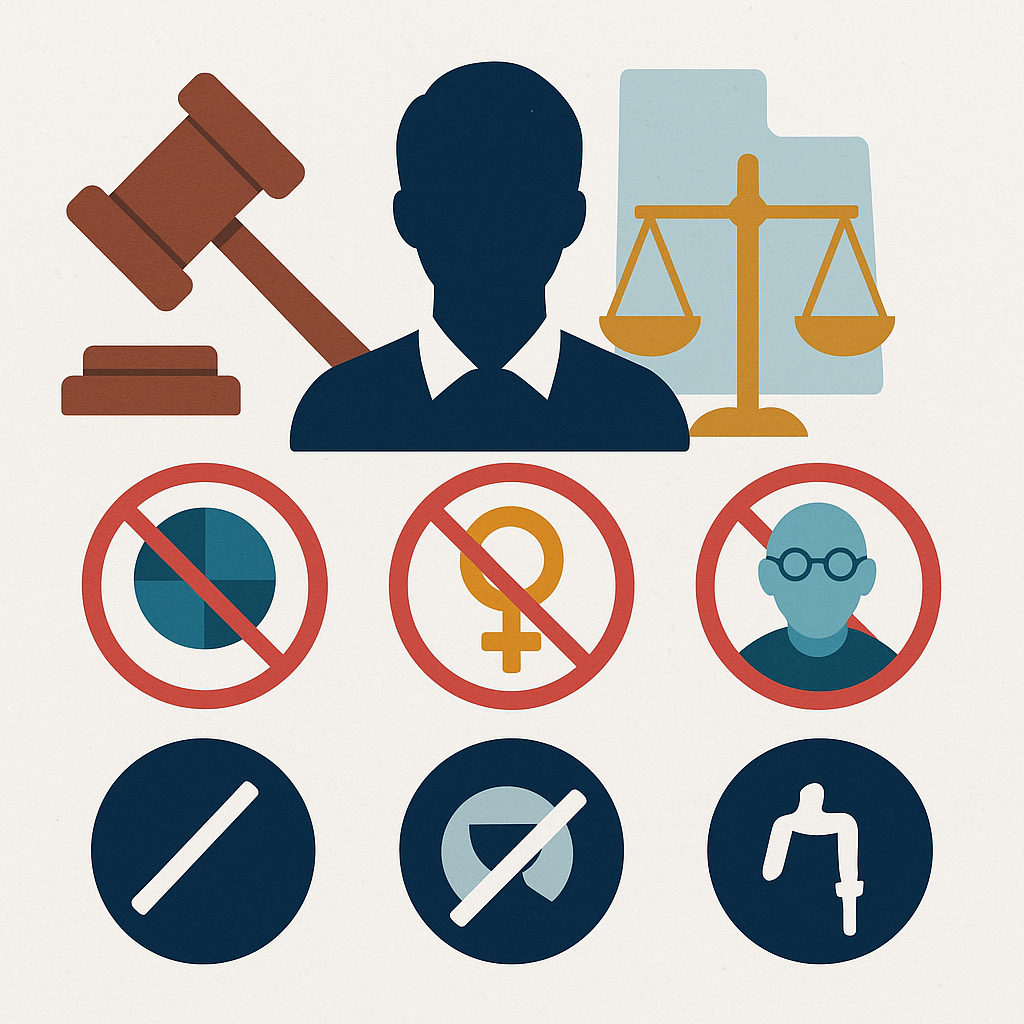
Protected Traits Under Utah Law
If your employer treats you worse than others, harasses you, or fires you because of any of these characteristics, it may be illegal discrimination.
Real-World Examples of Workplace Discrimination
- Hiring: Refusing to interview or hire someone because of race or religion.
- Pay: Paying women less than men for the same job.
- Promotion: Skipping over a qualified employee due to age or disability.
- Termination: Firing someone after they disclose a pregnancy or file a complaint.
- Harassment: Allowing slurs, sexual jokes, or offensive remarks tied to a protected trait to continue.
Discrimination vs. Harassment vs. Retaliation
Discrimination is unfair treatment based on a protected characteristic in decisions that affect your job.
Harassment is unwanted behavior that creates a hostile or intimidating work environment.
Retaliation happens when an employer punishes someone for reporting discrimination or supporting another worker’s complaint. All three are illegal under Utah and federal law.
Employer Responsibilities in Utah
- Keep workplaces free from discrimination and harassment.
- Investigate complaints promptly and fairly.
- Take corrective action when discrimination is found.
- Avoid retaliating against employees who report problems.
Many companies also post the Utah Antidiscrimination Act notice or include nondiscrimination policies in employee handbooks.
How to File a Discrimination Complaint in Utah
If you believe you have faced discrimination, you can file a complaint with the Utah Antidiscrimination and Labor Division (UALD). Key steps:
Protections for Whistleblowers
Utah law protects employees who report discrimination, unsafe conditions, or legal violations. Retaliating against a worker who files a good-faith complaint is itself a violation. If you are unsure whether your situation qualifies, contact a Utah employment attorney or the UALD before taking further action.
Watch & Learn: Utah Discrimination Law Explained
YouTube Resources
Final Thoughts and Next Steps
If you think you have faced discrimination at work, act quickly. Keep records, document dates and witnesses, and report concerns through proper channels. You can file a charge with the UALD or consult a qualified Utah employment attorney for guidance.
Talk to a Utah Employment AttorneyUtah Law Explained exists to make Utah’s laws clear and practical for real people. Our content is for information only and not legal advice.