
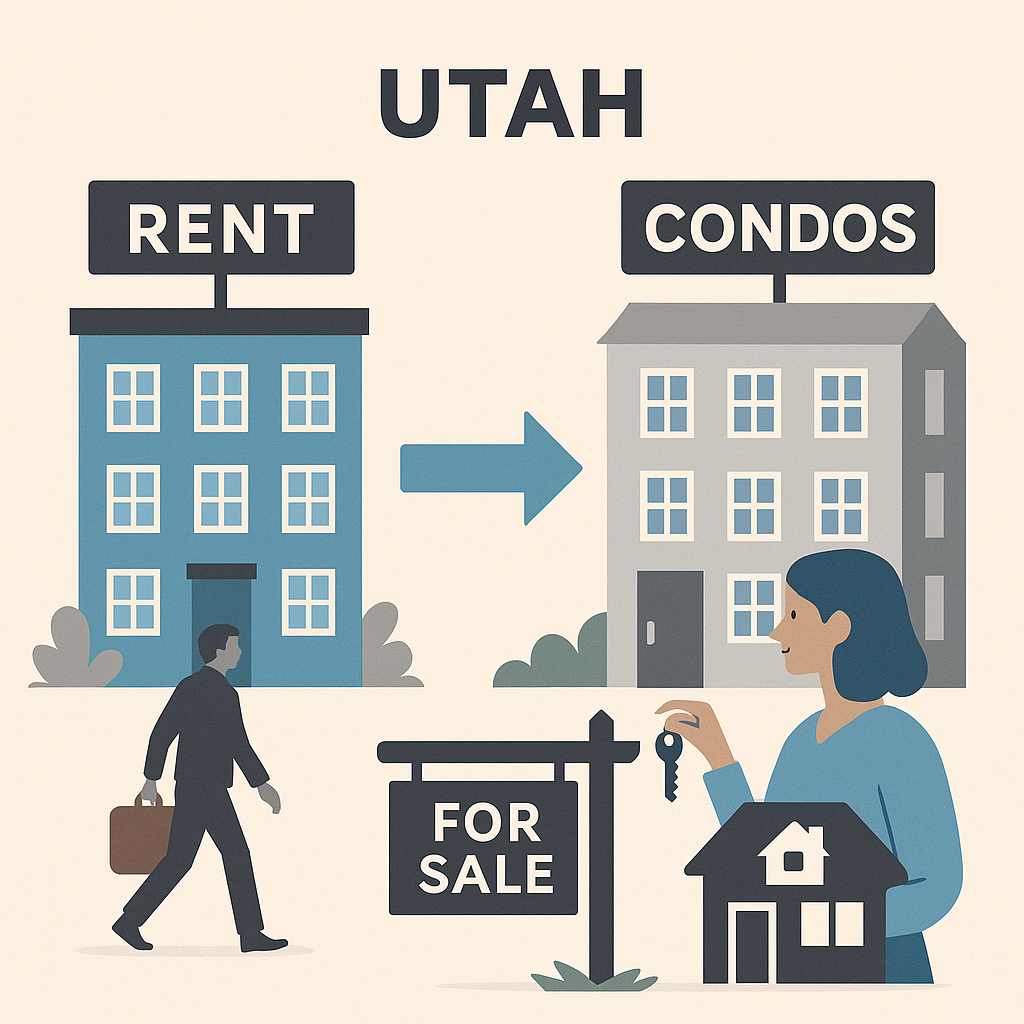
Understanding Utah’s Condominium Conversion Rules From Rental Units to Condos
Plain-English guide to notices, tenant protections, filings, and HOA formation
When a Utah landlord decides to turn rental apartments into individually owned condominiums, everyone involved — owners, tenants, and future buyers — needs to understand their rights and responsibilities. Utah’s condo conversion rules lay out how the process should happen, from advance notice to tenant protections and title updates. This guide breaks it down so you know what to expect and what steps are legally required.
What Is a Condominium Conversion?
A condominium conversion happens when a property owner changes a rental building (like an apartment complex) into individually owned units that can be sold to buyers. In Utah, this process is governed by the Utah Condominium Ownership Act (Utah Code §§ 57-8-1 through 57-8-55).
The law defines how owners must divide the property into separate legal units, how titles are recorded, and how shared spaces like hallways and parking lots are managed by a new homeowners association (HOA). A conversion affects both existing tenants and future buyers, so clear notice, proper filings, and transparent communication are critical.
Owner Requirements Under Utah’s Condominium Ownership Act
Before converting, an owner must:
- File a declaration and plat map showing each condo unit, common areas, and boundaries.
- Comply with local zoning laws and obtain approval from the city or county planning office.
- Create bylaws for the condominium association that will manage the property after conversion.
- Provide disclosure documents to potential buyers explaining the property’s condition, common area ownership, and HOA details.
These filings become public record and form the legal backbone of the condominium project.
Tenant Rights During a Condo Conversion
Advance written notice. Landlords must give tenants written notice before the property is officially converted. The notice typically explains when the conversion will occur and whether tenants will need to move out.
Relocation period. Tenants are generally entitled to a reasonable relocation timeframe, giving them time to find alternative housing before the conversion takes effect.
Opportunity to purchase. In many Utah conversions, tenants may receive the first right to purchase their rental unit before it is offered to outside buyers. This lets long term renters stay on as homeowners if they choose.
Security deposits and leases. Security deposits must be handled under Utah’s landlord-tenant laws, and lease agreements cannot be terminated early without proper notice and legal compliance.
Typical Timeline and Responsibilities
Disclosure and HOA Formation Rules
Once the conversion is complete, the new homeowners association (HOA) manages shared spaces and enforces bylaws. Utah law also requires the developer or owner to provide:
- A public offering statement to buyers, disclosing property details and financial obligations.
- HOA documents explaining maintenance responsibilities and assessment rules.
- Title insurance for each individual unit.
Buyers should review these documents closely before purchase, as they define ongoing costs and obligations.
Common Issues in Utah Condo Conversions
- Tenants claim insufficient notice or forced eviction before legal deadlines.
- Buyers discover unclear title boundaries or missing plat filings.
- HOA management disputes arise when bylaws are not followed.
- Local zoning or inspections reveal non compliant renovations or outdated permits.
Video & Social Learning Hub
YouTube: Utah Condo Conversions
Instagram: Real Utah Conversion Examples
Relevant Utah Code Sections
For those who want to read the source laws directly, Utah’s Condominium Ownership Act is found in Utah Code §§ 57-8-1 through 57-8-55 (available at le.utah.gov).
Need Help Applying This to Your Situation?
Condo conversions can be exciting opportunities, but the process must follow Utah’s Condominium Ownership Act step by step. Whether you are planning a conversion, renting in a building that is converting, or considering buying a new unit, take time to understand the notices, filings, and legal rights involved. Review conversion paperwork carefully and, if needed, consult a qualified Utah real estate or housing attorney before making any final moves.
Talk to a Utah AttorneyFor more plain English legal guidance, stay updated with Utah Law Explained, explore our mission on the About Us page, or connect with trusted counsel like Gibb Law Firm.