
How to Challenge an Administrative Fine in Utah
Traffic, environmental, licensing, or code enforcement, your rights and the appeal steps under Utah’s Administrative Procedures Act
Utah residents and businesses can appeal most administrative fines from parking or zoning tickets to environmental or licensing penalties. Administrative fines are civil penalties issued by a city, county, or state agency, not by a criminal court. This guide shows you how to file the appeal, what to expect at the hearing, and what to do next, using Utah’s Administrative Procedures Act as your roadmap.
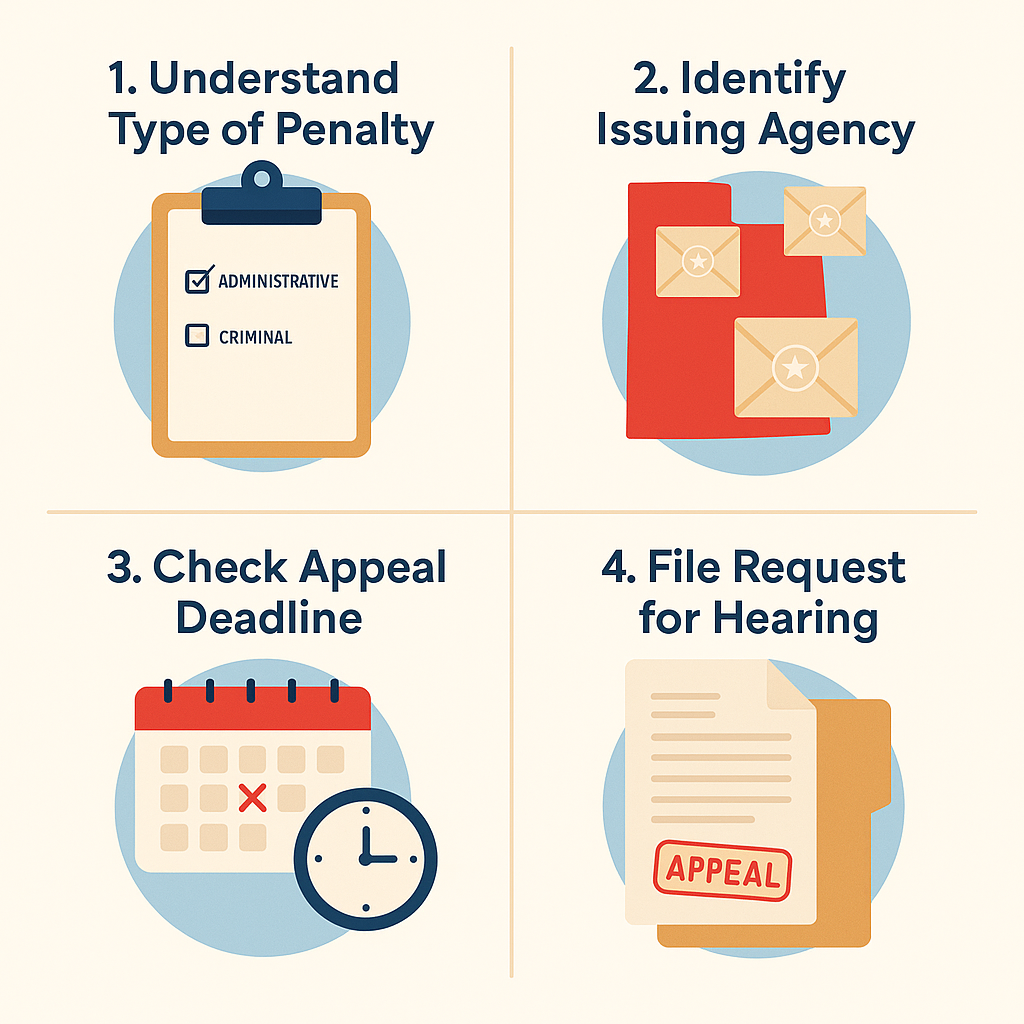
Understand What Type of Penalty You’re Facing
Administrative vs. criminal. Administrative fines come from agencies (e.g., city code enforcement, Utah DEQ, DOPL, DLD). Criminal fines come from a criminal case (like DUI or theft) in court.
If your paperwork says “Notice of Violation,” “Citation,” or “Administrative Order,” you’re in the administrative track and your appeal follows agency procedures rather than the criminal court process.
Identify Who Issued the Fine
City or county fines. Local parking, zoning, and code enforcement.
State agency fines. Environmental (DEQ), licensing (DOPL), or driver license actions (DLD).
Each agency runs its own appeal track and deadlines. Read the notice closely it usually tells you where to file.
Check the Appeal Deadline
Most agencies give 10–30 days from receipt to appeal. Miss it and the penalty may be finalized.
Watch for lines like: “You must request a hearing within 10 days” or “Failure to appeal within 30 days.” File early, don’t wait for the last day.
File a Request for Hearing or Appeal
Utah’s Administrative Procedures Act (Utah Code §§ 63G-4-201 to 63G-4-403) governs appeals. Typically you will:
Prepare for the Administrative Hearing
Once accepted, the agency schedules a hearing. You can explain your side, present evidence, and question the agency’s findings. A written decision follows.
Bring: Original documents, receipts, photos showing compliance; relevant email or letter threads; witnesses or expert statements if needed. Hearings are less formal than court, be organized, factual, and respectful.
After the Hearing: Next Steps
If you win: The agency may cancel or reduce the fine.
If you lose: You can usually appeal to a higher administrative body or to Utah District Court under Utah Code § 63G-4-402. District court appeals are formal and often require legal help, but give you another chance on legal or procedural grounds.
Step-by-Step Checklist
Before filing: Identify the issuing agency; read the notice for deadlines; gather evidence.
When filing: Complete the appeal/hearing form; include the citation number; state concise objections; attach documents; submit before the deadline.
Before the hearing: Review Utah Code §§ 63G-4-201 to 63G-4-403; organize documents; prepare brief talking points; confirm date, time, and format.
After the hearing: Await the written decision; evaluate further appeal options (including district court); if denied, comply or pay promptly.
Video & Social Learning Hub
YouTube: Fighting Utah Tickets & Administrative Fines
Need Help Applying This to Your Situation?
If you received an administrative fine in Utah, you don’t have to accept it without review. Understanding your appeal rights can save money, protect your record, and ensure fair treatment.
Talk to a Utah AttorneyUtah Law Explained makes complex Utah laws plain-English. This guide is educational, not legal advice.