
Property Tax Law Changes in Utah: How Rising Home Values Affect Homeowners
Plain-English explainer on assessments, exemptions, appeals, and 2025 policy updates
As Utah home values soar, many homeowners are finding that their property tax bills are climbing right alongside them. Counties across the state are reassessing properties at record rates, while state lawmakers debate new reforms designed to balance fairness with funding needs.
This guide from Utah Law Explained breaks down how Utah’s property tax system actually works from how assessed values are calculated to what exemptions and appeals processes are available when your tax bill feels too high.
Understanding How Property Taxes Work in Utah
Property taxes in Utah are administered at the county level but guided by state law. Every summer, county assessors calculate the market value of your property, which forms the basis for your tax bill. However, this does not mean your taxes automatically rise when your home’s market value increases.
Utah’s Truth in Taxation law prevents local governments from receiving a windfall when property values rise. Instead, it requires them to reduce their tax rates so that overall revenue remains roughly the same unless they publicly vote to increase taxes after holding a hearing.
Still, with property values climbing faster than rate reductions can offset, many Utahns are seeing their tax obligations go up.
How Counties Calculate Taxable Value
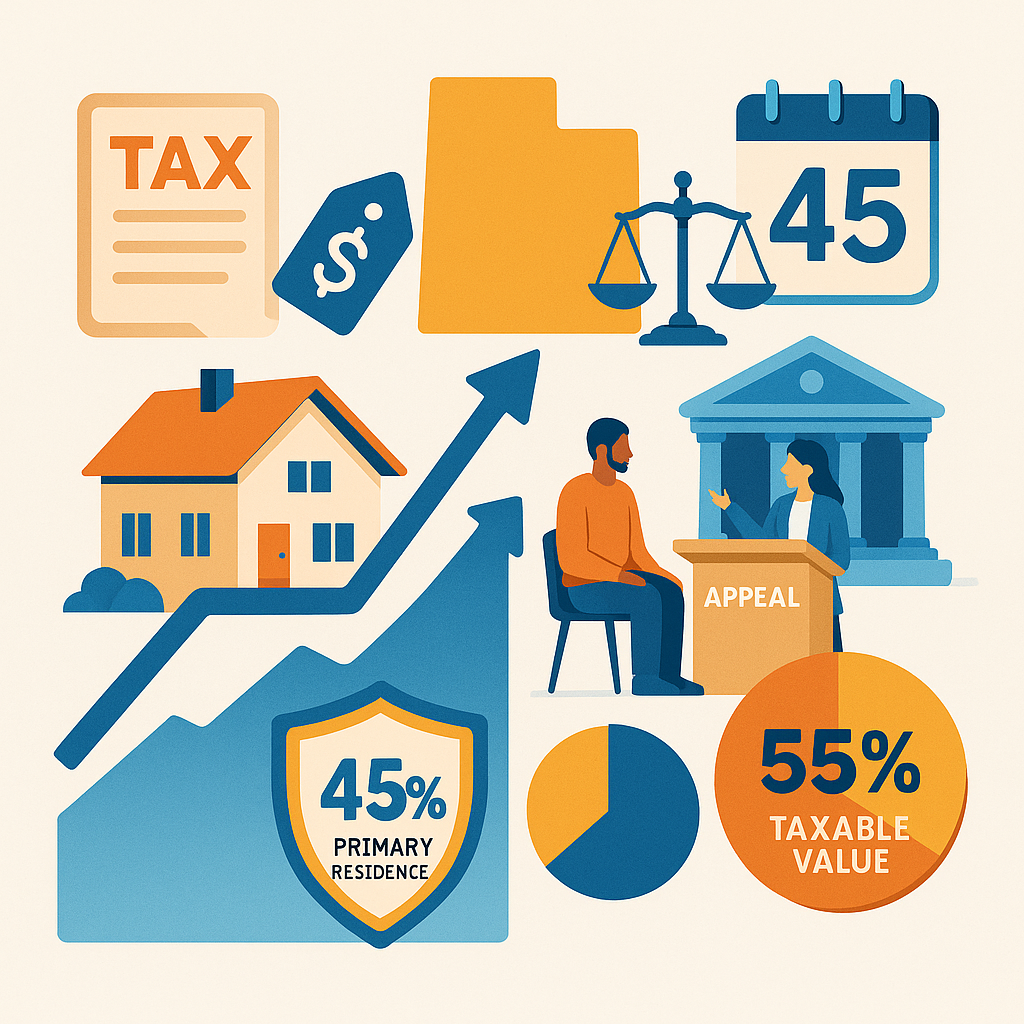
Your taxable value is generally 55% of your property’s fair market value. That means if your home is assessed at $600,000, your taxable value is $330,000 before exemptions or credits apply.
The county assessor’s office determines this value using market data, sales comparisons, and property characteristics. Each spring, you receive a notice of valuation showing how the number was calculated.
If you believe your property was overvalued, you have the right to appeal a key protection under Utah law.
Exemptions That Can Reduce Your Bill
- Primary Residence Exemption: Reduces the taxable value of an owner-occupied home by 45%. Second homes, rentals, and investment properties do not qualify.
- Veterans with Disabilities Exemption: Utah veterans with service-connected disabilities may qualify for additional property tax relief based on disability rating.
- Low-Income and Hardship Relief: Some counties provide additional credits for seniors or low-income homeowners facing hardship.
These exemptions can make a significant difference, especially as values climb across Salt Lake, Utah, and Davis Counties.
What To Do If You’re Overassessed
If your notice shows a market value that seems too high, you can file an appeal with your county board of equalization. Most counties give you 45 days from the mailing date of your valuation notice to submit it.
To strengthen your appeal, gather recent comparable sales, appraisal data, or evidence of errors in your property record (like square footage or condition).
After reviewing your submission, the board can adjust your valuation or uphold it. If you still disagree, you may appeal further to the Utah State Tax Commission.
2025 Legislative Session Updates
- Possible expansion of the Primary Residence Exemption to cover certain duplexes and shared-ownership homes.
- Enhanced disclosure requirements for county tax hearings to improve public understanding of rate changes.
- Streamlined digital tools for taxpayers to view historical assessments and lodge appeals online.
While not all of these measures have passed yet, they reflect growing political attention on housing affordability and local taxation fairness.
Q/A: Quick Answers
Q: Do property taxes automatically rise when home values go up?
A: Not necessarily. Truth in Taxation requires local governments to reduce rates to keep revenue stable unless they publicly vote to increase taxes.
Q: Can I appeal my property valuation if I think it is too high?
A: Yes. You have 45 days after receiving your valuation notice to file an appeal with your county board of equalization.
Q: What if my appeal is denied at the county level?
A: You can take your case to the Utah State Tax Commission for a final review.
Q: Are there any upcoming property tax changes for 2025?
A: Lawmakers are considering adjustments to exemptions, transparency requirements, and online appeal options.
Utah Property Tax: Video & Social Highlights
YouTube
Stay Informed. Pay Only What You Owe.
Knowing your tax rights helps prevent overpayment and keeps Utah homeowners informed. Whether your property value just spiked or your county sent a confusing notice, understanding how Utah’s property tax system works is your best defense against surprise bills.
Talk to a Utah AttorneyFor more Utah-specific legal explainers, visit Utah Law Explained. Explore our mission on the About Us page, or connect with trusted counsel like Gibb Law Firm.