
Hit-and-Run Accidents in Utah: What to Do When the Driver Leaves the Scene
Step-by-step guide and quick checklist for Utah hit-and-run victims, from 911 calls to insurance claims and restitution.
Being struck by a driver who speeds away is one of the most frightening ways to be involved in a crash. You are left hurt, confused, and wondering what to do next. Utah law does not leave you without options. Between criminal penalties under Utah Code § 41-6a-401 and uninsured motorist insurance coverage, there are concrete steps you can take to protect your health, your rights, and your finances.
This guide explains what to do in the minutes, hours, and days after a hit-and-run in Utah. It focuses on safety, reporting, evidence, and insurance so you can move from panic to a clear, practical plan.
Immediate Steps After a Utah Hit-and-Run
Your first priority is safety. Do not chase the fleeing vehicle. Instead, pull over to a safe place if you can, turn on your hazard lights, and take a breath so you can focus on your next moves.
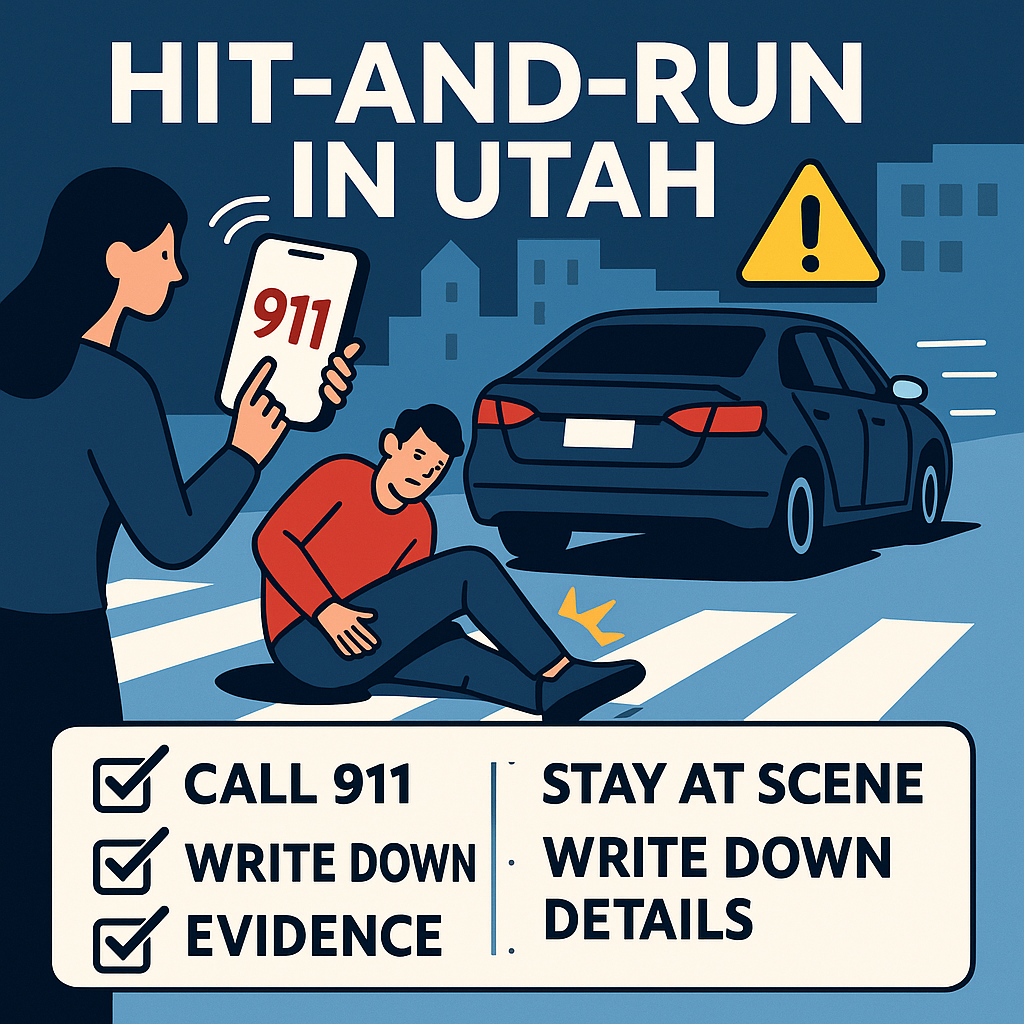
Call 911 right away. Tell the dispatcher:
- Where the crash happened.
- Whether anyone is injured and needs medical help.
- Anything you remember about the other vehicle (color, type, damage, license plate digits, direction of travel).
Calling 911 quickly is not just about safety. It also creates a time-stamped record that your insurer and the investigating officer can rely on later.
Stay at the scene. Utah law requires drivers involved in crashes to stop and remain at or near the scene. Staying put helps avoid confusion about who was involved and allows officers and medical professionals to reach you promptly.
Utah Hit-and-Run Law and Criminal Penalties
Utah Code § 41-6a-401 and related statutes require drivers involved in crashes to stop, exchange information, and provide aid where needed. Leaving the scene of a crash can be a crime even when the damage seems minor.
Penalties increase with the severity of the crash:
- Property damage only: typically charged as a Class B misdemeanor.
- Injury to another person: can be charged as a Class A misdemeanor.
- Serious injury or death: may be charged as a felony, with potential prison time.
If law enforcement later identifies the fleeing driver, prosecutors can pursue criminal charges. As part of that criminal case, the court may also order restitution to help repay your financial losses.
Insurance Claims After a Hit-and-Run in Utah
When the at-fault driver disappears, most Utah victims turn first to their own insurance. The exact coverage will depend on your policy, but several common protections often apply.
Uninsured motorist coverage (UM). UM coverage is designed for situations where the at-fault driver has no insurance or cannot be identified, which includes many hit-and-run crashes. UM can help with:
- Medical bills and rehabilitation.
- Lost wages if you miss work.
- Pain and suffering, if covered by your policy and Utah law.
Personal injury protection (PIP). Utah is a no-fault state for basic medical coverage. PIP usually covers:
- Initial medical treatment costs.
- Some lost income and household services, up to policy limits.
Collision coverage. If you carry collision coverage, it may help pay to repair or replace your vehicle even when the other driver cannot be found.
Notify your insurer of the hit-and-run as soon as you can. Provide the claim number from the police report, photos, and any witness information to support your version of events.
Documenting Injuries, Costs, and Impact
Thorough documentation can make a major difference in the outcome of your claim or any later legal case.
See a doctor as soon as possible. Some injuries, including concussions and soft-tissue damage, may not be obvious at the scene. A prompt medical exam:
- Protects your health.
- Creates a clear record tying injuries to the crash date.
Build a “recovery file.” Keep everything in one place, including:
- Medical bills and records.
- Repair estimates and photos of your vehicle.
- Pay stubs or employer letters showing missed work.
- A simple journal describing pain, sleep issues, or activity limits.
This organized record helps you, your insurer, and any attorney understand the full impact of the hit-and-run over time.
Quick Checklist: What to Do After a Utah Hit-and-Run
Call 911, request medical help if needed, and stay at the scene in a safe location.
Write down anything you remember about the fleeing vehicle and direction of travel.
Take photos and videos of damage, injuries, road conditions, and nearby landmarks.
Get witness names and contact information while they are still on scene.
Obtain a copy or number of the police report and share it with your insurer.
Notify your insurance company promptly and ask how uninsured motorist and PIP coverage apply.
Keep all bills, receipts, and notes about missed work and ongoing symptoms in one file.
Utah Hit-and-Run Video & Social Learning Hub
YouTube: Utah Hit-and-Run and Crash Guidance
Instagram: Real Utah Hit-and-Run Stories
Need Help After a Utah Hit-and-Run?
Every crash is different, and Utah courts and insurers evaluate hit-and-run cases based on the specific facts. If you are unsure how these steps apply to your situation, speaking with a Utah personal injury attorney can help you understand your options and next moves.
Talk to a Utah AttorneyFor more plain-English legal guidance, stay updated with Utah Law Explained, explore our mission on the About Us page, or connect with trusted counsel like Gibb Law Firm.