
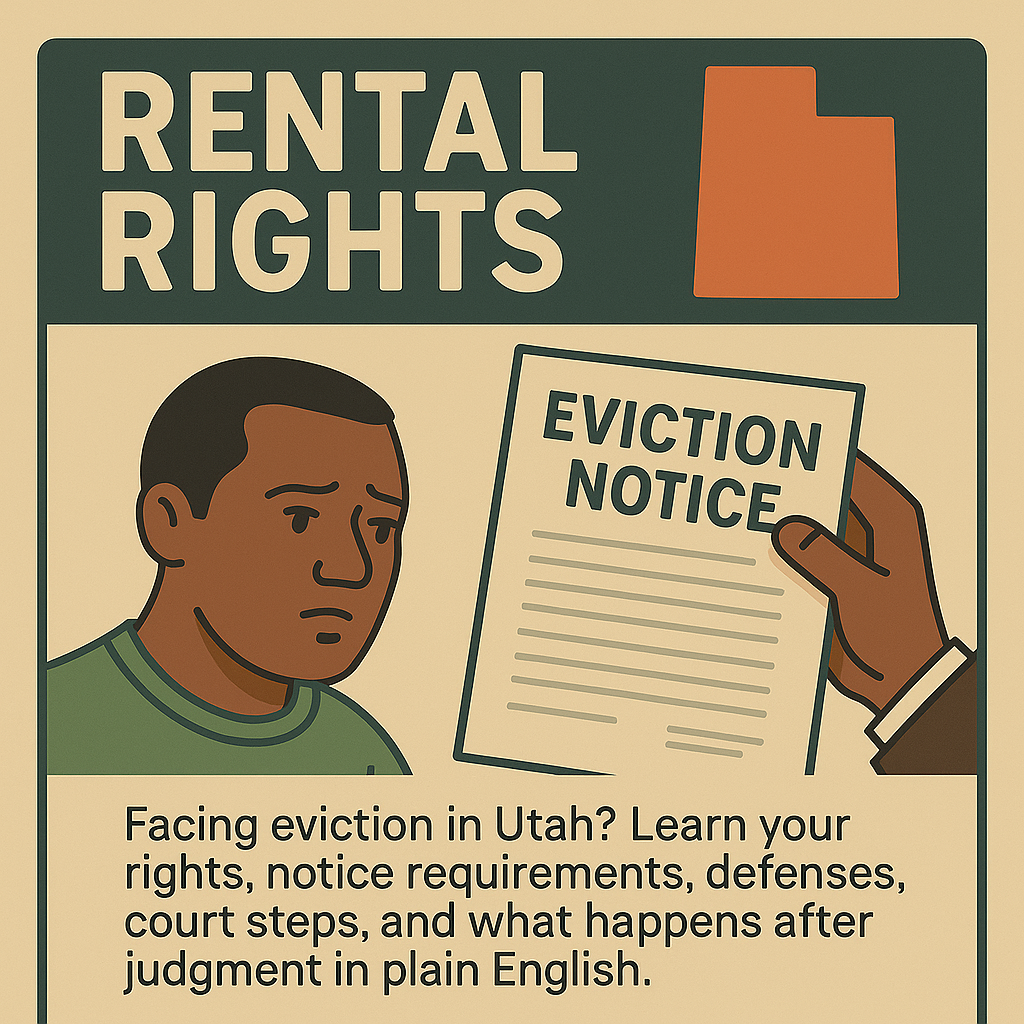
What are my rights if I’m being evicted in Utah? A plain-English guide to notices, timelines, defenses, and court
Understand legal reasons for eviction, required notices, how to answer in court, defenses that work, and what happens if the landlord wins
Being served with an eviction notice in Utah is stressful and confusing, but you do have rights. Tenants often don’t realize that Utah law sets strict rules on notices, timelines, and court procedures – rules landlords must follow before they can legally remove you.
If you understand how notices work, how to answer a case in court, and what defenses you may have, you can protect yourself, buy time, and in some cases stop an eviction altogether. This guide gives you clear, step-by-step answers in plain English so you know exactly what to expect.
Why can a landlord evict me in Utah?
Landlords in Utah can only evict for legally recognized reasons. The most common are non-payment of rent, lease violations, serious illegal activity on the property, or staying past the end of a lease term.
Month-to-month
If you are month-to-month, a landlord can serve a no cause termination, but still must follow proper timelines and notice rules.
No retaliation
It is unlawful to evict in retaliation for asserting rights like requesting repairs or reporting code issues.
No discrimination
Evictions cannot be based on protected categories such as race, religion, national origin, disability, or other protected traits.
Documentation helps
Keep your lease, payment records, notices, repair requests, and communications organized and ready to show.
Required Notices before Court
Utah law requires written notice before an eviction can move to court. The type and timing depend on the issue.
- 3-day pay or vacate – For missed rent.
- 3-day cure or vacate – For a correctable lease violation.
- 3-day unconditional – If the landlord alleges serious illegal activity.
- 15 or 30-day no cause – For ending a month-to-month tenancy without cause, depending on circumstances.
If the wrong notice is used or service is improper, you can raise that as a defense in court.
After the Notice: Court Filing and Answer
If you do not move out or fix the issue, the landlord can file an unlawful detainer case in Utah district court. Once served, you usually have only 3 business days to file an Answer.
Your Answer is a written response that tells the court your side. If you ignore it, the landlord can win by default and removal may follow quickly. Filing an Answer keeps the case alive and preserves your right to be heard.
What to Expect at the Hearing
Utah eviction hearings move fast, often within days of your Answer. Bring your lease, notices, payment proof, photos, texts or emails, and repair requests if relevant. The judge may decide the same day.
Common Defenses that Matter
- Wrong notice or bad service – The notice did not match the alleged issue or was not served correctly.
- Retaliation – You asserted legal rights, such as asking for repairs, before the eviction started.
- Uninhabitable conditions – Serious issues that the landlord failed to fix after notice.
- Cured or paid – You already paid or corrected the problem identified in the notice.
The stronger your documentation, the stronger your defense. Judges rely on evidence, not just statements.
If the Landlord Wins
If the landlord wins, the court issues a writ of restitution allowing the sheriff to remove you, often within days. You may owe back rent, court costs, and attorney fees. An eviction judgment can also affect future renting.
If you win, you stay in your home and in some cases may recover costs.
Video and Social Learning Hub
YouTube
Key Takeaways
Utah requires proper written notice before court. Wrong notice or bad service can be a defense.
You usually have 3 business days to Answer after service. Answering prevents default and preserves your rights.
Evidence wins cases. Bring leases, payments, photos, texts or emails, and repair requests.
This page is legal information, not legal advice. Talk to a Utah attorney for guidance on your situation.
Final Word
Facing eviction does not mean you are powerless. Utah law imposes specific notices, strict timelines, and a fair court process – and you have the right to be heard. Understanding these steps can protect your record, your money, and your peace of mind.
Talk to a Utah Housing LawyerRemember: this page is legal information, not legal advice. If you are facing eviction – especially if your housing stability, family, or credit are at risk – get professional counsel before deadlines pass.