
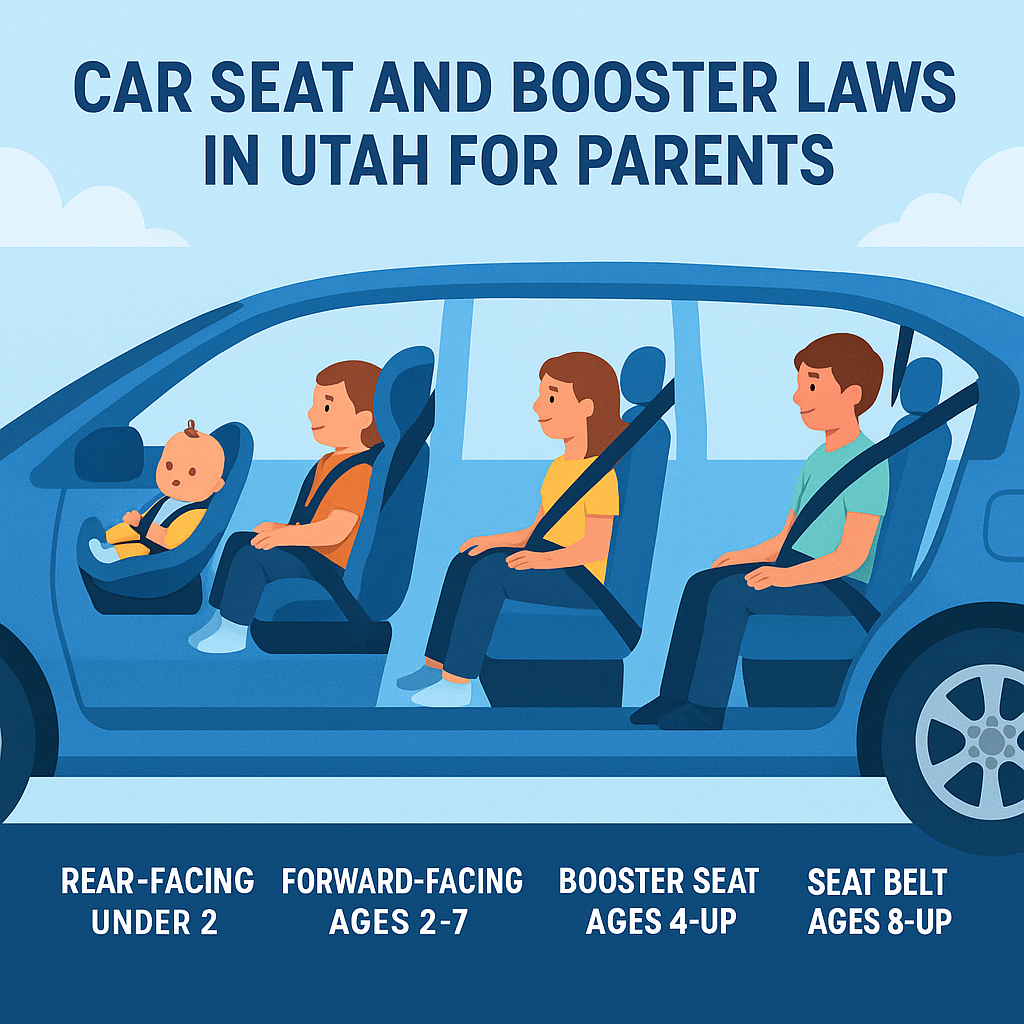
Car Seat and Booster Laws in Utah for Parents
Plain-English guide to rear-facing, forward-facing, and booster-seat rules so Utah kids ride safer and stay compliant.
Keeping kids safe on Utah roads isn’t just good parenting, it’s the law. Utah requires children to ride in proper car seats or booster seats based on age, height, and weight. Misusing a seat or moving a child forward too soon can lead to tickets, higher injury risk, and scary outcomes if there’s a crash. This guide walks Utah parents through rear-facing, forward-facing, and booster-seat rules in plain English, so you know exactly which restraint your child should be using and when it’s really safe to move to the next stage.
Quick Overview of Utah Child Passenger Rules
Utah law focuses on two big questions: How old is your child? and how tall are they? Seats and boosters are then matched to those milestones, with an emphasis on keeping kids in the safer option as long as they fit.
Use this quick reference chart as a starting point, then read the sections that follow for deeper explanations and safety tips.
Rear-Facing Car Seats (Birth to Age 2)
Utah law requires children to stay in a rear-facing seat until at least age 2. Rear-facing seats cradle a child’s head, neck, and spine so the seat not the child’s body absorbs much of the crash force.
Most kids can safely stay rear-facing beyond age 2 as long as they are within the seat’s height and weight limits. That’s not only legal it’s encouraged by safety experts.
- Check the labels: Every car seat shows its rear-facing height and weight limits. Follow those limits even if your child seems “big.”
- Snug, not loose: The harness should be at or below the shoulders and snug enough that you can’t pinch extra strap at the collarbone.
- No puffy coats: Bulky clothing can create dangerous slack in the harness. Use thin layers and blankets over the harness instead.
If your child’s legs look cramped rear-facing, that’s okay. Leg comfort is less important than keeping their head and neck protected.
Forward-Facing Seats with Harness
After age 2, and once a child has outgrown the rear-facing limits of their seat, Utah law allows them to move to a forward-facing car seat with a 5-point harness.
- Harness as long as possible: Keep your child harnessed until they reach the forward-facing height or weight limit listed on the seat.
- Use the top tether: Attach the tether to the anchor in your vehicle to reduce head movement in a crash.
- Strap placement: For forward-facing, harness straps should be at or above the shoulders and tight with no slack.
Moving from a harness to a booster is a step down in protection. There’s no prize for “getting out of the car seat first” the goal is staying safer, longer.
Booster Seat Requirements in Utah
Under Utah law, most children will use a booster seat somewhere between ages 4 and 8. The key rule is:
Children under age 8 must ride in a booster seat unless they are at least 57 inches (4’9″) tall.
Booster seats lift a child so the adult seat belt lies in the correct places:
- Lap belt low and snug on the upper thighs/hips, not the stomach.
- Shoulder belt crossing the middle of the chest and shoulder, not the neck or face.
Many Utah parents move their child to a booster too soon. If your child still fits their forward-facing harness seat, it’s usually safer to stay there until they reach its limits.
When a Child Can Ride Without a Booster
A child may legally ride without a booster in Utah if they are:
- At least 8 years old, or
- At least 57 inches (4’9″) tall, even if under age 8.
Even then, they still need to “pass” a basic seat-belt fit check:
- They sit all the way back against the seat without slouching.
- Knees bend naturally at the edge of the seat, feet flat on the floor.
- Lap belt lies low on the hips, not up on the belly.
- Shoulder belt crosses the chest and shoulder, not the neck or face.
If your child fails any of these steps, they likely still need a booster, even if they meet the bare legal minimum.
Penalties and Where to Get Help in Utah
When kids are riding unrestrained or in the wrong type of seat, Utah officers can issue citations. Fines and fees vary, and in some cases courts may reduce a fine if you show proof that you’ve obtained and installed a proper seat.
Beyond tickets, the bigger issue is safety. Improper restraints are a major reason children are seriously injured in otherwise survivable crashes.
Where to get help:
- Local car seat inspection events and fitting stations.
- Utah Highway Safety Office child passenger safety technicians.
- Hospitals and some fire departments that host car seat check days.
If you’re unsure whether your child’s seat is installed correctly or if you’re in the right stage, a 15-minute check with a trained technician can make a big difference.
Video & Social Learning Hub: Utah Car Seat & Booster Safety
YouTube: Utah Car Seat and Booster Guidance
Instagram: Utah Booster Rules & Seat-Belt Fit
Need Help Applying Utah’s Car Seat Rules to Your Family?
Every child grows at a different pace, and real life does not always fit neatly into age or height charts. If you are unsure whether your child is in the right seat, or you have questions after a crash or traffic stop, talking with a Utah attorney can give you clarity and peace of mind.
Talk to a Utah AttorneyFor more plain-English legal guidance, stay updated with Utah Law Explained, explore our mission on the About Us page, or connect with trusted counsel like Gibb Law Firm.