
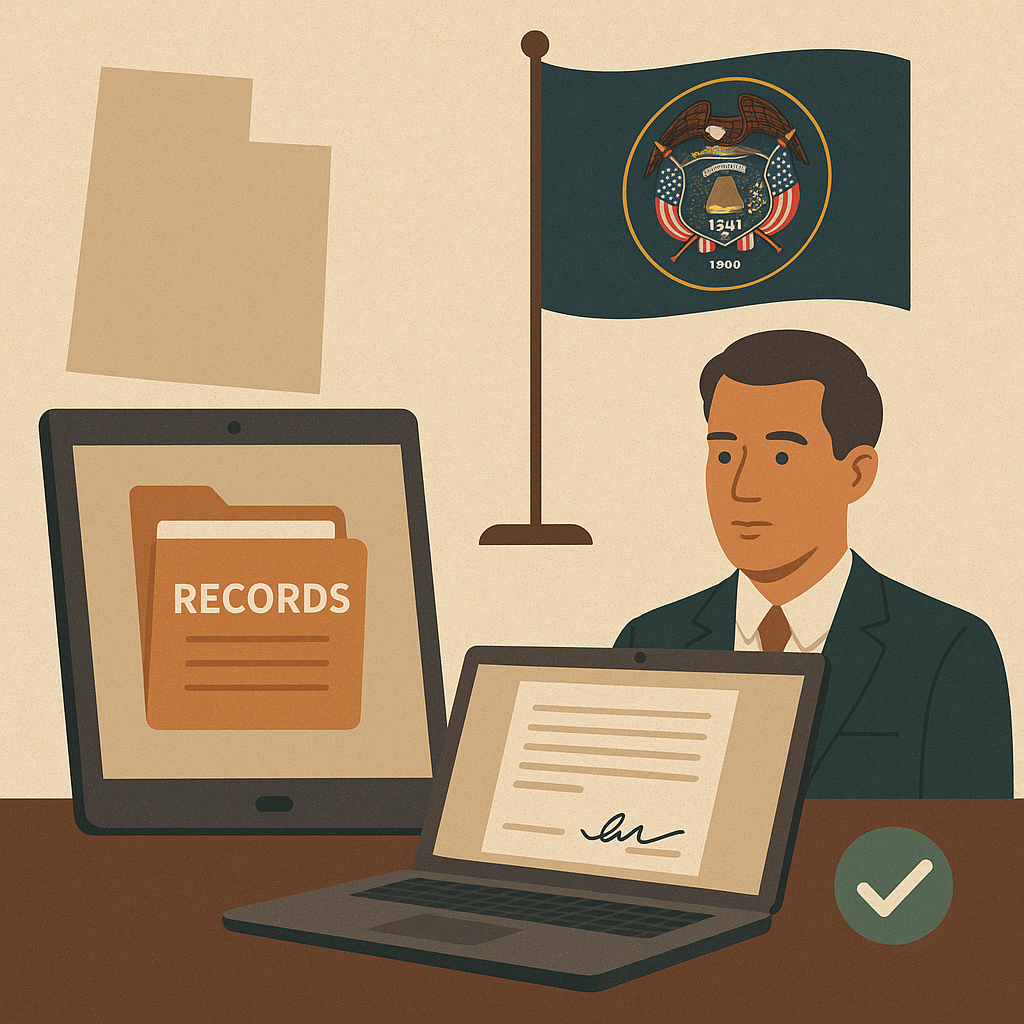
Corporate compliance for Utah firms: digital recordkeeping and e-signatures
Plain-English guide to Utah e-signatures, digital record retention, and litigation-ready records
Paperless offices are standard in Utah, but digital records still carry legal weight. Whether your company uses e-signatures for contracts, employee onboarding, vendor agreements, or internal approvals, Utah law sets specific requirements to ensure those electronic records are valid and enforceable. Utah Law Explained breaks down the rules in plain English so businesses understand what counts as a valid signature, what must be retained, and how digital governance protects a company during audits, disputes, or litigation.
Overview: Utah’s Rules for Digital Records and E-Signatures
Utah follows the Uniform Electronic Transactions Act (UETA), a statewide law that gives electronic signatures and electronic records the same legal standing as ink-signed documents, so long as certain conditions are met. That means a properly managed digital contract can be just as enforceable as a paper one.
Businesses cannot assume every digital document is legally compliant. They must establish secure processes, maintain accurate records, and ensure signatures can be authenticated if challenged in court or by regulators.
This guide explains key parts of Utah digital-compliance law for businesses:
- When electronic signatures are valid
- Retention and audit requirements
- Corporate-governance expectations
- Litigation and discovery obligations
Are Electronic Signatures Valid in Utah?
Explainer. Under Utah’s UETA, an electronic signature is valid if:
- The signer intended to sign.
- Both parties agreed to conduct business electronically.
- The system used to capture the signature can reliably identify the signer.
- The digital record is stored in a form that cannot be altered without detection.
This can include typed names, click-to-sign buttons, PIN-verified approvals, secure signature platforms, and authenticated digital certificates. The key is being able to show who signed, what they agreed to, and that the record has not been tampered with.
Scenario example. A Utah construction company uses a click-through system to approve subcontractor bids. Each bidder has a unique login, and the platform logs IP addresses, timestamps, and document versions. As long as each signer logs in with verified credentials and the system produces an audit trail, the signature is as enforceable as one on paper. If the business cannot show who actually clicked the approval, the contract could be challenged.
Digital Record Retention and Audit Trails
Explainer. Utah businesses must keep electronic records in a form that:
- Accurately reflects the original agreement or communication.
- Remains accessible for future reference during the full retention period.
- Retains metadata showing when it was created, modified, and signed.
- Produces a verifiable audit history that can be shared with regulators or courts.
Industries such as healthcare, finance, and engineering may also have federal or industry-specific retention rules that layer on top of Utah law. Corporate recordkeeping systems should be designed to meet both state and industry requirements.
Scenario example. A retail company stores digital employment agreements on a shared cloud folder without access controls. A manager later downloads and replaces a file. Without a secure, immutable audit trail, the company may struggle to prove the agreement’s authenticity in a wage-dispute case.
Corporate Governance: Best Practices for Compliance
Explainer. Document governance is now a core part of compliance for Utah organizations. Boards and executives are expected to treat digital records with the same seriousness as financial controls or employment policies. In practice, that often means:
- Written digital-record and e-signature policies.
- Secure user-authentication rules and role-based access.
- Clear approval workflows for contracts and major decisions.
- Access-level restrictions so only the right people can edit or approve documents.
- Version control and tamper-evident or immutable storage.
- Documented training procedures for employees who handle sensitive records.
Good governance protects both the business and individual decision-makers by showing that the company treats digital compliance as an ongoing, monitored responsibility.
Scenario example. A Utah nonprofit approves major financial decisions using informal email chains. Without a policy or system that tracks who approved what and when, the organization risks disputes over whether the board actually authorized key transactions.
Litigation and Discovery: Why Digital Records Matter
Explainer. When Utah businesses face lawsuits, digital records quickly become evidence. Courts and opposing counsel will look at how your company stores, retrieves, and protects electronic records. In discovery, they often expect:
- Authenticity, including metadata showing when records were created and changed.
- Chain-of-custody documentation for sensitive or high-value records.
- Verification that key records have not been altered or deleted after the dispute began.
- The ability to produce responsive documents quickly and in usable formats.
Poor digital storage practices can expose a company to sanctions, adverse inferences, or weakened defenses, even if the underlying facts are in the company’s favor.
Scenario example. A Utah tech firm cannot produce past vendor contracts during litigation because files were stored across employee laptops with no central system. The court may draw negative assumptions about missing records or limit certain defenses if required documents cannot be retrieved.
Video & Social Learning Hub: E-Signature Compliance
YouTube: Digital Recordkeeping & E-Signatures
Instagram: Everyday E-Signature Workflows
Need Help Building Compliant Digital Systems?
Every Utah business handles records differently, and the right mix of e-signature tools and retention policies depends on your industry, risk tolerance, and internal workflows. If you are unsure whether your digital systems would hold up in an audit or lawsuit, speaking with a Utah business or corporate attorney can help you pressure-test your current approach.
Talk to a Utah AttorneyStrong digital-recordkeeping and e-signature processes protect Utah businesses from data loss, contract disputes, and evidentiary risks. As companies move fully into paperless systems, compliance is not just a technical question, it is part of responsible governance. Utah Law Explained will continue breaking down emerging digital-compliance rules so Utah organizations stay informed and confident as they operate in a modern, fully electronic environment. For more plain-English legal guidance, stay updated with Utah Law Explained, explore our mission on the About Us page, or connect with trusted counsel like Gibb Law Firm.