
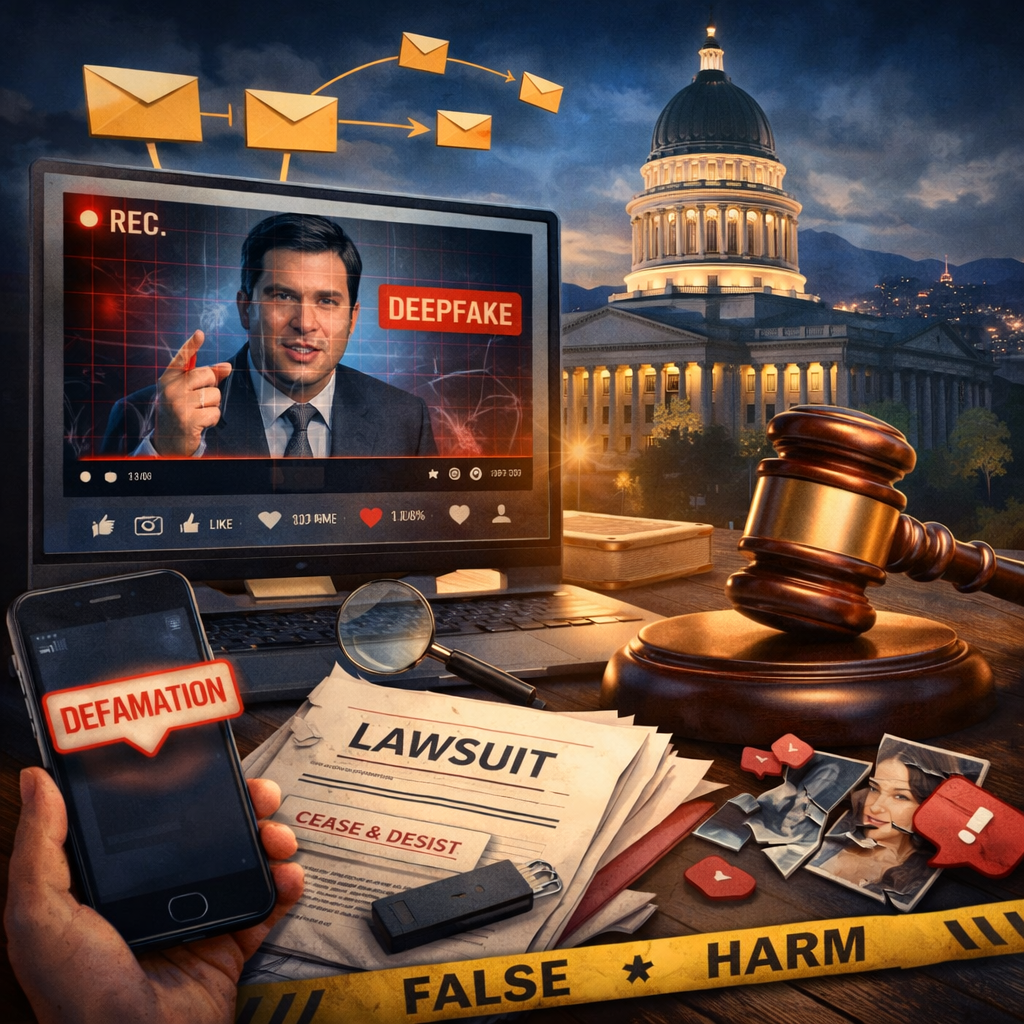
Deepfake Videos and Utah Defamation Law
Plain-English guide to when deepfakes can be defamatory, what you must prove, and fast steps to protect your reputation
Fake videos that look real can ruin reputations overnight. Deepfakes can make it appear that a person said or did something they never did, then the clip spreads across social media, group chats, and search results before you even know it exists.
This guide explains how Utah defamation principles can apply to deepfake content, what it usually takes to show the video is false and harmful, and the practical steps that can help you contain the damage early.
Defamation Basics in a Deepfake World
Deepfakes feel like a brand-new problem, but the legal question is often familiar: did someone publish false factual content that harmed another person’s reputation?
In practice, that means a deepfake may raise defamation concerns when it convinces viewers that a real person made a damaging statement or engaged in damaging conduct and that depiction is not true.
One tricky issue with AI media is context. Clips can be edited, stitched, or re-voiced in ways that change the meaning. If the overall takeaway is a false factual impression that causes reputational harm, that is typically where defamation analysis begins.
When a Deepfake Can Support a Defamation Lawsuit
A deepfake is more likely to create legal exposure when it depicts something that reasonable viewers would treat as a real, verifiable fact rather than obvious satire or opinion.
Common high-risk scenarios include deepfakes that portray someone:
- committing a crime or admitting to illegal conduct
- making racist, threatening, or defamatory statements
- engaging in unethical professional behavior (especially for licensed or public-facing roles)
- doing something that leads employers, clients, neighbors, or customers to treat them differently
The stronger the “this is real” signal (realistic voice, familiar setting, believable facial movement, posted by an account that looks credible), the more urgent it becomes to preserve evidence and act fast.
Proving Falsity and Harm
Deepfake disputes often come down to proof. It is not enough to say “that’s not me” you typically need credible documentation showing that the video or audio is fabricated or materially altered, and that the content caused harm.
Examples of harm may include:
- lost work, contracts, customers, or business partnerships
- workplace discipline or termination tied to the video
- harassment, threats, or safety concerns after the video spreads
- measurable reputational fallout (screenshots of comments, posts, shares, news mentions)
If the deepfake targets a business (or a business owner’s reputation), it can ripple into reviews, cancellations, and local word-of-mouth, so documenting the timeline matters.
Who May Be Responsible
With deepfakes, responsibility can be layered. The person who created the media is an obvious focus, but practical enforcement often depends on identifying who posted it, who amplified it, and who continued sharing it after being told it was false.
These cases can involve anonymous accounts, burner profiles, repost pages, or private group shares that later become public. That is why early evidence preservation capturing accounts, URLs, and timestamps is often as important as the legal theory itself.
Even when the original creator is unclear, a clean record of how the video spread can help counsel evaluate options and prioritize the most impactful points of removal.
Emergency Steps: Remove, Report, and Reduce Spread
When a deepfake is harming you, time is your enemy. The first goal is usually to slow distribution while you document what happened.
Practical early steps may include:
- reporting the content to the platform as impersonation, manipulated media, harassment, or misinformation (as applicable)
- asking the poster to remove it (while taking screenshots first)
- documenting where it appears (public pages, groups, reposts, search results)
- consulting counsel about targeted takedown demands and next steps
Even if removal is not immediate, building a record of what was posted, when it appeared, and where it spread can protect your ability to respond effectively.
Evidence Preservation and a Realistic Case Study
Evidence preservation. Before content disappears or multiplies across reposts save what you can. Preserve the video file if possible, plus links, usernames, account IDs, timestamps, and screenshots showing views, comments, and shares. If the content changes (edited captions, re-uploads, new thumbnails), capture that too.
Case study. A Utah small-business owner wakes up to messages: “Is this you?” A realistic-looking video shows the owner making offensive remarks about customers. It spreads to local community pages, then into neighborhood group chats. Within 48 hours, the business loses bookings, receives threats, and gets flooded with negative comments.
The owner quickly downloads the video, captures URLs and reposts, screenshots the most damaging claims and reactions, and documents cancellations and customer communications. With that record, the owner is in a stronger position to seek platform removal and evaluate legal options. The key lesson: the faster you document and challenge the content, the better your odds of limiting long-term fallout.
Video & Social Learning Hub
YouTube: Deepfakes and Legal Risk
— Explains what deepfakes are and why they create legal and defamation risks. AI Deepfakes and Law
— Covers liability questions and how legal responses may evolve. Huntsville lawyer offers solutions to deepfake defamation
— News segment on practical legal solutions and real-world risks.
Need Help Responding to a Deepfake?
Deepfake situations move fast, and the best response usually starts with careful documentation and quick action to limit spread. If you are unsure what steps to take next or how to evaluate possible claims, speaking with trusted counsel can help you protect your name and your livelihood.
Talk to a Utah AttorneyFor more plain-English legal guidance, stay updated with Utah Law Explained, explore our mission on the About Us page, or connect with trusted counsel like Gibb Law Firm.