
How do mechanic’s liens work in Utah for homeowners & contractors?
Understand preliminary notice, filing deadlines, enforcement, and lien releases so you protect payment and your property title
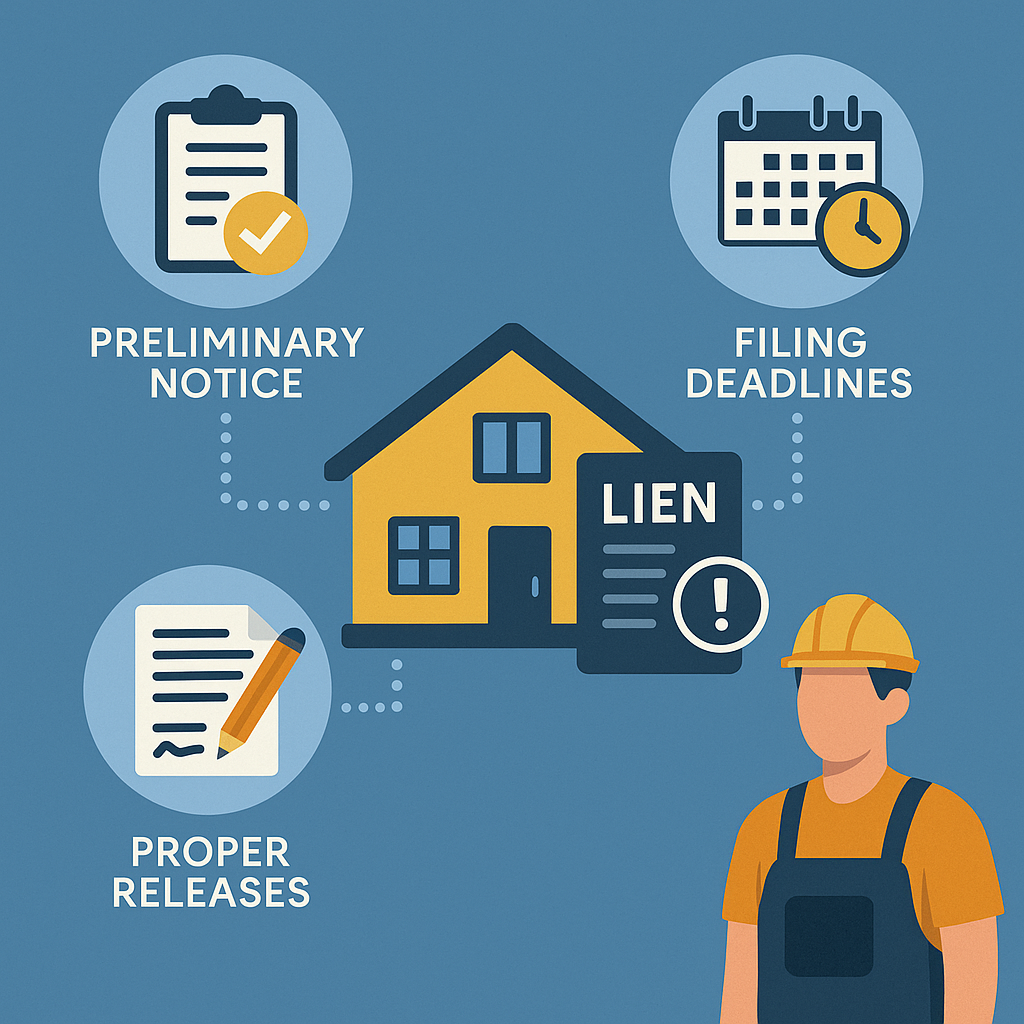
Whether you are seeking payment or protecting your home, Utah mechanic’s lien law turns on three things: filing a preliminary notice in the State Construction Registry, hitting strict recording deadlines, and using lien releases the right way. Missing a single step can void a lien or leave a title clouded.
Mechanic’s liens secure payment for labor or materials by attaching to the property that benefited from the work. This guide explains who has lien rights, the required notices and timelines, how enforcement works, and how owners can bond off or clear liens.
Who Can Claim a Lien
In Utah, lien rights may exist for anyone who contributes labor, materials, or equipment to improve real property, including:
- General contractors
- Subcontractors
- Material suppliers
- Design professionals in limited cases
Owner alert: Paying the general contractor does not automatically protect you if subs or suppliers go unpaid. Collect lien releases at each draw and track payments carefully to protect clear title.
Preliminary Notice & the State Construction Registry
Most contractors and suppliers must file a Preliminary Notice in the State Construction Registry (SCR) within 20 days of first furnishing labor or materials. The notice does not create a lien. It preserves the right to record one later. Without it, lien rights are lost.
The SCR serves as a public project log so owners, lenders, and title companies can see who is on the job and confirm everyone has been paid before closing or refinancing.
Filing Deadlines & Required Content
If payment is not made, a claimant must record the lien in the county recorder’s office within 180 days after last furnishing labor or materials, or within 90 days if a Notice of Completion was filed.
Enforcing the Lien
Recording is only step one. To enforce a lien, the claimant must file a foreclosure lawsuit within 180 days after the lien was recorded. If no suit is filed by then, the lien expires automatically.
During foreclosure, the court can order the property sold to satisfy the debt. Many cases settle through payoff or negotiated release, but strict procedures apply once litigation begins.
Bonding Off a Lien
Owners or general contractors can bond off a lien by posting a lien release bond with the same county recorder where the lien is recorded. This clears title so a sale, loan, or refinance can proceed while shifting the claim from the property to the bond.
Avoiding Common Errors
- For contractors and suppliers: File the preliminary notice on time. Keep delivery tickets, invoices, and communications. Use conditional and unconditional lien releases at each payment stage.
- For homeowners: Check the SCR early. Do not pay the final balance until you receive lien releases from all tiers. Consult counsel if a lien notice arrives or one is recorded.
Utah Mechanic’s Lien Deadline Chart
Deadline: Within 20 days of first furnishing
Where: State Construction Registry
Deadline: Within 180 days of last work, or 90 days if Notice of Completion is filed
Where: County Recorder
Deadline: Within 180 days of lien recording
Where: Utah District Court
When: After payment or bonding off
Where: County Recorder
Helpful Videos & Instagram Highlights
YouTube: Utah Mechanic’s Liens
Instagram: Lien Basics & Closings
Need Help With a Utah Mechanic’s Lien?
Mechanic’s liens are powerful rights with strict rules. If you are filing, bonding off, or disputing a lien, confirm your deadlines and paperwork before you act.
Talk to a Utah AttorneyFor more plain-English legal guidance, stay updated with Utah Law Explained, explore our mission on the About Us page, or connect with trusted counsel like Gibb Law Firm.