
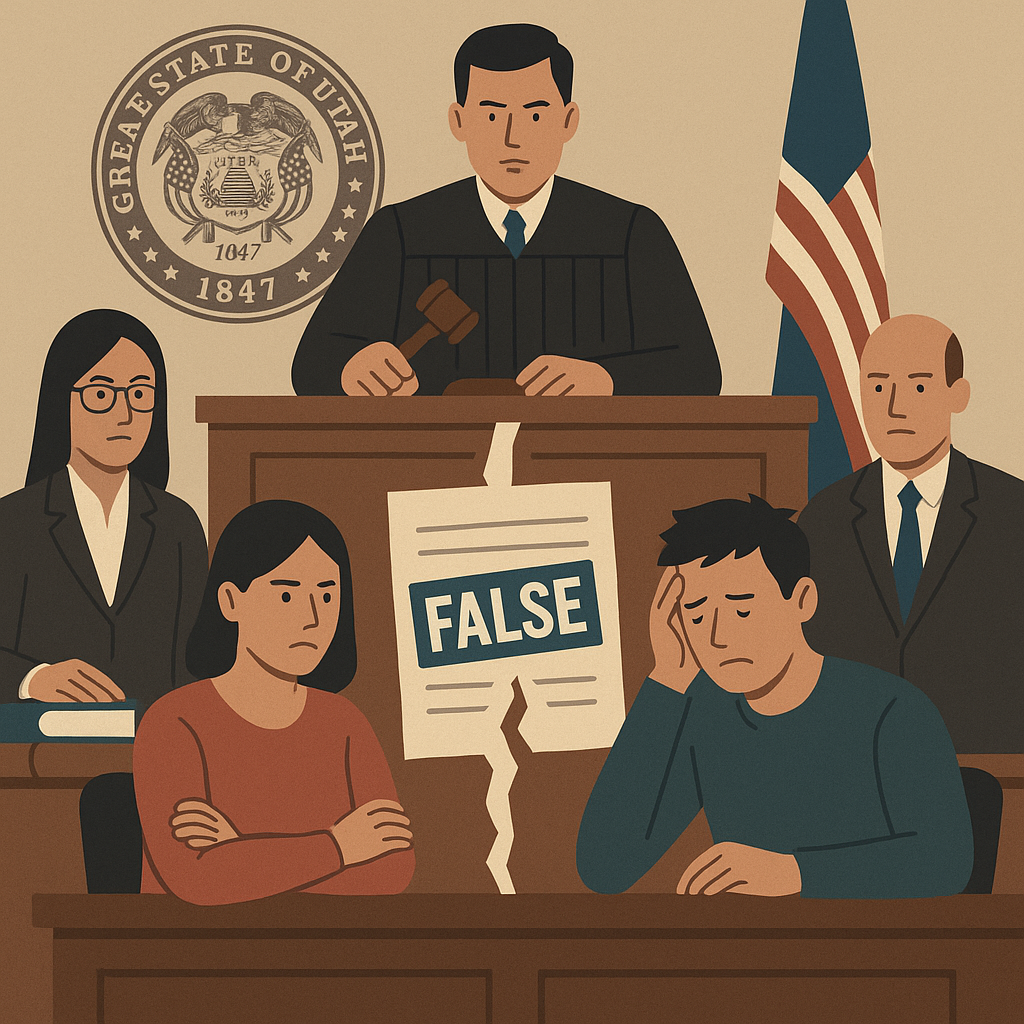
How Utah Courts Handle False Allegations During Custody Disputes
Plain-English guide to investigations, GALs, custody evaluations, and defending against false claims in Utah custody cases.
False accusations are one of the most stressful and damaging events that can happen during a custody dispute. Even unproven claims can reshape parent-time, trigger emergency hearings, and cast doubt on a parent’s credibility.
Utah courts are not designed to accept accusations at face value. Instead, judges rely on structured investigations, evidence reviews, and neutral professionals to determine what actually happened. This guide explains how Utah courts handle false allegations, what tools they use, what consequences exist for making false claims, and how parents can protect themselves with documentation and consistency.
Overview: How Utah Courts Separate Facts From Falsehoods
Utah courts approach allegations carefully and methodically. Because custody decisions must serve the child’s best interest, judges look for reliable, verifiable information before making any major decisions about parent-time, legal custody, or restrictions.
During a dispute involving serious claims, Utah courts may:
- Review all available evidence and testimony
- Appoint a Guardian ad Litem (GAL) to represent the child’s interests
- Order a custody evaluation by a licensed professional
- Request involvement from DCFS in abuse-related allegations
- Issue temporary orders to protect the child while facts are gathered
Even when allegations are emotionally charged, the core question remains: what outcome best protects the child in the long term?
How Courts Investigate Allegations During Utah Custody Cases
Utah judges use several layers of review to determine whether statements are truthful or exaggerated. No single piece of information controls the outcome. Instead, judges look for patterns, corroboration, and credibility.
Evidence Review
Judges look for objective materials such as texts, emails, call logs, school records, medical charts, photos, videos, police reports, and credible witness statements. Consistent records over time usually carry more weight than one-off claims.
Testimony and Hearings
Courts may hold evidentiary hearings where both parents, and sometimes other witnesses, testify under oath. The judge can ask direct questions, observe body language, and assess how each parent responds when pressed on details.
Guardian ad Litem (GAL)
A GAL is an attorney appointed to represent the child’s best interests. The GAL may interview the child, parents, teachers, therapists, and other caregivers to understand what is happening behind the scenes and to make recommendations to the court.
Custody Evaluation
A licensed custody evaluator can conduct home visits, psychological testing, and detailed interviews with both parents and the child. The evaluator’s written report often analyzes whether the allegations have merit and what parenting plan best supports the child.
DCFS Investigation
For claims involving abuse or neglect, the Division of Child and Family Services (DCFS) may launch its own independent inquiry. DCFS findings can influence the court but do not replace the judge’s final decision.
These layers work together so that decisions are not made based on “he said, she said” alone.
Q&A: How Courts Treat Abuse or Domestic Violence Allegations
Q: How do Utah courts treat allegations of abuse or domestic violence?
Serious allegations are investigated immediately. A judge may issue temporary protective orders, order supervised visitation, or adjust parent-time to keep the child safe while the court collects evidence.
These measures are temporary tools, not final judgments. Long-term decisions depend on proof, not accusations. Once more information is gathered, the court can either make the restrictions permanent, modify them, or lift them entirely.
Q&A: What Happens When Allegations Are Knowingly False?
Q: What happens when a parent knowingly makes a false allegation?
If the court determines that a parent intentionally made a false claim or used accusations to manipulate the outcome of a case, there can be real consequences, including:
- Contempt of court findings
- Orders to pay the other parent’s attorney fees
- Reduction or loss of custody or parent-time
- Significant damage to the parent’s credibility in future hearings
- Possible perjury charges if lies were made under oath
Using false allegations as leverage is viewed as harmful to the child and to the integrity of the court process, and Utah judges take it very seriously.
Q&A: Neutral Professionals and the Child’s Emotional Health
Q: What roles do GALs and custody evaluators play?
GALs and custody evaluators are neutral professionals who help clarify facts when parents disagree. They assess:
- Each child-parent relationship and the history of care
- The consistency of each parent’s story
- Evidence supporting or disproving specific allegations
- Whether coercion, coaching, or alienation is occurring
Judges often give strong weight to GAL and evaluator findings because these professionals provide objective, child-focused perspectives.
Q: How does the court account for the child’s emotional well-being?
Utah’s “best interest” analysis includes the child’s emotional and psychological health. Courts look at:
- Whether ongoing conflict or allegations are harming the child
- Each parent’s willingness to support a healthy relationship with the other parent
- Signs the child is being pressured, manipulated, or coached
If a parent uses accusations to damage the child’s relationship with the other parent, that conduct may influence custody and parent-time decisions.
Q&A: How Parents Can Defend Against False Allegations
Q: What can a parent do to defend against false allegations?
Documentation is key. Parents facing false claims should focus on building a clear, consistent record of their parenting and interactions with the other parent. Helpful documentation might include:
- Time-stamped texts, emails, and other messages
- Medical or school records that show attendance, involvement, or lack of injury
- Parenting schedules and logs that track actual parent-time
- Photos or videos when relevant and lawfully obtained
- Communications stored in parenting apps
- Witness statements from teachers, caregivers, or others who see the child regularly
Consistency, calm communication, and documented patterns often speak louder than accusations in Utah courtrooms.
YouTube & Instagram: Utah Custody & False Allegations
YouTube: Utah Custody and Court Process
Instagram: Utah Family Law Realities
Need Help Applying This to Your Situation?
False allegations create fear, frustration, and uncertainty, but Utah courts have safeguards to identify the truth. Evidence, expert insight, and thorough investigation guide the judge’s decisions, not emotion or pressure. Parents who remain honest, organized, and focused on their child’s well-being are in the strongest position during a custody dispute.
Talk to a Utah AttorneyUtah Law Explained will continue to provide clear, Utah-specific guidance to help families understand the legal landscape and navigate difficult situations with confidence. For more plain-English legal guidance, stay updated with Utah Law Explained, explore our mission on the About Us page, or connect with trusted counsel like Gibb Law Firm.