
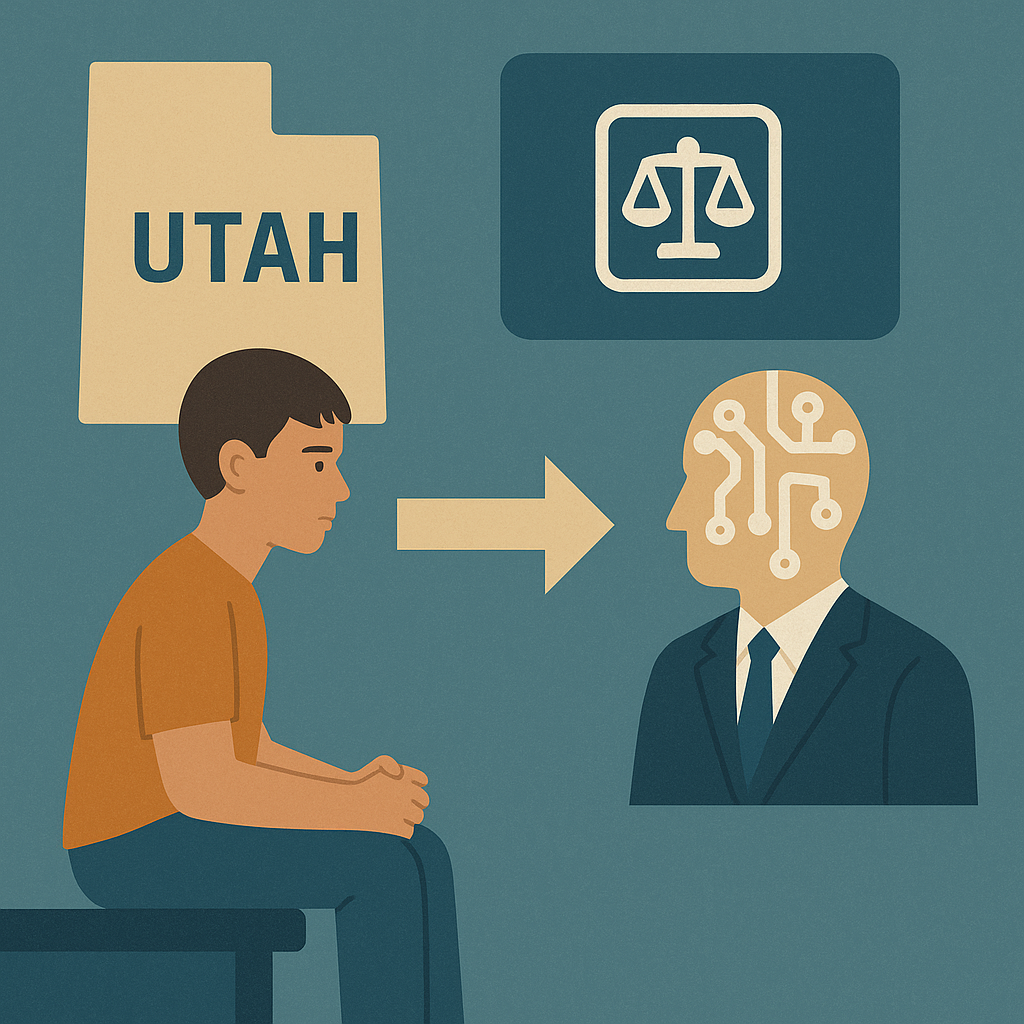
Juvenile Justice and AI in Utah: How Courts Handle Algorithmic Decision Tools
Where data tools meet due process, transparency, and rehabilitation for Utah youth
Utah’s juvenile courts are exploring new ways to balance fairness, efficiency, and public safety. One of the latest developments is the use of artificial intelligence tools that assess risk and guide decision-making. These tools promise to help judges and probation officers identify which youth may need closer supervision or intervention but they also raise serious questions about bias, transparency, and due process.
Artificial intelligence is already reshaping how justice systems work across the country, and Utah is quietly adapting to this shift. But as algorithms enter courtrooms, the central question remains: Can a data-driven tool truly understand the human circumstances of a child?
Understanding AI in Juvenile Justice
AI-driven risk assessment tools are designed to help predict outcomes, such as the likelihood of reoffending or failing to appear in court. In Utah, they may be used at various stages of the juvenile process, from detention decisions to probation recommendations.
These models typically analyze historical data about prior offenses, age, school attendance, and social factors. The goal is to support judges by highlighting patterns and potential risks. However, since algorithms learn from past data, they can also reproduce or amplify past biases if the input data reflects unequal treatment or enforcement.
Utah’s juvenile justice philosophy emphasizes rehabilitation over punishment. That makes the responsible use of AI especially important. Judges still make the final call, but the growing influence of machine-generated “scores” raises questions about how much weight they should carry.
Transparency and Bias Safeguards
The Utah judiciary has begun examining transparency standards for algorithmic tools used in court. While Utah does not yet have a specific law governing AI in sentencing or detention, it follows the broader ethical principles of fairness, accountability, and explainability.
Judges and defense attorneys increasingly push for what’s called algorithmic transparency, the right to know how a risk score was generated. If a computer program affects a young person’s liberty, the defense should have a chance to challenge it.
Nationally, watchdog groups have flagged cases where risk tools scored minority youth higher, even with similar circumstances. Utah’s courts have responded cautiously, emphasizing that any AI system must complement not replace judicial discretion.
Due Process and Youth Rights
In juvenile proceedings, due process is already a delicate balance. Minors often have limited understanding of their rights, and AI tools add a new layer of complexity. If a judge relies on a risk score to justify detention or extended probation, the defense must be allowed to question the underlying data and methodology.
Utah law requires that all decisions affecting a juvenile’s liberty be supported by individualized findings. That principle means no algorithm can decide a case on its own. Courts must document the human reasoning behind every decision, ensuring that technology remains a tool not an authority.
The Utah Juvenile Court Rules and the state’s ongoing juvenile reform efforts both reflect a broader national movement to modernize justice while preserving fairness. The Utah Judicial Council and Commission on Criminal and Juvenile Justice (CCJJ) continue to study how these tools can be validated locally before they are widely adopted.
National Trends Shaping Utah’s Approach
States such as Pennsylvania, Florida, and California have already tested predictive analytics in youth justice systems. Their experiences offer cautionary lessons. Some jurisdictions paused their programs after finding racial or socioeconomic disparities in the data. Others introduced independent audits and public disclosure requirements to rebuild trust.
Utah’s legal community is following these developments closely. Law schools and policy think tanks have begun hosting panels on AI ethics in law, signaling growing awareness of both the potential and the pitfalls of machine-assisted justice.
In the coming years, Utah’s courts may adopt formal rules governing algorithmic tools—requiring transparency, periodic validation, and disclosure to all parties. The state’s careful, incremental approach may serve as a model for balancing innovation with fairness.
Video & Social Learning Hub
YouTube
Conclusion: Keep People at the Center
Artificial intelligence will continue shaping Utah’s justice system, but it cannot replace the insight and compassion of human judgment. For juvenile courts, where the focus is on rehabilitation and second chances, fairness must remain at the heart of every decision. By demanding transparency, testing for bias, and maintaining judicial oversight, Utah can ensure AI becomes a helpful tool rather than a hidden risk.
This explainer was produced by Utah Law Explained, where complex laws meet plain-English clarity. Our goal is to help Utahns understand how technology, law, and fairness intersect, so that innovation serves people, not the other way around.
Talk to a Utah Attorney