
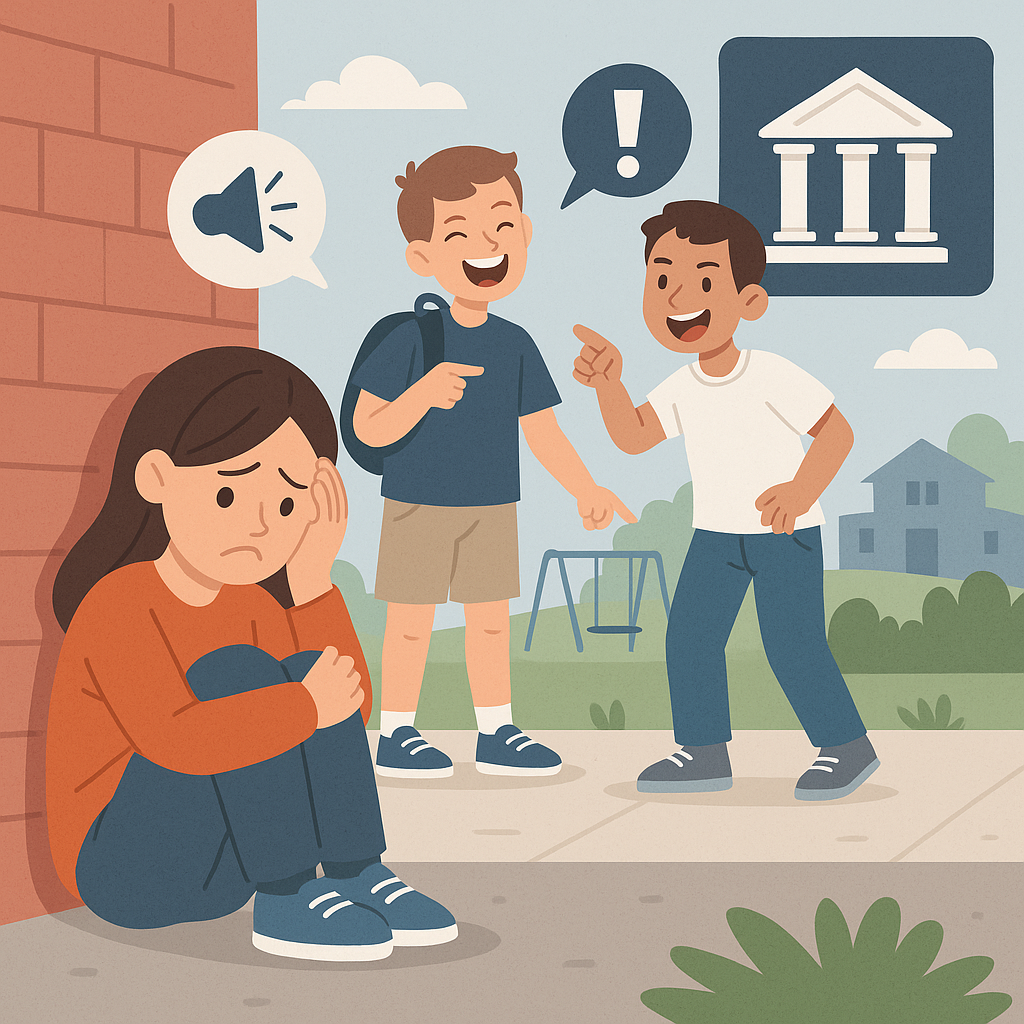
School Bullying and When It Becomes a Utah Legal Issue
Plain-English guide to when school bullying crosses into a legal issue in Utah, how schools must respond, and what parents can do.
Introduction. Bullying is frightening for any family, but not every hurtful comment or mean act is automatically a crime. In Utah, some behavior stays within school disciplinary rules, while other conduct clearly crosses into criminal territory under laws on assault, threats, harassment, or stalking.
This explainer from Utah Law Explained breaks down when bullying becomes a Utah legal issue, what duties schools have under state law, and how parents can respond when they feel their child is not being protected.
When Bullying Becomes a Crime in Utah
Bullying becomes more than a “school issue” when the behavior meets the elements of a criminal offense. Patterns of conduct that may trigger Utah’s criminal laws include:
- Physical harm or assault. Hitting, kicking, shoving into lockers, or throwing objects with intent to hurt can be treated as assault.
- Threats of violence. Statements like “I’m going to jump you after school” or “You’ll be sorry on the bus today” may be treated as unlawful threats when they cause fear.
- Harassment and stalking. Repeated following, blocking paths, cornering a student, or relentless targeting that causes fear or serious distress can cross into harassment or stalking.
- Electronic or online harassment. Cyberbullying through texts, group chats, or social media that includes threats or repeated targeting may also be illegal.
Once bullying hits these thresholds, parents are no longer dealing only with school discipline. They may be dealing with potential criminal conduct that can involve law enforcement and juvenile court.
Utah’s Safe Schools Duties: What Schools Must Do
Utah’s safe schools framework puts clear responsibilities on schools when bullying, harassment, or threats are reported. While exact procedures vary by district, core duties typically include:
Scenario Breakdown: When Does It Cross the Line?
It can be hard for parents to tell when bullying is a discipline issue versus a legal one. These simplified scenarios illustrate how facts can shift a case from “school discipline” into “Utah legal issue.”
- Scenario 1 – Threatening texts after school. A seventh grader receives repeated messages that he will “get jumped” after practice. The school should investigate, notify parents, and consider whether the threats need to be referred to law enforcement.
- Scenario 2 – Repeated shoves in the hallway. A student is pushed into lockers several times a week, and bruises are visible. The pattern may be treated as assault rather than simple “roughhousing.”
- Scenario 3 – Group cyberbullying on social media. A student becomes the target of a group chat and public posts that mock appearance and encourage others to join in. The conduct may raise harassment or electronic communication concerns, especially when it is relentless.
- Scenario 4 – Retaliation after reporting. After a student reports bullying, other students call her a “snitch” and threaten to make school unbearable. Schools should treat retaliation as its own violation and assess whether any threats are serious enough to involve police.
Each case depends on details, but the pattern is the same: as bullying becomes more targeted, repeated, threatening, or physically harmful, it becomes more likely to trigger Utah law.
Parent Action Steps When the School Isn’t Responding
Parents often sense something is wrong long before the system does. If you feel the school is not taking bullying seriously, you can:
- Document everything. Keep a simple log with dates, times, places, people involved, and what happened. Save emails, texts, and screenshots.
- Ask for a formal meeting. Request a meeting with the principal or administrator, bring your documentation, and ask what steps the school will take next.
- Clarify reporting and escalation. Ask whether the school has reported the incidents to the district or to law enforcement, especially if there are threats of violence or repeated physical harm.
- Re-report new incidents. Send follow-up messages each time something serious happens so there is a clear record of ongoing problems.
- Consider contacting law enforcement directly. For serious threats, sexual misconduct, weapons, or continued assault, it may be appropriate to make your own police report.
Taking these steps does not mean you are “overreacting.” It means you are creating a clear, factual record that can help protect your child if things escalate.
Evidence and Documentation That Can Help in Serious Cases
When bullying grows serious, documentation often becomes the difference between “we can’t prove it” and “we have enough detail to act.” Helpful items can include:
- Screenshots of texts, DMs, group chats, and posts relating to the bullying.
- Photos of bruises, cuts, damaged property, or torn clothing (if safe to take and store).
- Written notes summarizing your child’s description of what happened and who saw it.
- Copies of emails or messages with teachers, counselors, or administrators.
- Any school reports or discipline notices you receive.
- Records of counseling or medical visits, if your child needed care related to bullying.
Clear evidence helps schools make better decisions and gives law enforcement something concrete to review if the matter becomes a legal case.
Key Takeaways: Utah School Bullying and the Law
Not all bullying is criminal, but repeated threats, physical aggression, and targeted harassment can cross into Utah criminal law.
Utah schools have duties to investigate, document, notify parents, and provide safety planning when serious bullying is reported.
Parents can strengthen their child’s protection by logging incidents, saving evidence, and asking clear questions about school and law enforcement responses.
Video & Social Learning Hub: Bullying in Utah Schools
YouTube: Bullying Concerns in Utah
Instagram: Bully-Free Schools & Student Safety
When School Bullying Becomes a Legal Issue
Bullying is more than schoolyard conflict when it turns into threats, harassment, or physical harm. Utah law gives families real tools to respond, but those tools work best when parents report concerns early, keep detailed records, and ask clear questions about how schools and, when needed, law enforcement are responding.
Early reporting and detailed records can help parents protect their child when bullying escalates and make it easier to see when a situation has become a true Utah legal issue.
For more plain-English legal guidance, stay updated with Utah Law Explained, explore our mission on the About Us page, or connect with trusted counsel like Gibb Law Firm.