
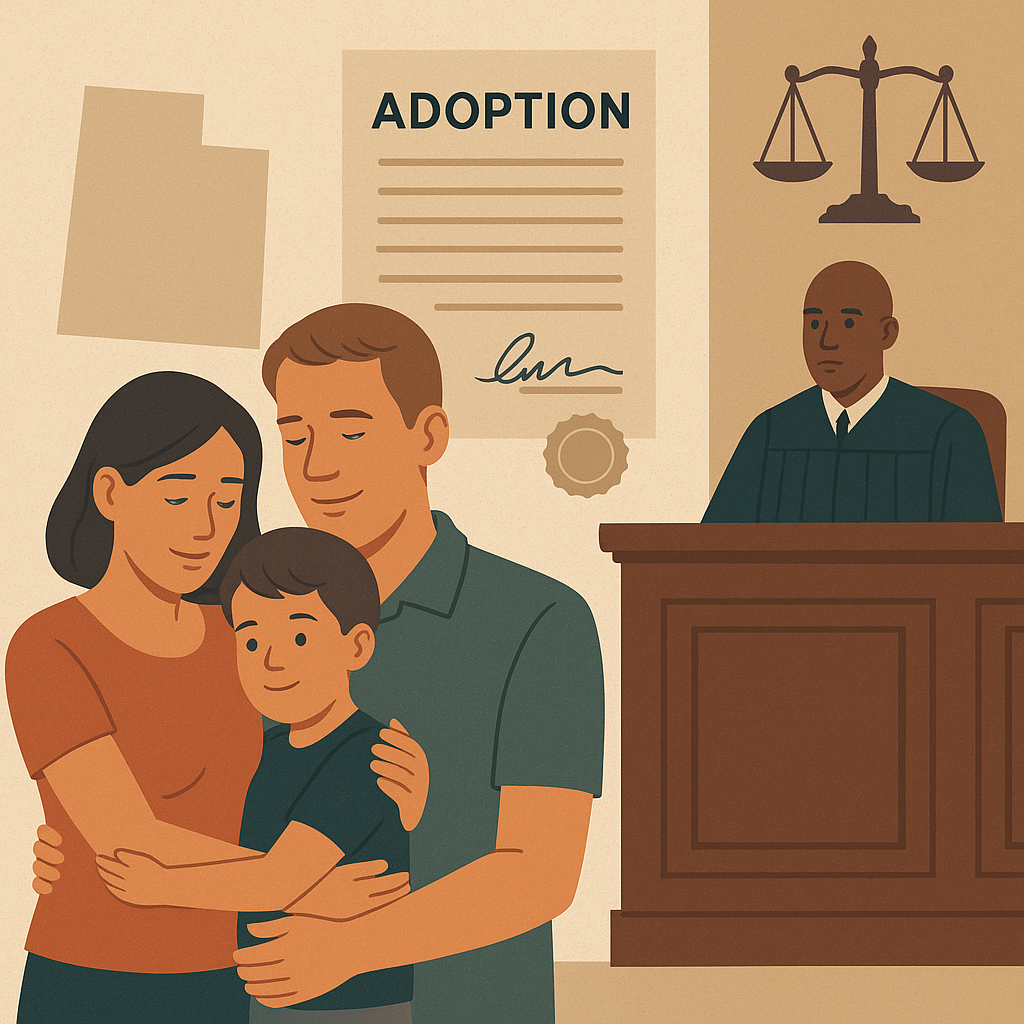
Stepparent Adoption in Utah: Process, Consent, and What to Expect in Court
Plain-English guide to consent, background checks, court hearings, and final adoption orders in Utah
Stepparent adoption can be one of the most meaningful legal steps a family takes. It legally unites a child with the parent who has been there day-to-day, often for years. But in Utah, the process has several required steps, from securing parental consent to completing court hearings. Utah Law Explained breaks the process down in plain English so families know exactly what to expect and how the system works.
Overview: How Stepparent Adoption Works in Utah
Utah’s adoption laws are designed to protect the child’s interests while ensuring the adoption is legally solid. Every case must pass through three major stages:
- Consent: Either the biological parent consents, or the court determines their rights can be terminated under Utah law.
- Investigation or background check: Utah requires background screening, including fingerprinting, for the adopting stepparent.
- Court approval: A judge reviews evidence, confirms legal requirements are met, and finalizes the adoption.
Understanding these stages helps families avoid delays and prepare for what the court will ask.
Biological Parent Consent in Utah
Consent is the most important part of any stepparent adoption. Utah courts need clarity on the rights of the child’s other biological parent.
You generally need one of the following:
- Written consent from the biological parent.
- Proof the parent abandoned the child under Utah law.
- Evidence supporting termination of parental rights, such as long-term non-support or no contact.
- A previous termination order, often from a different court case.
Consent must be legally valid. Informal agreements, texts, or verbal permissions do not satisfy Utah’s adoption statutes.
Background Checks and Investigations
Utah requires adopting stepparents to go through a basic safety screening. This typically includes:
- A criminal background check, including fingerprinting.
- A child abuse and neglect registry check.
- Sometimes a brief court-ordered evaluation if questions arise.
Compared to full adoptions, the process is typically faster and less intrusive because the child already lives in the stepparent’s home.
What Happens at the Court Hearing
Once consent and background checks are complete, the family schedules a finalization hearing. This is usually a brief, positive court appearance.
Typical steps include:
- The judge confirms all legal requirements were met.
- The adopting stepparent answers simple questions about their relationship with the child.
- The child may attend if appropriate.
- The judge signs the final adoption decree, making the relationship legally permanent.
Most hearings take place in Utah district court. Many families describe this as one of the happiest days of the entire process.
Name Changes and Birth Certificate Updates
After the adoption decree is issued, families can request an updated Utah birth certificate.
This can include:
- A new last name for the child (optional).
- Listing the stepparent as the child’s legal parent.
- Issuance of a new certified record, replacing the old version.
These updates make school enrollment, medical care, and travel far easier because all documents now match the stepparent’s legal status.
Common Roadblocks
- Missing or invalid consents.
- Incomplete background checks.
- Filing in the wrong county.
- Failing to properly terminate a biological parent’s rights.
Video & Social Learning Hub
YouTube: Utah Stepparent Adoption
Need Help Applying This to Your Situation?
Stepparent adoption in Utah has clear rules, required filings, and important court steps, but with preparation it can move smoothly and predictably.
Talk to a Utah AttorneyUtah Law Explained is here to help families understand every part of the process in plain English so they can move forward with confidence. Our guides offer legal information, not legal advice. If you need case-specific guidance, consider speaking with a qualified Utah family law attorney. For more plain-English legal guidance, stay updated with Utah Law Explained, explore our mission on the About Us page, or connect with trusted counsel like Gibb Law Firm.