
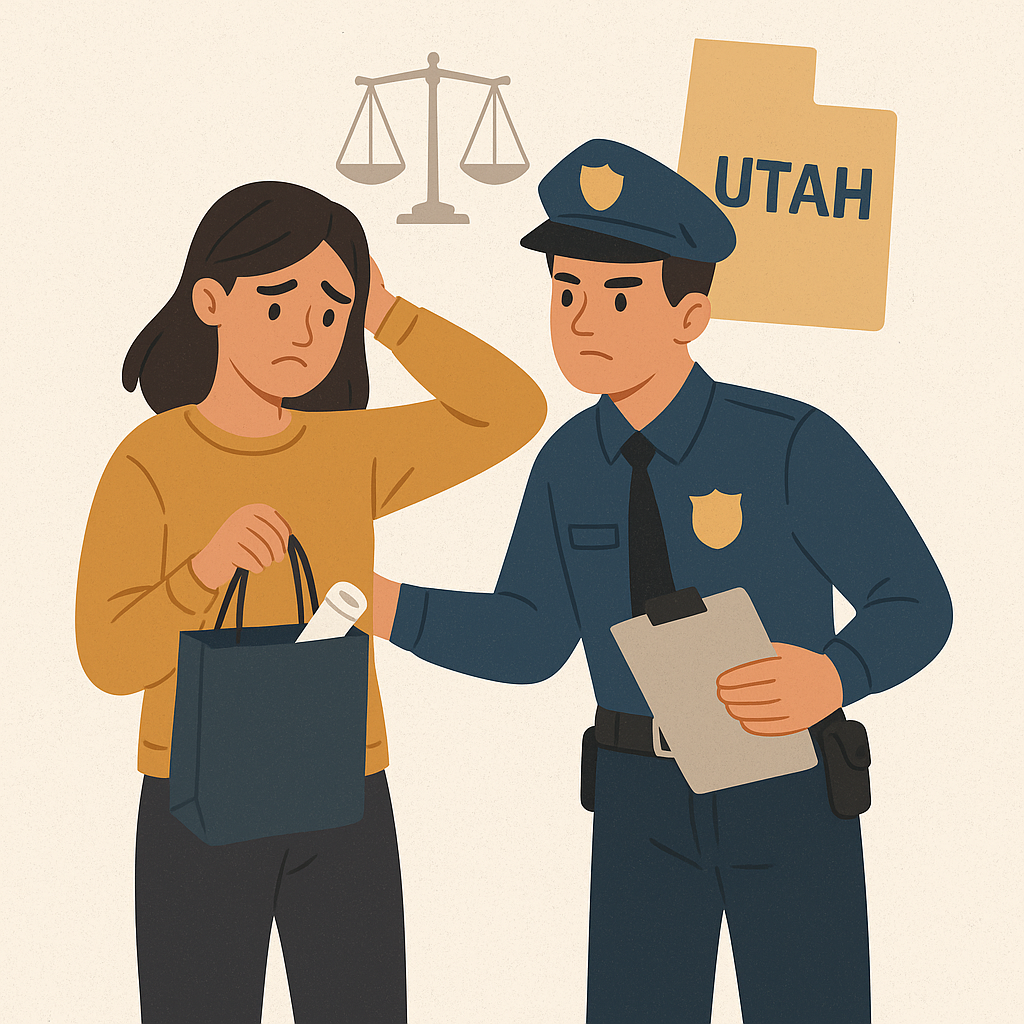
Teen Shoplifting Charges and Options in Utah
How juvenile shoplifting is charged, what penalties teens face, and the diversion and record-clearing paths that can protect their future.
Shoplifting is one of the most common juvenile offenses in Utah, but even “small” incidents can lead to court dates, probation, and a record that follows a teen into jobs and college applications. The good news: Utah’s juvenile system is built around rehabilitation. Diversion programs, classes, and record-sealing options can turn a painful mistake into a short chapter instead of a permanent label.
This guide from Utah Law Explained walks parents and teens through how shoplifting is charged, the difference between misdemeanors and felonies, what happens in juvenile court, how restitution and store demands work, and how to approach the process in a way that protects a teen’s long-term future.
How Teen Shoplifting Cases Work in Utah
Utah law treats shoplifting as a form of retail theft. A teen can be charged even if they never officially leave the store. Common examples include:
- Hiding items in a backpack or clothing.
- Switching or removing price tags.
- Skipping items at self-checkout.
- Walking past the registers without paying.
Most teen cases are handled in Utah Juvenile Court, where the focus is accountability and rehabilitation rather than adult-style punishment. Judges look at the teen’s age, prior history, value of the items, cooperation with store security, and home support when crafting a response.
If the teen and family take the case seriously showing up, completing requirements, and addressing the behavior, many first-time cases can be resolved through diversion or other alternatives that keep the long-term damage as low as possible.
Charges & Penalties: Misdemeanor vs. Felony Thresholds
Utah classifies theft charges mainly by the value of the property involved. While the exact thresholds can change over time, the structure generally looks like this:
Juvenile Court, Diversion, and Record-Clearing Paths
Once a citation is issued, a teen’s shoplifting case usually enters the juvenile court intake process. A probation officer looks at the police report, the teen’s prior history (if any), and family support to decide how the case should move forward.
Depending on the facts, options may include:
- Nonjudicial adjustment (informal resolution): Conditions like community service, a theft-awareness class, and staying out of trouble for a set period. If completed, the case may close without a formal adjudication.
- Diversion program: A more structured path that can include classes, counseling, written apologies, and restitution. Successful completion can significantly limit the impact of the charge.
- Formal petition and adjudication: For more serious or repeat conduct, the case proceeds more like a standard court case, with a judge deciding whether the allegations are proven.
Later on, many teens can also explore record-sealing options through juvenile court so that a resolved shoplifting case does not continue to block college, military, or job opportunities.
Parent Responsibilities, Restitution & Store Demands
Parents are not bystanders in teen shoplifting cases. Utah’s juvenile system expects parents or guardians to:
- Attend court hearings and probation meetings.
- Help arrange transportation to classes and counseling.
- Ensure that restitution is paid to the store as ordered.
- Support and monitor the teen’s follow-through at home.
Restitution is money paid back to the store for the value of the item or any documented loss. It is usually ordered by the juvenile court and must be completed for the case to close successfully.
Some stores also send a separate civil demand letter, asking for additional money beyond the item value. This letter is not a criminal charge, but it is still important to handle carefully. Before paying or ignoring it, many families speak with a Utah attorney to understand what the law allows and how that demand interacts with the court case.
Case Scenario: Teen Caught Shoplifting at a Utah Mall
Scenario: A 15-year-old is stopped by store security after slipping a $45 item into a backpack. Security escorts the teen to a back room, calls the police, and the officer issues a juvenile citation for retail theft.
What typically happens next:
- Intake: Juvenile court reviews the incident, the teen’s record (if any), and attitudes during the investigation.
- Offer of nonjudicial adjustment or diversion: Because the value is low and there is no prior record, the teen is offered an informal resolution that includes community service, a theft-awareness class, restitution, and a requirement to stay out of trouble for several months.
- Completion: The teen completes all tasks, writes an apology, and stays incident-free. The case closes without formal adjudication.
- Future impact: With the case resolved and later record-sealing options, the teen is far less likely to face long-term barriers from this one mistake.
This example shows why early, calm action getting information, keeping court dates, and following through can dramatically change the outcome of a Utah teen shoplifting case.
Q&A: Common Questions About Teen Shoplifting in Utah
Q: Will my teen go to jail for shoplifting?
In most first-time juvenile shoplifting cases, detention is unlikely. Courts usually focus on diversion, supervision, and education instead of confinement especially when the teen and parents are cooperative.
Q: Can the store “drop the charges” if we pay?
Paying the store or settling with them privately does not automatically erase the juvenile case. Once police are involved, the juvenile prosecutor and court control how the case moves forward.
Q: Will this be on my teen’s record forever?
Not necessarily. Many cases resolved through diversion or nonjudicial adjustment have a much lighter footprint, and Utah law offers record-sealing paths for eligible teens who complete their obligations and stay out of trouble.
Q: Do we really need a lawyer if it’s “just” shoplifting?
Even a low-value theft can affect school, college, and employment. A Utah juvenile defense attorney can explain the options, negotiate for diversion where appropriate, and help protect your teen’s long-term opportunities.
Q: What should we do at home after the incident?
Courts look favorably on families who take the situation seriously. That may include conversations about peer pressure, setting clearer boundaries, helping the teen find ways to “give back,” and following through on counseling or classes recommended by professionals.
Video & Social Learning Hub: Teen Shoplifting in Utah
YouTube: Utah Teen Shoplifting & Juvenile Court
Instagram: Real-World Shoplifting Context
Helping a Teen Recover After a Shoplifting Charge
A teen’s shoplifting case can feel like the end of the world, but it doesn’t have to define their story. Utah’s juvenile system gives families tools diversion programs, counseling, supervision, and record-sealing paths to turn a bad decision into a learning moment instead of a lifelong setback.
Talk to a Utah AttorneyEarly legal guidance can keep a teen’s mistake from becoming a long-term record. For more plain-English legal guidance, stay updated with Utah Law Explained, explore our mission on the About Us page, or connect with trusted counsel like Gibb Law Firm.