
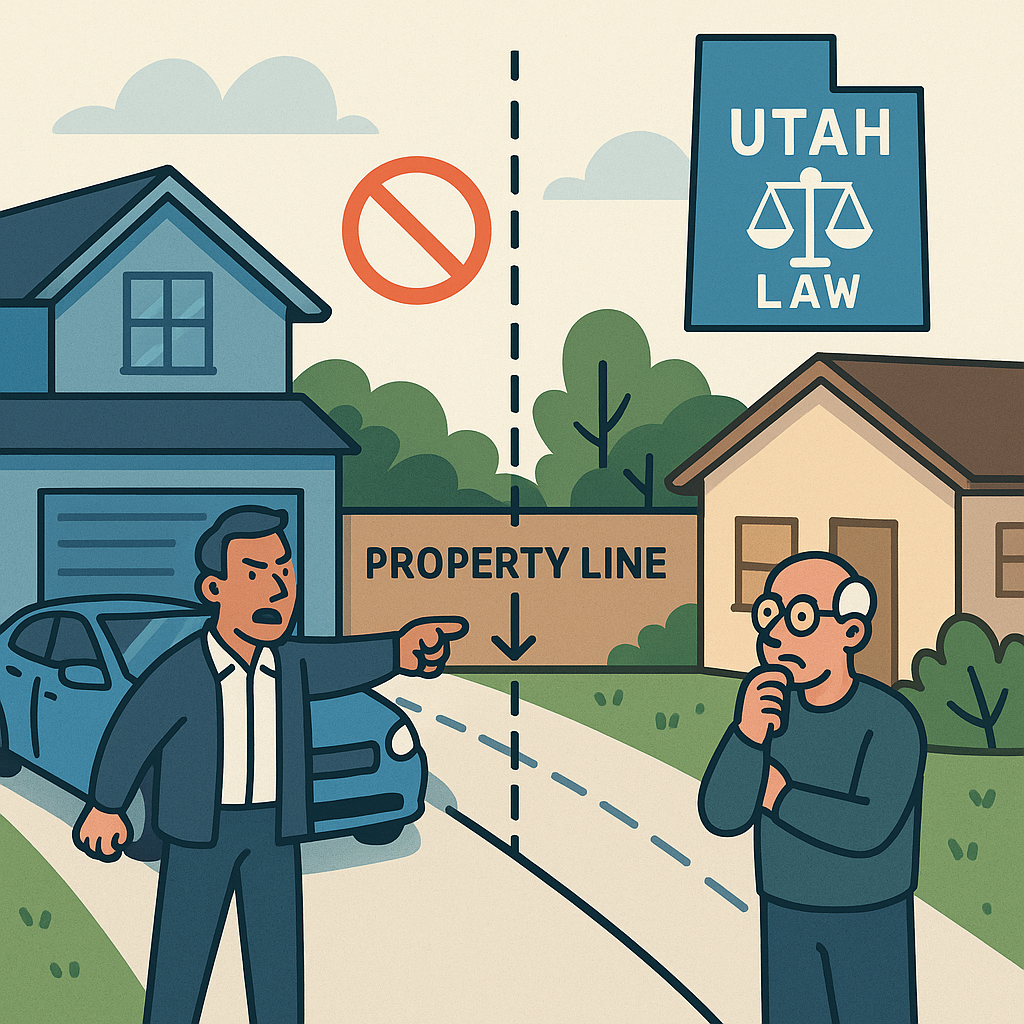
Driveway Disputes and Utah Property Law
Understanding rights, easements, boundaries, trespass, and practical fixes between neighbors
Utah property law gives homeowners clear boundaries and rules for resolving driveway and access conflicts. Whether a neighbor is parking too close, blocking your driveway, or claiming shared use, the law defines when that behavior becomes trespass and how to handle it. This guide explains how Utah treats shared driveways, easements, and boundary issues so you can protect your property and keep the peace.
How Utah Property Boundaries and Easements Work
Your deed and the subdivision plat on file with your county recorder define your legal boundaries. These documents may include easements, which are permissions that let someone else use part of your land for a specific purpose like shared access or utilities.
An easement does not transfer ownership. It creates a right to use part of the property. If a driveway runs across two lots, a recorded easement can make that shared access lawful even if one neighbor owns the ground underneath.
What Counts as a Shared or Implied Driveway Easement
Not every shared driveway has a written grant. Utah courts can recognize implied easements where neighbors have used the same driveway openly and continuously for many years and that use was necessary for access. For example, if both homes have relied on one drive to reach the road and that setup existed before lines were redrawn, a court may find an implied easement even without a recorded document.
Implied easements are not automatic. They depend on evidence of long use, necessity, and the original owner’s intent. If there is no clear record, verify any shared driveway agreement with title documents or a real estate attorney.
Checking Your Deed or Plat Map for Driveway Rights
Your county recorder can provide a copy of your deed and plat. Review them for easement references under “Encumbrances” or “Legal Description.” A title company can issue a title report listing recorded easements.
If no easement exists but your neighbor still uses part of your driveway, decide whether the use is lawful access or unauthorized. Do not make physical changes like fences or gates until you confirm rights, since you could block a legitimate right-of-way.
When Using or Blocking a Neighbor’s Driveway Becomes Trespass
Unauthorized use or obstruction of another’s property can be trespass under Utah Code § 76-6-206. Even small encroachments like parking partly on a neighbor’s drive can qualify if done without consent.
Deliberately blocking lawful access, such as parking across a shared drive or adding a barrier, can also violate property and nuisance laws. Document the situation, notify your neighbor in writing, and if it continues, contact code enforcement or pursue a small-claims action for damages.
Resolving Disputes Without Court
Before filing a lawsuit, try mediation or direct negotiation. Utah courts and local dispute resolution centers offer neighbor mediation for boundary and access issues. A simple plan works well:
- Gather your deed, plat, surveys, photos, and any communications.
- Write a concise summary of your concerns and proposed fixes.
- Suggest mediation or a meeting to review documents together.
Misunderstandings about lines are common. Mediation helps avoid costly litigation and preserves neighbor relations.
Handling Damage or Ongoing Obstruction. If a neighbor damages your drive or landscaping during access, Utah’s property damage and nuisance laws, including Utah Code § 78B-6-1101, allow recovery of repair costs. For recurring obstructions like parked cars or bins, request enforcement through your city’s nuisance ordinance or use the non-emergency police line. If the drive is shared, check your HOA or road agreement for maintenance and use rules.
Quiet Title, Easement Declarations, and Zoning Rules
If informal solutions fail, you can file a quiet title action or seek a court declaration of easement in Utah district court. Be prepared with:
- A professional land survey
- Your deed and any prior recorded instruments
- Evidence of historic use or agreements
Litigation can be expensive and slow, so reserve it for serious or value-impacting disputes.
City and County Zoning. Local ordinances govern driveway width, setbacks, and access points. Many jurisdictions limit the number of curb cuts and require spacing from intersections. Always confirm city or county standards before adding, expanding, or modifying a drive to avoid fines or permit denials.
Video & Social Learning Hub
YouTube: Utah Property Boundaries & Easements
Instagram: Boundaries, Title, and Shared Drives
Key Takeaways
Check deed and plat first. Many disputes resolve once boundaries and easements are verified.
Implied easements require proof of long-term use and necessity. They are not automatic.
Unauthorized parking or blocking can be trespass. Document, notify, then escalate if needed.
Mediation is faster and cheaper than court. Save litigation for serious or high-value issues.
Need Help Applying This to Your Situation?
Driveway conflicts can turn stressful fast, but Utah law offers practical tools. By checking your deed, confirming easements, and using mediation before court, you can protect your property and peace of mind.
Talk to a Utah AttorneyUtah Law Explained provides plain-English, Utah-specific legal education. This content is educational only, not legal advice.