Utah Drone Laws for Nosy Neighbors
Plain-English guide to backyard drone privacy, harassment rules, and reporting options in Utah.
Drones can be fun until one hovers above your backyard, windows, or kids playing outside. At that point, it stops feeling like a gadget and starts feeling like an invasion of privacy. Utah homeowners and renters are seeing more drones each year as they become cheaper, quieter, and easier to fly.
This guide explains how Utah law treats low-altitude flyovers, when a neighbor’s drone crosses into harassment or voyeurism, what evidence to collect, and how to report drone misuse without turning your neighborhood into a war zone. Utah Law Explained focuses on realistic, Utah-specific next steps not legal jargon.
When Neighbor Drones Cross the Line in Utah
Utah does not ban drones outright. Instead, the law focuses on how a drone is used, especially when it is flown low over private property. A “nosy neighbor” drone becomes a legal problem when it interferes with your privacy, safety, or quiet use of your home.
Several Utah and federal rules come into play when a drone is flown over your backyard:
- Privacy and voyeurism laws. Using a drone to look into bedrooms, bathrooms, or fenced yards where you reasonably expect privacy may amount to criminal voyeurism.
- Harassment and stalking concepts. Repeated low flyovers by the same operator, especially near windows or gatherings, can support a harassment or stalking complaint.
- Reckless or dangerous drone use. Flying close to people, pets, or property, or ignoring basic safety, can be treated as reckless behavior under Utah and FAA rules.
- FAA unmanned aircraft rules. The FAA regulates airspace and bans drone operations that endanger people or interfere with other aircraft, even at lower altitudes.
In practice, Utah officials look at how the drone is flown: is it briefly passing overhead, or is it hovering and pointing a camera directly at your family or windows?
Scenario Breakdown: Common Backyard Drone Problems
Most complaints are not about one quick flyover. They arise from repeated, uncomfortable drone flights that feel targeted. Here are some of the most common Utah scenarios and how they are typically viewed through a legal lens.
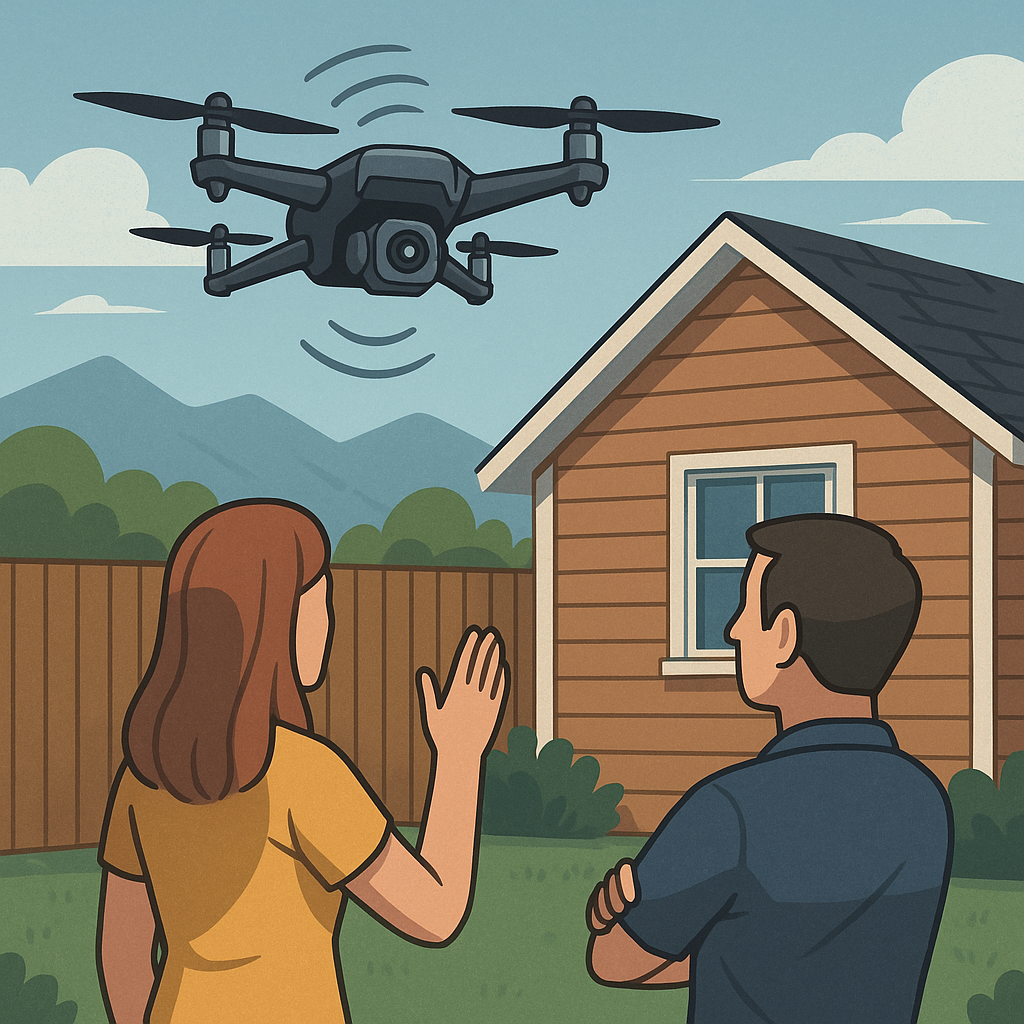
Scenario A: A drone hovers low over your fenced backyard.
If the drone stays low and appears to watch your family, pool, or hot tub, it may cross into privacy invasion. A fenced yard usually reflects a reasonable expectation of privacy, especially if the drone lingered or returned repeatedly.
Scenario B: A drone stops near your windows at night.
A drone hovering outside bedroom or bathroom windows is one of the strongest signs of possible voyeurism. Even if you cannot prove recording, the behavior alone can justify a call to law enforcement in Utah.
Scenario C: Repeated flyovers from the same direction.
If a drone passes over once, it might be a hobbyist cutting across the sky. If it flies the same low path over your home many evenings in a row, it starts to look intentional and may be treated as harassment.
Scenario D: You do not know who is operating the drone.
Many Utahns never see the pilot. That does not stop you from documenting what is happening. Photos, videos, and flight logs can help police or city officials track down the operator later.
Scenario E: Drone overflights during family gatherings.
A drone circling during a backyard party, barbecue, or children’s birthday adds to the perception of targeted spying. The more focused and repeated the flights, the stronger the privacy concerns.
Evidence to Collect When a Drone Invades Your Privacy
Staying calm and documenting what is happening usually helps more than arguing with a neighbor. If drone harassment becomes an issue, good evidence can make all the difference in Utah.
Helpful documentation includes:
- Photos or videos of the drone. Capture how low it is flying, where it hovers, and whether it appears to face windows or people.
- Dates, times, and duration of each flight. A simple log in your phone can show a pattern of repeated overflights.
- Descriptions of behavior. Note whether the drone follows people around the yard, circles a pool, or stops at windows.
- Neighbor statements. If others saw the drone, their observations may support your report.
- Any identifying features. Unusual lights, markings, or the direction it always comes from can help identify the operator.
You do not need to know the model, registration number, or exact altitude to start a conversation with law enforcement. Clear, consistent evidence is far more important.
Reporting Options: Utah Police vs. FAA Complaints
Once you have basic documentation, you can decide whether to handle things informally, report the behavior, or do both. In Utah, there are two main official channels.
1. Local Police or Sheriff’s Office
Contact local law enforcement when:
- The drone repeatedly hovers outside windows or near private areas.
- You feel harassed, intimidated, or watched in your own yard.
- The drone is flown dangerously close to people, pets, or property.
Share your photos, videos, and flight log. Officers can decide whether the situation fits local criminal statutes or needs a warning, documentation, or further investigation.
2. FAA Online Drone Complaint
The FAA focuses on aviation safety. Consider an FAA complaint when:
- The drone flies in a clearly unsafe manner or too close to other aircraft.
- You see drones near airports, wildfire areas, or emergency operations.
- The operator appears to ignore basic FAA rules for safe flying.
FAA action is usually separate from any local Utah investigation. It is common for a serious situation to involve both local police and an FAA report.
Practical Steps to Deter or Stop Drone Harassment
Not every drone problem needs to become a court case. In many Utah neighborhoods, calm practical steps resolve the problem quickly.
Consider a polite conversation first (if it feels safe).
Some operators do not realize how intrusive their flights feel. A low-key mention that the drone is making you uncomfortable may be enough to change their behavior.
Improve privacy barriers.
Higher fencing, pergolas, shade sails, or taller plants can reduce sight lines from low-flying drones, especially around pools, hot tubs, or play areas.
Use your own cameras as a shield.
Motion-activated cameras or doorbell cameras can help capture the drone’s path. Many Utahns find that once a neighbor realizes they are being recorded, the overflights stop.
Avoid escalating or damaging the drone.
Hitting, jamming, or trying to shoot down a drone can create separate legal problems. Focus on documentation and reporting instead.
Talk with an attorney if the behavior continues.
If repeated drone harassment continues even after warnings or reports, a Utah attorney can help you evaluate whether restraining orders, civil claims, or other tools make sense in your situation.
Video & Social Learning Hub: Drone Privacy Stories
YouTube: Drone Privacy in Utah and Beyond
Instagram: Community Reactions to Nosy Drones
Need Help Applying Utah Drone Laws to Your Situation?
Drone harassment can feel intrusive and unsettling, especially when it targets your home and family. Calm documentation, a solid understanding of Utah drone privacy rules, and knowing when to involve authorities can often stop repeated flyovers without escalating neighborhood conflict.
Talk to a Utah AttorneyFor more plain-English legal guidance, stay updated with Utah Law Explained, explore our mission on the About Us page, or connect with trusted counsel like Gibb Law Firm.