
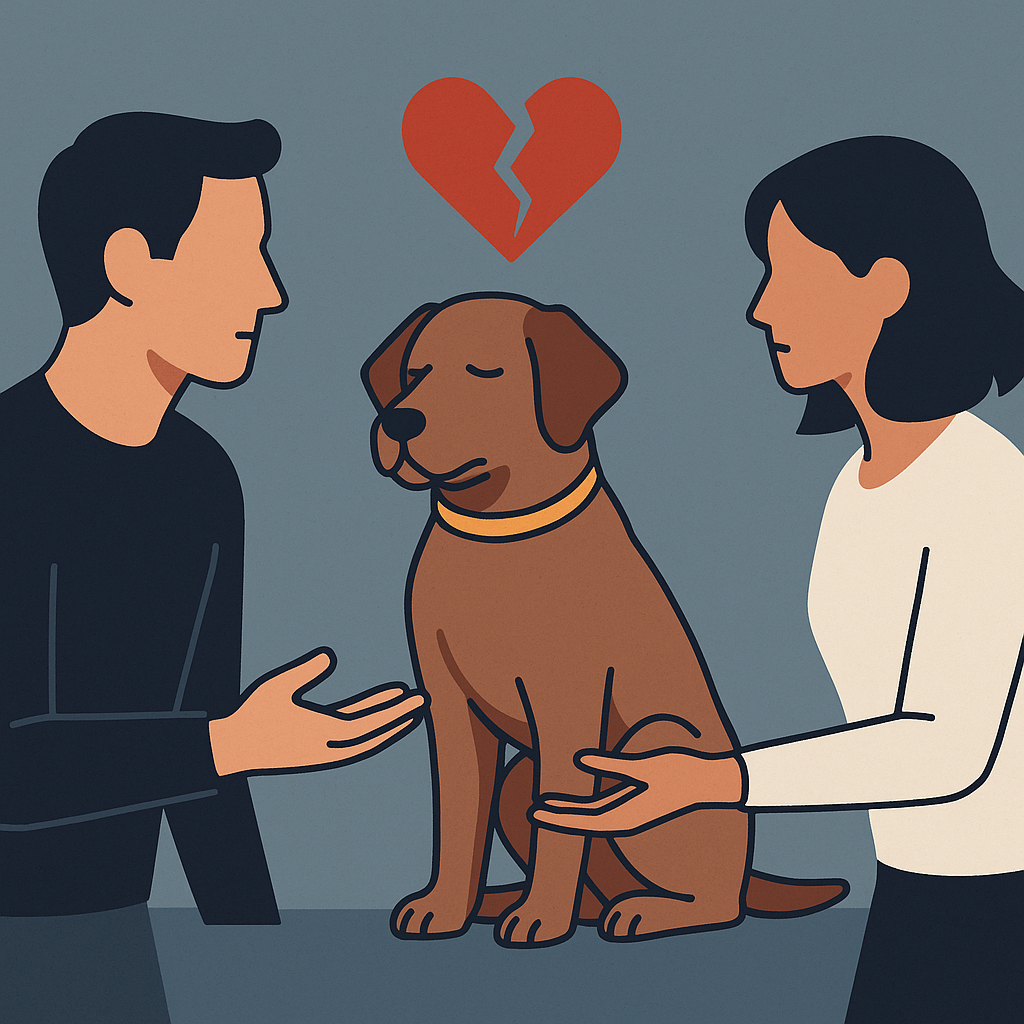
Utah Pet Custody After a Breakup
Plain-English guide to who keeps the pet, what evidence matters, and how to avoid a court fight in Utah.
When a relationship ends, deciding who keeps the dog or cat can feel harder than dividing furniture. Pets are family but under Utah law, they are treated as property. That doesn’t mean courts ignore the emotional bond. Instead, judges look at evidence of ownership and caregiving: who adopted or bought the pet, who handled vet care, and who consistently took responsibility day to day.
This guide from Utah Law Explained walks through how Utah decides pet custody after a breakup, what proof helps your case, and how many couples resolve things through calm conversation or mediation instead of a full-blown lawsuit.
Case Scenario: Who Keeps Milo the Dog?
Imagine this: Emily and Jake adopt a Golden Retriever named Milo while living together in Salt Lake City. Milo sleeps on Emily’s side of the bed, but Jake usually takes him to the vet and pays for food, grooming, and training. When they break up, both say, “Milo is my dog.”
Who keeps Milo? In Utah, the answer is not “who loves him more.” A judge would likely look at:
- Who is named on the adoption or purchase paperwork
- Whose name appears in the vet and microchip records
- Who regularly paid for food, medical care, and other costs
- Who actually handled daily walks, feeding, and training
If the documents and payment history mostly point to Jake, he may have the stronger legal claim even if Emily feels a deep emotional bond. This kind of scenario shows why documentation matters before a breakup ever happens.
How Utah Law Treats Pets After a Breakup
Utah does not currently treat pets the same way it treats children. There is no standard “pet custody” statute with parenting plans and formal visitation schedules. Instead, pets are generally handled as personal property.
In practice, that means Utah courts focus on ownership and control:
- Legal ownership. Who adopted, purchased, or registered the pet?
- Paper trail. Whose name shows up on vet, licensing, and microchip records?
- Financial responsibility. Who consistently paid for food, boarding, grooming, and medical care?
- Caregiving reality. Who actually did the day-to-day work of caring for the animal?
When paperwork is unclear or both partners are listed, judges may weigh the caregiving history more heavily. Courts are also sensitive to stability: a partner with a safer, more stable living arrangement for the pet may be viewed more favorably.
Key Evidence That Strengthens Your Claim
If you believe the pet should stay with you, the strongest cases are built on clear, consistent records not just emotion. Helpful evidence includes:
Options to Resolve Pet Custody Without Going to Court
Taking a pet dispute to court can be slow, expensive, and emotionally draining. Many Utah couples reach a solution outside the courtroom by focusing on the pet’s well-being and being realistic about their own lives.
Common approaches include:
- Informal agreement. Calmly discuss who can reasonably care for the pet, who has a stronger bond, and how schedules and housing will work.
- Written understanding. Even a simple written note or email summarizing your agreement can prevent arguments later.
- Mediation. A neutral mediator can help each person be heard, keep emotions in check, and craft a solution focused on the animal’s needs.
- Shared arrangements. Some exes choose shared time (for example, alternating weeks) if they live close and communicate well, even if a court wouldn’t formally order it.
Court is usually a last resort when one partner refuses to cooperate or uses the pet as leverage in larger disputes.
When Both of You Have a Strong Claim to the Pet
Sometimes both partners have their name on the adoption papers, both contributed to costs, and both cared for the animal. When that happens, a Utah judge may look at additional factors such as:
- Which home offers more stability, space, and safety for the animal
- Whether one person is using the pet to “punish” the other
- The pet’s established routine and attachment (who they spend most time with)
- Work schedules and ability to be physically present
If all else is truly equal, courts may give weight to who first adopted or purchased the pet, or to whichever option causes the least disruption to the animal’s life. That is another reason clear, early documentation can make a difference.
Practical Tips and Common Mistakes in Utah Pet Custody Disputes
Smart steps to take:
- Gather adoption papers, vet records, and microchip details before serious conflict starts.
- Keep your communication calm and focused on the pet’s needs, not old relationship issues.
- Think honestly about your time, budget, and housing before insisting the pet stay with you.
- Talk to a Utah attorney if you see a dispute coming or if the other person is making legal threats.
Common mistakes that hurt your position:
- Hiding the pet, blocking contact without cause, or threatening to “get rid of” the animal.
- Refusing all compromise when your documentation is weak.
- Only relying on emotional appeals instead of collecting records and proof.
- Letting the dispute spill onto social media, where posts can be used against you.
A little planning and documentation often leads to better outcomes than rushing to court out of anger.
YouTube & Instagram: Learn More About Pet Custody
YouTube: Pet Custody After a Breakup
Instagram: Real Stories & Quick Pet Custody Tips
Trying to Figure Out Who Keeps the Pet?
Pet-custody disputes are emotionally heavy, but Utah law still comes back to ownership and caregiving evidence. Clear records, calm negotiation, and, when needed, mediation often lead to better outcomes than a full property fight in court.
Talk to a Utah AttorneyFor more plain-English legal guidance, stay updated with Utah Law Explained, explore our mission on the About Us page, or connect with trusted counsel like Gibb Law Firm.