
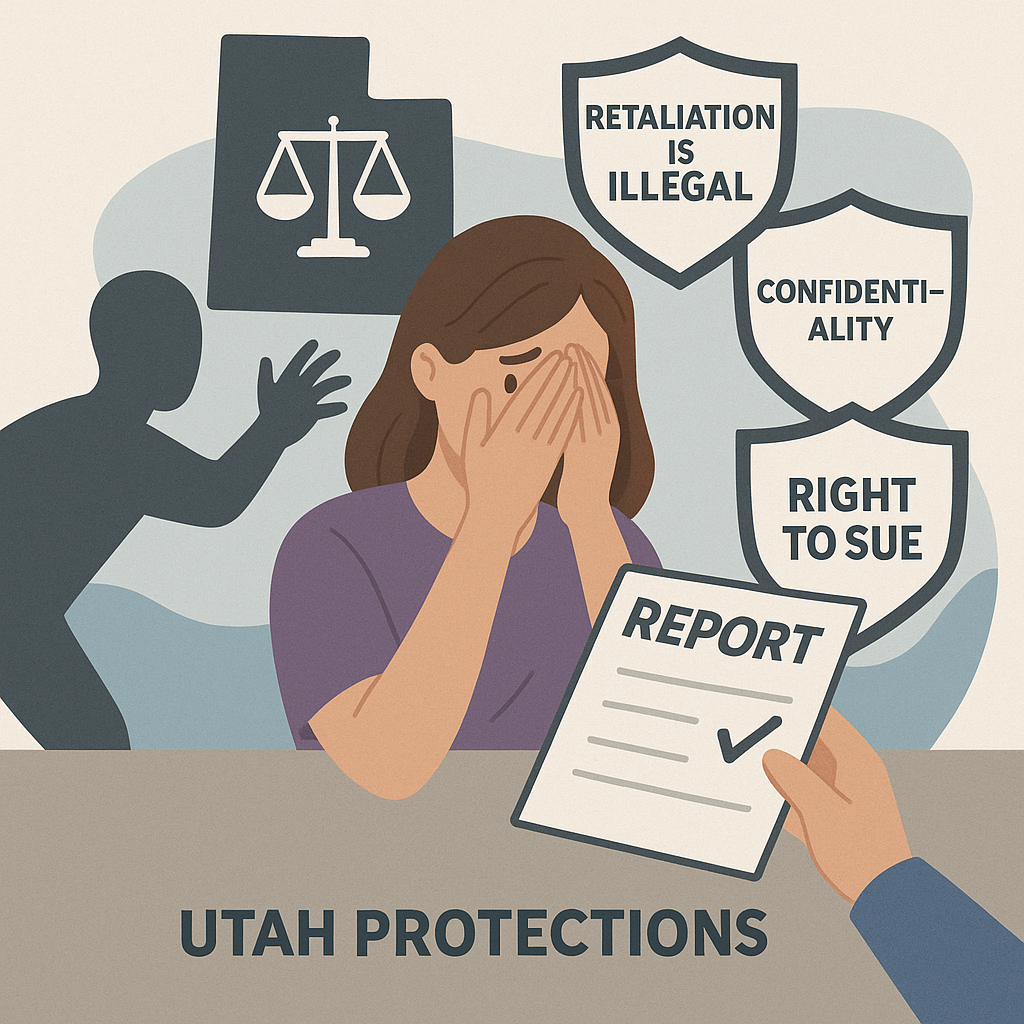
Utah Protections After a Workplace Sexual Harassment Report
Plain-English guide to Utah workplace sexual harassment, reporting options, and retaliation protections
Reporting sexual harassment at work is hard enough. Worrying about losing your job, hours, or promotions for speaking up can make it feel impossible. Utah and federal law recognize this and give employees strong protections after they report harassment or take part in an investigation. This guide explains what counts as sexual harassment in Utah workplaces, how reporting works, and what protections you have if anything changes at work after your complaint.
What Counts as Workplace Sexual Harassment in Utah
Sexual harassment in Utah is treated as a form of unlawful discrimination under both the Utah Antidiscrimination Act and federal Title VII. It is not limited to one type of behavior or one kind of workplace. What matters is whether the conduct is unwelcome and tied to sex or gender.
Two common legal categories show up in Utah cases:
- Quid pro quo harassment. A manager or supervisor conditions work benefits such as a promotion, a good schedule, or keeping your job on sexual favors or tolerance of sexual conduct. Even a single serious incident can be enough.
- Hostile work environment. Ongoing unwelcome behavior, comments, messages, jokes, touching, or images that is severe or pervasive enough to make the workplace intimidating, hostile, or offensive.
Courts look at the whole picture: how often the conduct happened, who did it, how it affected your work, and how your employer responded once they knew about it.
Reporting Harassment: Internal and External Options
Most Utah cases turn on when and how the employer learned about the harassment. Once a business knows there is a problem, it has a legal duty to take reasonable steps to investigate and correct it.
Common internal reporting paths in Utah workplaces include:
- Following the company’s written harassment policy
- Reporting to a supervisor or manager
- Reporting directly to Human Resources (HR)
- Using an anonymous hotline or reporting portal, if offered
Your report does not have to use special legal words. In many cases, it is enough that you make it clear you believe you are being harassed or discriminated against and that you want it to stop.
In more serious situations, or if your employer ignores your complaint, you can also go outside the company and report to the Utah Labor Commission or the EEOC. Those options are explained further below.
Anti-Retaliation Protections After You Report
The law does not just protect you from harassment itself it also protects you from retaliation after you report it. Employers in Utah generally cannot punish you because you:
- Reported sexual harassment or discrimination
- Participated in an internal investigation
- Filed a charge with the Utah Labor Commission or EEOC
- Supported or testified for a coworker’s complaint
Retaliation can be obvious or subtle. Examples that often show up in Utah employment cases include:
- Termination, demotion, or forced reduction in hours
- Sudden negative performance reviews after years of good feedback
- Unwanted shift changes that make your life significantly harder
- Exclusion from meetings, training, or opportunities you used to have
- Hostile treatment from supervisors or coworkers because you spoke up
Even if your employer ultimately disagrees that the behavior was “legal harassment,” they still cannot lawfully retaliate against you for raising a good-faith concern.
Case Study: Reporting Harassment at a Utah Workplace
Imagine a Utah employee, Sara, working at a mid-size company in Salt Lake County. Her supervisor makes repeated comments about her body, sends late-night messages, and “jokes” about her needing to be more “friendly” to move up.
After a few weeks, Sara emails HR, describing specific incidents and attaching screenshots of the messages. Under Utah and federal law, that email is protected activity. The company must now take the complaint seriously.
A lawful response might include:
- Promptly interviewing Sara, the supervisor, and any witnesses
- Preserving texts, emails, and chat records as evidence
- Separating Sara from the supervisor during the investigation
- Disciplining or removing the supervisor if harassment is confirmed
If, instead, the company ignores the complaint or moves Sara to a worse shift “to avoid conflict,” then later cuts her hours and labels her “not a team player,” that pattern can look like retaliation. Even if there is a dispute about the underlying harassment, Sara may have a strong retaliation claim based on what happened after she reported.
Filing Complaints with the Utah Labor Commission and EEOC
If internal reporting does not fix the problem or if the retaliation is serious, Utah workers often turn to government agencies. In most situations, you must file with one of these agencies before suing in court.
Two main enforcement bodies handle Utah workplace harassment and retaliation claims:
- Utah Labor Commission, Antidiscrimination & Labor Division (UALD). Enforces Utah antidiscrimination law for many employers. Employees usually must file within a relatively short time limit from the last incident, so it is important not to wait to get information about deadlines.
- Equal Employment Opportunity Commission (EEOC). Enforces federal anti-discrimination and retaliation laws. In Utah, many claims are “dual filed” with both UALD and the EEOC so that state and federal rights are preserved.
These agencies can investigate, ask the employer for documents, interview witnesses, and try to resolve the dispute. In some cases, they may issue a “right to sue” letter that allows you to take your claim to court with an attorney.
Documentation & Next Steps for Utah Workers
You do not need perfect evidence to report harassment, but solid documentation can make a big difference if your case is later reviewed by an investigator, agency, or court.
Utah workers often find it helpful to save:
- Texts, emails, chat messages, or social media messages showing harassment or retaliation
- A simple timeline of key dates: when the conduct started, when you reported, and what changed afterward
- Copies of performance reviews, write-ups, and schedules from before and after your complaint
- Names of coworkers who witnessed the conduct or the changes in how you were treated
If you start to notice negative changes at work after your report, write down what is happening and when. Then consider speaking with an experienced Utah employment attorney or contacting the Utah Labor Commission or EEOC to better understand your options.
Video & Social Learning Hub
YouTube: Utah Workplace Harassment & Retaliation
Need Help Protecting Your Job After a Report?
If you have reported sexual harassment at work in Utah and are now worried about retaliation, you do not have to figure it out alone. A Utah employment or civil-rights attorney can help you understand your options and how state and federal protections apply to your situation.
Talk to a Utah AttorneyFor more plain-English legal guidance, stay updated with Utah Law Explained, explore our mission on the About Us page, or connect with trusted counsel like Gibb Law Firm.