
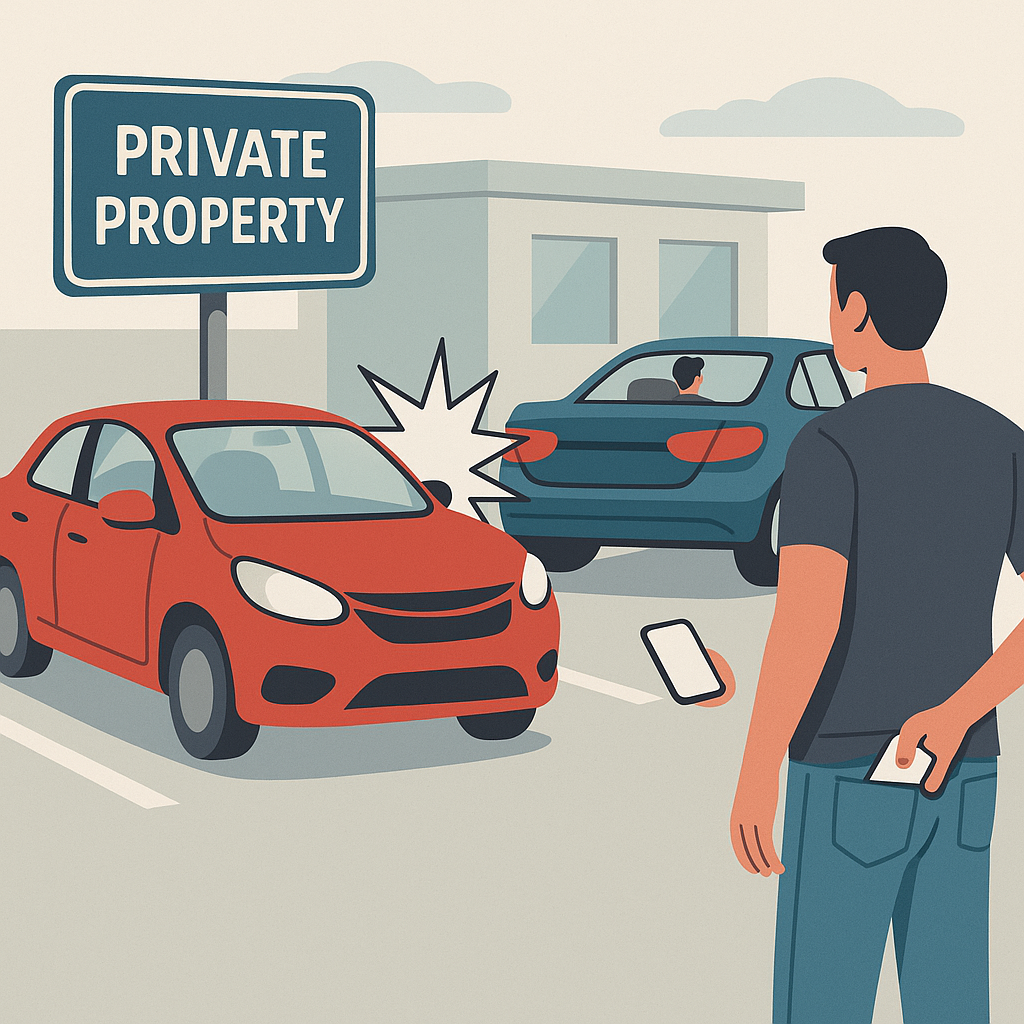
What to Do After a Hit-and-Run on Private Property in Utah
Step-by-step Utah guide to private-property hit-and-run reporting, evidence, and insurance claims.
A hit-and-run is stressful no matter where it happens but in Utah, leaving the scene on private property (like parking lots, driveways, apartment complexes, or store lots) is still illegal. Even off the public road, you’re expected to report, document, and cooperate with insurance. This guide walks you through what to do the moment you discover damage, how to involve police, and how to pursue insurance coverage when the other driver is unknown.
Step 1 Make Sure the Area Is Safe
Before anything else, check your surroundings. Even in a parking lot or driveway, your vehicle might be blocking traffic, hiding a hazard, or sitting in a blind spot. If it’s safe, quickly capture how you first found the car before moving it.
Checklist:
- Look for immediate dangers (leaking fuel, sharp debris, traffic flow).
- Check that everyone in or around the car is uninjured.
- Snap a few quick photos of the vehicle’s position before moving it.
- Move the vehicle to a safer parking spot if it’s creating a hazard.
Step 2 Call Local Police (Even on Private Property)
In Utah, leaving the scene after causing damage can still be treated as a hit-and-run even when it happens on private property. A police report creates an official record that your car was damaged by an unknown driver not by you.
Use the non-emergency line if no one is hurt. If there are injuries, call 911.
Checklist:
- Call local police and explain that this was a hit-and-run on private property.
- Provide the exact location (store lot, workplace garage, apartment complex, etc.).
- Note the approximate time you parked and when you discovered the damage.
- Ask how to obtain a copy of the police report for your insurance claim.
Step 3 Document Every Detail You Can
Because the other driver fled, your documentation becomes the core of your claim. Clear photos and notes help insurance and sometimes police reconstruct what happened.
Checklist:
- Take close-up and wide-angle photos of all damage to your car.
- Photograph broken glass, plastic pieces, or paint transfer left behind.
- Capture the parking spot, nearby poles, curbs, or other property damage.
- Write down the date, time, weather, and what you were doing before/after parking.
- Save dash-cam footage if available, and back it up before it records over.
Step 4 Look for Video and Witnesses
Many Utah hit-and-runs on private property are caught on camera even if you didn’t see it happen. Footage and witness statements can identify the vehicle or at least confirm that another driver caused the damage.
Checklist:
- Ask the business, property manager, or security office about parking-lot cameras.
- Check for Ring, Nest, or other home cameras if this happened at a residence.
- Request video from the timeframe when the car was parked and when you returned.
- Talk to nearby employees, residents, or shoppers who might have seen or heard the crash.
- Write down witness contact information and any plate numbers they recall.
Step 5 Notify the Property Owner or Manager
Private-property owners often have their own incident procedures and camera systems. Reporting the hit-and-run helps them protect other drivers and may give you access to additional evidence.
Checklist:
- Report the incident to the store, complex office, HOA, or garage manager.
- Ask if they have security footage and how they handle video requests.
- Request an incident report or at least email confirmation that you reported the damage.
- Ask if similar incidents occurred recently patterns can help investigations.
Step 6 Contact Your Insurance and Track All Costs
Even when the other driver disappears, your own insurance may cover the loss. In Utah, hit-and-runs on private property are often handled through Uninsured Motorist Property Damage (UMPD) or collision coverage, depending on your policy.
Insurers usually want prompt notice and a police report before they’ll treat it as a hit-and-run claim.
Checklist:
- Call your insurer and report a hit-and-run on private property in Utah.
- Provide the police report number once available.
- Upload your photos, video clips, and any written witness statements.
- Ask whether UMPD, collision coverage, or another coverage applies and what your deductible is.
- Get written repair estimates from a reputable shop and keep all receipts.
- Track rental-car or rideshare costs if your vehicle is undrivable and you have rental coverage.
- Follow up for the final police report and send a copy to your adjuster when it’s ready.
Video & Social Learning Hub: Hit-and-Run on Private Property
YouTube: What to Do After a Hit-and-Run
Instagram: Post-Accident & Hit-and-Run Tips
Need Help Applying This to Your Situation?
A hit-and-run on private property can feel unfair and overwhelming, especially when the other driver disappears. But quick reporting, strong evidence, and the right insurance steps can make a real difference in whether you recover your losses. If you’re unsure how Utah law applies to your specific facts, speaking with a Utah attorney can help you understand your options.
Talk to a Utah AttorneyFor more plain-English legal guidance, stay updated with Utah Law Explained, explore our mission on the About Us page, or connect with trusted counsel like Gibb Law Firm.