
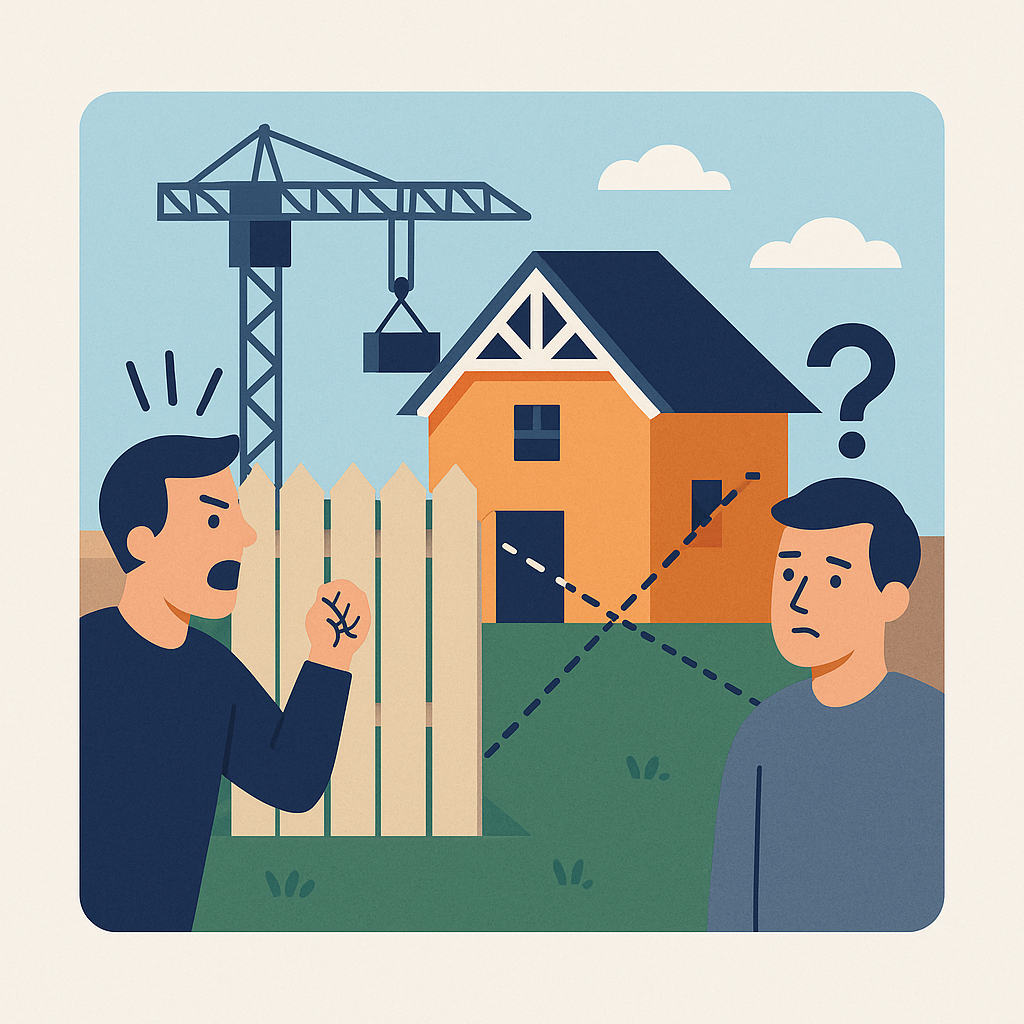
When a Neighbor’s Construction or Fence Encroaches on Your Utah Property
Plain-English guide to Utah property line encroachment, boundary disputes, and practical remedies.
Property lines are serious business in Utah. A fence, shed, wall, driveway, or home addition that crosses even a few inches over the boundary can create long-lasting legal problems , especially because Utah law recognizes doctrines like adverse possession and boundary by acquiescence, which can shift ownership over time.
This guide walks you through what encroachment is, how Utah boundary laws work in plain English, and the realistic options you have if a neighbor’s construction or fence ends up on your land. The goal is simple: give you a clear, actionable path before a small property line issue turns into a long, expensive fight.
What Is Property Line Encroachment in Utah?
Encroachment happens when someone builds or places something on land that legally belongs to you. It is not just a neighbor “getting too close”it is a structure or improvement physically crossing the boundary line.
Common Utah examples include:
- New fences installed a foot or more over the line
- Retaining walls or block walls that sit on your side
- Garages, sheds, or home extensions built partly on your lot
- Driveways or concrete pads that overlap onto your property
- Sprinkler lines, landscaping, or irrigation systems running across the boundary
Encroachment disputes in Utah often involve boundary surveys, local city or county building codes, and civil claims like trespass or nuisance. The sooner you identify what is happening and get accurate information, the easier it usually is to fix.
Scenario Breakdown: How Encroachment Shows Up in Real Life
Most Utah homeowners discover encroachment in very ordinary ways during a home project, when replacing an old fence, or after hiring a surveyor. Here are three common scenarios explained in plain English.
Scenario 1: “My neighbor put up a new fence and it looks over the line.”
This is the most typical dispute. A neighbor hires a contractor, eyeballs the line, and a brand-new fence ends up built on your land.
Your rights: if the fence sits on your property, you can ask for it to be moved. To get there, you usually need a licensed survey to confirm where the legal boundary actually is. If the fence is recent, courts are more likely to see it as straightforward trespass that can be corrected.
Scenario 2: “Part of their shed, garage, or addition is on my property.”
Permanent structures raise the stakes. A few inches of encroachment from a wall, garage, or addition can affect resale value, future building plans, and even financing.
Depending on the facts, your options may include demanding removal or modification, negotiating a written easement so the structure can stay, or asking a Utah court for an order clarifying ownership and requiring a fix.
Scenario 3: “Their driveway or concrete crosses my lot line.”
Concrete is expensive to move, which makes these cases tense. Long-term use of a strip of driveway can also fuel claims of adverse possession or boundary by acquiescence if the issue sits for years without objection.
That does not mean your neighbor instantly “wins” your land, but it does mean waiting too long to act can make your side of the story harder to prove later.
Utah Law Basics: Boundaries, Adverse Possession & Acquiescence
Encroachment cases in Utah often turn on a handful of legal concepts. You don’t need to memorize the statute numbers, but it helps to understand the basics.
Boundary Surveys as Core Evidence
A licensed Utah surveyor is often the most important witness in a boundary dispute. Their job is to take the legal description of your property from the deed and physically mark the true line on the ground. Without a survey, you and your neighbor are mostly arguing based on assumptions, memories, or old fence lines.
Adverse Possession (Long-Term Use of Land)
Adverse possession is a doctrine that can, in limited situations, transfer ownership if someone openly uses another’s land as their own for a long period and meets specific legal requirements. Courts do not casually “give away” property, but if an encroachment sits unchallenged for many years, this argument may appear in a dispute.
Boundary by Acquiescence (Common in Fence Cases)
Boundary by acquiescence is a Utah-specific risk. If both neighbors treat a misplaced fence or wall as the true boundary for many years, a court can decide that the fence itself has become the legal boundary, even if a later survey disagrees.
This is why old fences are tricky: the longer everyone silently accepted them, the stronger a boundary-by-acquiescence argument may become.
Trespass and Encroachment Claims
When a structure crosses over onto your land without permission, that is typically a form of trespass. Utah courts can order removal, award damages, or approve a negotiated solution such as an easement or land swap, depending on what is most practical and fair in the circumstances.
Step-by-Step: What to Do If You Discover Encroachment
When you first realize that a neighbor’s fence or construction may be on your property, it is tempting to react quickly. A calmer, step-by-step approach usually works better.
Step 1: Confirm, Don’t Guess
Start by locating your deed and any old surveys from your closing documents. Then, if the situation is unclear, hire a licensed Utah surveyor to verify the boundary. A precise line on paper and on the ground is far more persuasive than “I think” or “the previous owner told me.”
Step 2: Talk to Your Neighbor (Calmly)
Once you have solid information, share your concern with your neighbor in a non-accusatory way. Many people truly believe they built on their own land. Showing them the survey results and offering to problem-solve together can avoid months of hostility.
Step 3: Put It in Writing
If a friendly conversation does not resolve the issue, consider a polite but firm written notice or demand letter. This can be drafted by you or, better yet, a Utah attorney. The letter should explain the encroachment, reference the survey, and state what you would like done (such as moving the fence or negotiating an easement).
Step 4: Explore Mediation
For close neighbors, mediation can be a low-drama way to solve the problem. A neutral third party helps you both talk through options removal, adjustment, compensation, or written permission without a courtroom battle.
Step 5: Consider Legal Action if Needed
If a structure is clearly on your land and the neighbor refuses to cooperate, a Utah property attorney can help you evaluate filing a lawsuit. Typical claims may include trespass, quiet title (asking the court to clarify who owns what), or seeking an order requiring removal or modification of the encroaching structure.
Common Mistakes Utah Homeowners Should Avoid
Even well-meaning homeowners can weaken their position by reacting too fast or not reacting at all. Here are pitfalls to watch for.
- Assuming the existing fence is correct. Old fences are often in the wrong place. Treat them as clues, not proof.
- Waiting years to say anything. The longer an encroachment sits, the more room there is for adverse possession or boundary-by-acquiescence arguments.
- Letting the neighbor use the land “just this once.” Casual permissions without anything in writing can be misunderstood later.
- Skipping the survey. Arguing based on guesswork makes the dispute more emotional and less fixable.
- Expecting the city or county to “fix it.” Most encroachments are private civil matters between neighbors, not something local government will resolve for you.
Addressing encroachment early before structures age, memories fade, and patterns of use become entrenched is usually the best way to protect your boundary and keep future buyers, lenders, and courts from facing a confusing mess.
YouTube & Instagram Guides on Neighbor Encroachment
YouTube: Understanding Encroachment & Property Lines
Instagram: Real-World Fence & Wall Disputes
Need Help Protecting Your Property Line?
Encroachment disputes can feel personal and overwhelming, but addressing them early is the best way to prevent years of costly litigation and strained neighbor relationships. Whether it’s a fence, wall, driveway, or shed, Utah law gives you tools to clarify the boundary and seek a practical fix.
Talk to a Utah AttorneyFor more plain-English legal guidance, stay updated with Utah Law Explained, explore our mission on the About Us page, or connect with trusted counsel like Gibb Law Firm.