
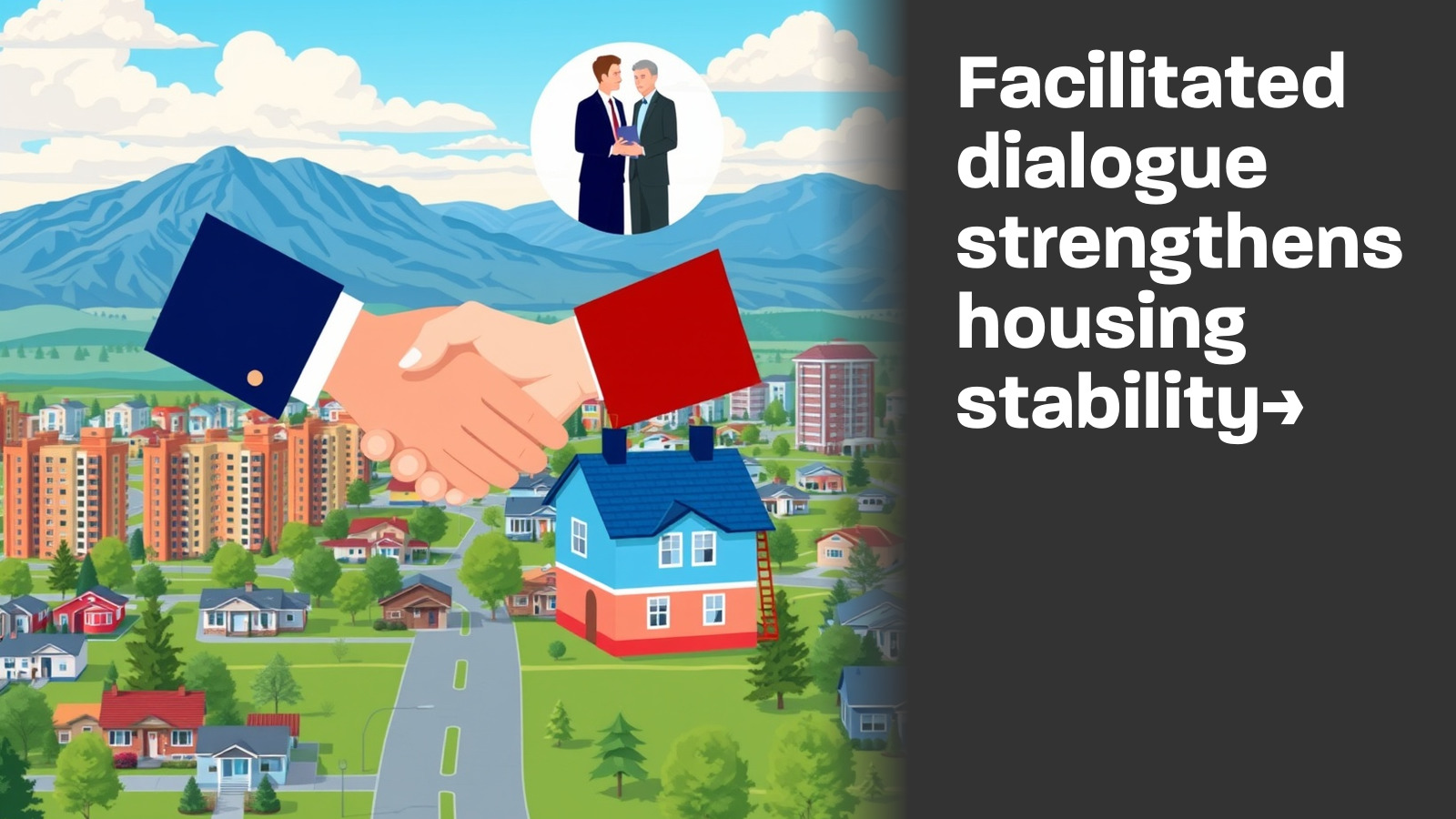
Utah’s housing market is experiencing a significant shift in how disputes between landlords and tenants are resolved. In recent years, the rise of mediation-based approaches has shown promise in de-escalating conflicts and preventing evictions. The formation of the Landlord and Community Partners Coalition—an initiative designed to bridge the gap between property owners and renters—has garnered attention as a model for collaborative conflict resolution. This coalition emphasizes the importance of communication, mutual understanding, and proactive engagement in resolving issues before they escalate to legal battles. By bringing together mediators, housing services specialists, and community action organizations, the coalition seeks not only to stabilize housing but also to create long-term, sustainable relationships between landlords and tenants.
This trend comes at a crucial time when many vulnerable populations face housing instability. With rising rental costs and an increasingly competitive market, the need for timely and effective resolution mechanisms has never been more urgent. The coalition’s work resonates deeply with local stories across Utah—from the struggles of tenants confronting eviction notices to disputes over overdue rent that could lead to abrupt displacement. Moreover, recent examples from other jurisdictions, such as Hawaii’s new mediation process under Act 202, serve as instructive case studies that complement Utah’s efforts. Ultimately, the trend toward mediation underscores a broader movement within Utah’s legal and housing communities: a commitment to protecting vulnerable populations while ensuring that landlords, who are vital to the housing supply, are also supported in maintaining their business interests.
As more stakeholders recognize that effective mediation can reduce the emotional and financial toll of housing disputes, Utah is poised to become a leader in collaborative resolution strategies. This introductory analysis lays the groundwork for understanding the multifaceted approaches being deployed and sets the stage for a detailed discussion of the major trends shaping housing mediation in the state.

1. Strengthening Landlord-Tenant Coalitions
A key trend reshaping the housing dispute landscape in Utah is the emergence of landlord-tenant coalitions committed to fostering cooperative relationships. The Landlord and Community Partners Coalition, as reported from Salt Lake City, is a prime example of an initiative that bridges the traditional divide between property owners and renters. By emphasizing mediation over litigation, the coalition helps both parties understand that long-term stability is in everyone’s best interest. Participants in the coalition, including housing services specialists and nonprofit mediators, work diligently to provide early intervention. For instance, specialists such as Cody Egan stress the importance of reaching out before conflicts escalate—a message that resonates with many tenants and landlords facing high-pressure situations caused by eviction notices or overdue rent.
The coalition’s philosophy is rooted in the idea that effective housing management benefits equally from a business mindset and a recognition of personal needs. As Heather Lester of Utah Community Action explains, the goal is to underscore the fact that “landlords honestly do need tenants just as much as tenants need landlords.” This mutual dependency forms the backbone of the coalition’s initiatives, ensuring that mediation services remain accessible to all. Such collaborative efforts are particularly vital amid a backdrop of rising rental costs and economic uncertainties that put extra pressure on occupancy rates. By inviting both parties to participate in structured, state-supported mediation, the coalition is helping mitigate the adverse effects of sudden evictions, foreclosure risks, and iterative disputes.
Over time, these measures are expected to not only stabilize the housing market but also contribute to more predictable and just outcomes for all involved. The ongoing dialogue between landlords and tenants, facilitated by expert mediators, reflects a broader shift in Utah’s housing policies towards proactive, rather than reactive, dispute resolution. As this trend continues to develop, it promises to serve as a model of how strong community partnerships can lead to more resilient and sustainable housing systems statewide.

2. Proactive Mediation and Eviction Prevention
Another trend gaining traction in Utah’s housing market is the increasing use of state-funded mediation to prevent evictions and resolve overdue rent disputes. With many tenants facing the harsh reality of eviction notices and landlords struggling to manage rental arrears, mediation has become an essential tool in de-escalating potentially adversarial situations. Drawing on lessons from nationwide examples—such as Hawaii’s recently enacted Act 202—the Utah experience emphasizes the importance of early engagement. Housing specialists advise that tenants should seek mediation before conflicts reach a critical point. As highlighted by community experts, waiting until problems accumulate often leads to resentment and less effective outcomes.
This trend is characterized by a structured approach where mediation services are provided free of charge and made accessible through community action partnerships. These services offer a neutral forum where tenants and landlords can come together to design mutually agreeable solutions to rent arrears and disputes. The benefits are clear: not only do such interventions help avoid the disruptive consequences of evictions, but they also preserve important tenant-landlord relationships, which are crucial to maintaining a stable housing supply. Moreover, mediation has shown to reduce both the emotional stress placed on families and the legal costs for both parties involved.
As the demand for such services grows, there is a concerted push among local organizations to raise awareness of mediation options early in the dispute cycle. This proactive approach is proving particularly beneficial in high-demand areas, where housing vouchers and other supportive services add a layer of protection for vulnerable tenants. By reinforcing the idea that early communication can prevent escalation, Utah’s mediation models are setting new standards that could well be adopted in other states facing similar housing challenges.

3. Cross-Jurisdictional Lessons and Adaptive Practices
Although Utah has its unique legal and housing landscape, recent mediation practices have drawn comparative lessons from other jurisdictions. For example, while Maui’s recently implemented Act 202 introduces a robust, mediation-based process to resolve overdue rent disputes and prevent evictions as a state-funded initiative, Utah’s community organizations are considering how similar adaptive practices might further support the local housing market. These cross-jurisdictional insights highlight the importance of flexibility in mediation protocols, tailored to the economic and demographic realities of each community. In Utah, where the relationship between landlords and tenants is often strained by economic pressures and rapidly rising rents, adaptive mediation practices are not just a stopgap measure—they are becoming a fundamental pillar of housing policy.
Experts suggest that integrating a coordinated mediation process with local regulatory frameworks could help standardize how disputes are managed, irrespective of county variations. By learning from successful models elsewhere, Utah’s policymakers and community leaders are exploring ways to offer mediation channels that are both efficient and culturally sensitive. This includes providing multilingual resources, digital mediation platforms for remote access, and extended support beyond the initial resolution phase to help ensure that agreements are upheld. The ultimate goal is for the mediation process to serve not only as conflict resolution but also as a preventative mechanism that fosters long-term collaboration and community cohesion.
The adaptive practices emerging from these lessons are reflective of a broader trend: the willingness to innovate and customize legal support systems according to local needs. As Utah continues to evolve its housing policies, such cross-jurisdictional inspirations offer valuable guidance in crafting a mediation framework that is resilient, inclusive, and effectively addresses the complexities of modern rental disputes.

4. Future Outlook: Integrated Policy Reforms and Expanded Support Networks
Looking ahead, the future of housing mediation in Utah is poised for significant evolution driven by integrated policy reforms and the expansion of support networks for both tenants and landlords. Stakeholders envision a future where mediation services are not just reactive but woven into the fabric of housing policy as a preventative measure. This vision includes enhanced state-funded mediation programs, continuous training for mediators, and widespread public education initiatives that embolden tenants to seek early intervention. Legislative proposals aimed at standardizing mediation procedures across counties, coupled with increased funding for community action partnerships, could dramatically reduce the incidence of housing crises.
Moreover, there is a growing recognition that robust mediation can help defuse tensions that, if left unresolved, lead to costly litigation and prolonged displacement. In the near future, a multi-pronged strategy is expected to emerge—one that not only improves immediate dispute resolution but also creates mechanisms for ongoing support and follow-up. By leveraging digital platforms, local governments may offer virtual mediation sessions and online resources designed to guide both tenants and landlords through the complexities of their legal rights. Such initiatives would also include regular updates and training sessions to keep all parties informed of new legal developments and best practices.
Ultimately, the successful integration of these elements is expected to foster a more stable and equitable housing market in Utah. As policymakers refine laws that encourage proactive conflict resolution, and community organizations continue to offer practical support, the state may serve as a national model for collaborative dispute resolution. Utah Law Explained remains dedicated to empowering its readers with clear insights on legal trends, ensuring that both tenants and landlords are better equipped to navigate a rapidly changing housing landscape. Together, these efforts promise to create a more harmonious and sustainable future for all Utahns.