
What Utah Homeowners Should Know About Easements & Neighbor Property Rights
Plain-English guide to easements, boundaries, access, utilities, and neighbor rights in Utah
This article explains how easements and neighbor property rights work in Utah, including what they mean for driveways, fences, utilities, and shared access areas on your land. Property lines can be clear on paper but complicated in real life. Utah homeowners often face unexpected questions about who can use what, where boundaries begin, or whether a neighbor has the right to cross part of their land. This explainer breaks down the essentials of Utah easement law and how to manage them responsibly.
Understanding Easements in Utah
An easement is a legal right that allows someone else to use a portion of your property for a specific purpose. You still own the land, but the easement grants access or usage rights to another person, utility company, or entity. In Utah, easements often appear in deeds or plats, but they can also arise through consistent long-term use or agreement between neighbors.
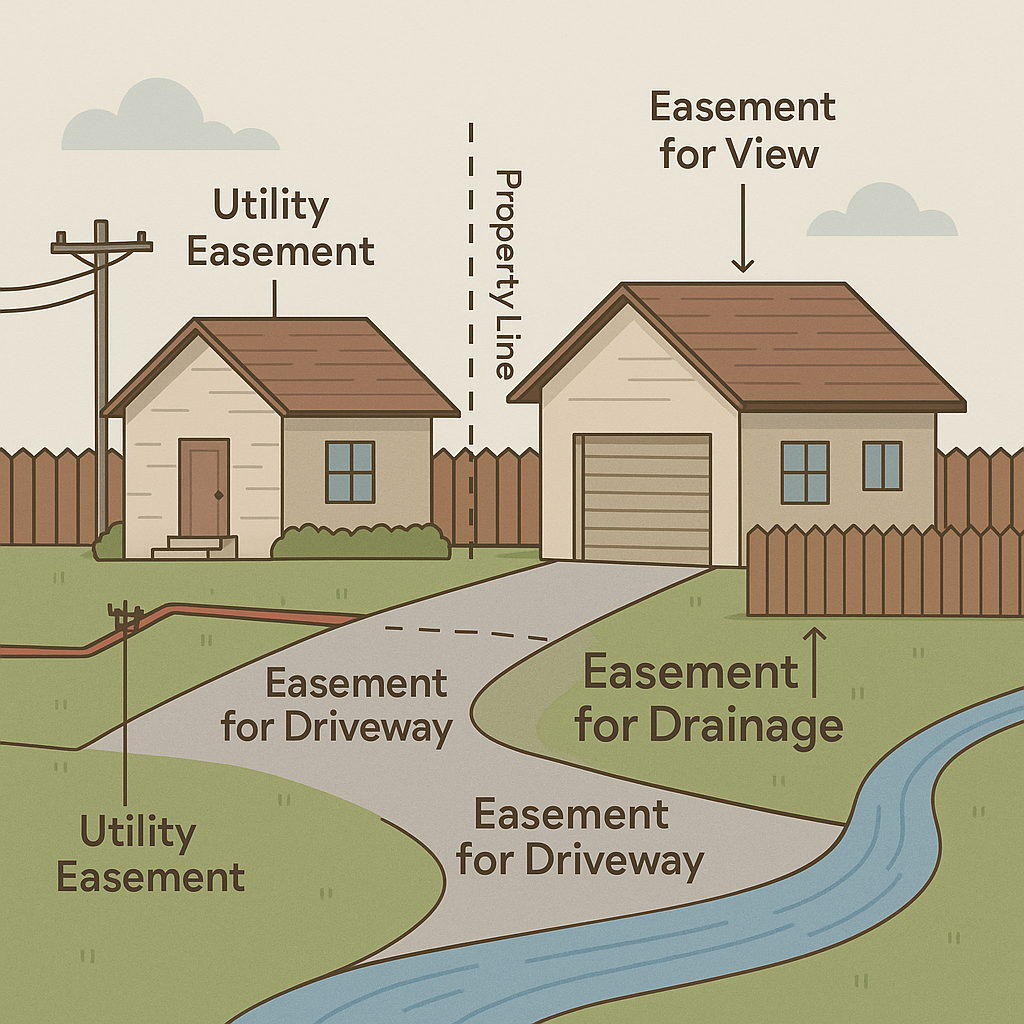
The key is recognizing that an easement limits how freely you can use the affected part of your land. Common examples include utility easements for power lines, water drainage, or shared driveways.
Common Types of Easements in Utah
- Utility easements: Allow power, gas, and telecom companies to install and maintain lines or pipes.
- Access easements (ingress/egress): Grant someone the right to cross your property to reach their own land.
- Drainage easements: Allow for the natural flow or management of water runoff between properties.
- Scenic or view easements: Restrict construction or landscaping that could block a view or sunlight.
Understanding which type applies to your property helps you determine what activities are permitted and what may violate another’s rights.
How Easements Are Created in Utah
- Express Easements: Written and recorded in your property deed or another legal document.
- Implied Easements: Not written down, but assumed based on long-term, obvious use or necessity, such as a driveway used for decades.
- Prescriptive Easements: Established through open, continuous, and unchallenged use over time, typically 20 years under Utah Code §57-13-1.
Homeowners can search for easement information through a county recorder’s office or a state parcel map viewer, which maintain property records and plats.
Rights and Responsibilities
If your property has an easement, you retain ownership but must not block or interfere with the easement’s intended use. Likewise, the easement holder must use it only for the specific purpose stated in the agreement.
For example, if a neighbor has an access easement to reach their driveway, they cannot use it to park long term or store equipment. Misuse can lead to civil disputes and possible injunctions.
When a Neighbor Blocks or Builds on Your Property
Disputes often arise when neighbors install fences, landscaping, or structures that cross a boundary or block an access route. Before taking action, confirm the property line and easement boundaries through a licensed Utah land surveyor.
If the obstruction violates an easement or encroaches on your land, first try a calm discussion with your neighbor. If that fails, you may file a quiet title action or trespass complaint in district court to have the boundary clarified or the obstruction removed.
Modifying or Terminating Easements
Changing or ending an easement in Utah usually requires a written agreement between all affected property owners. If the original purpose no longer exists, such as when a road is replaced by a new one, courts may terminate it.
Be cautious about assuming an easement has expired. Even unused easements can remain valid unless formally released in writing and recorded with the county.
Scenario Example: Shared Driveway Dispute
Imagine two homeowners sharing a narrow driveway that runs across one person’s property. Over time, one homeowner installs a fence that narrows access, preventing the other from reaching their garage.
If the shared use is based on a recorded easement, the obstructing homeowner can be compelled to remove the fence. If the access was informal, the court may weigh evidence of historical use before granting or denying continued access rights. This is why confirming your deed and recorded easements before disputes arise is critical.
Relevant Utah Law
Utah Code §57-13-1 and related statutes govern the creation and enforcement of easements. Property owners can also reference Utah’s Boundary by Acquiescence Doctrine, which recognizes long-term accepted boundaries even if the official line differs.
YouTube & Instagram Resources
YouTube: Easements & Neighbor Rights in Utah
Need Help Applying This to Your Property?
Understanding your property rights starts with knowing what is on paper and what has been practiced over time. Easements can be helpful or frustrating, but clarity and communication go a long way.
Talk to a Utah AttorneyFor more plain-English guides on Utah real estate and homeowner laws, visit Utah Law Explained. This article provides legal information only and should not be taken as legal advice. Always confirm easement details before buying, building, or making changes to your land.