
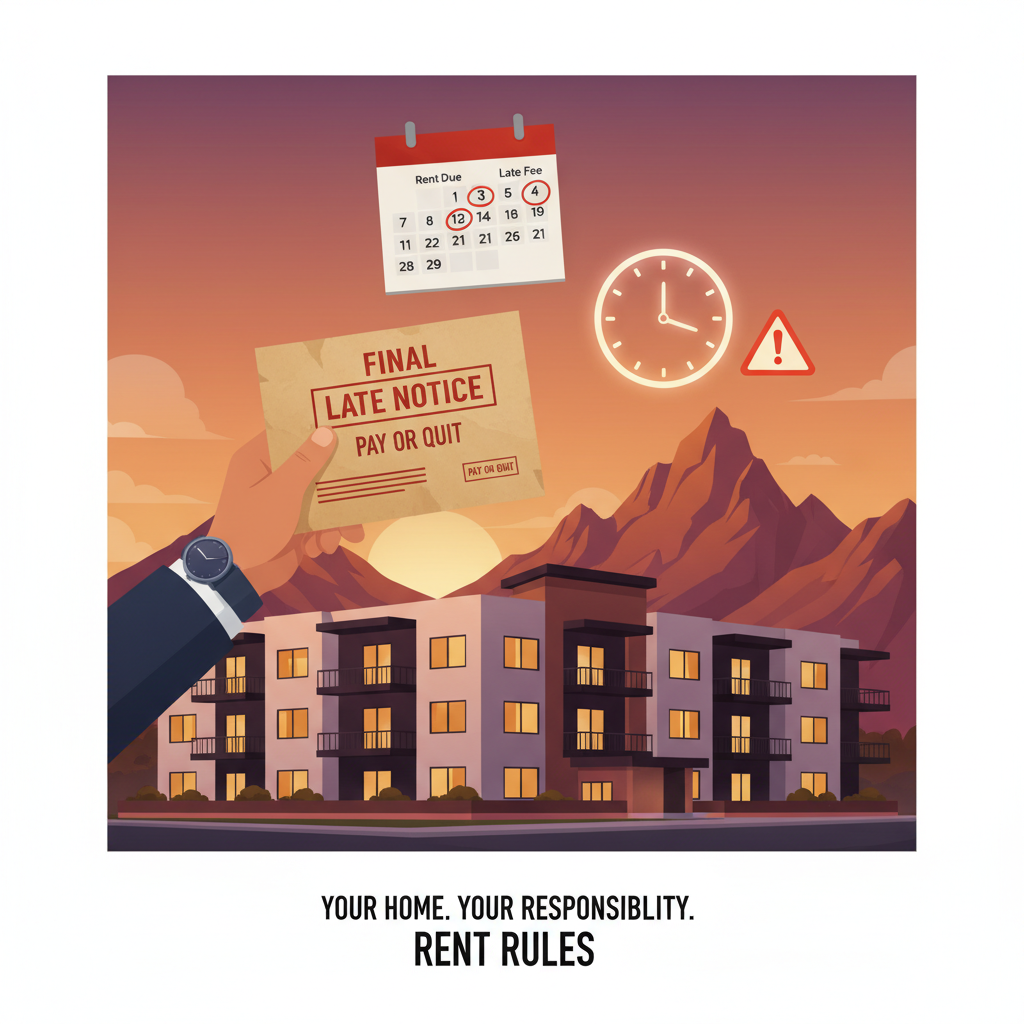
What are Utah rules on late fees, grace periods, and rent notices? It’s a question many Utah landlords and renters face. Whether you’re new to owning a duplex in Ogden or renting an apartment in Salt Lake City, understanding Utah’s rental payment rules can save you time, money, and headaches. This guide breaks down the biggest mistakes Utahns make—and how to avoid them.
Renting in Utah can be straightforward if you know the law. A little bit of knowledge about late fees, grace periods, and legal notice requirements helps everyone—from college students in Provo to families moving to St. George—stay on the right side of the rules. Let’s look at where folks most often get tripped up and how you can do things the right way.
Utah Law on Rent Due Dates, Late Fees, and Notices
Utah law gives landlords and tenants flexibility, but Utah Code Ann. § 57-22 (the Utah Fit Premises Act) sets some basic requirements for rental payments, late fees, and required notices. Here’s what you need to know in plain English:
- Rent Due Date: Usually set in the lease agreement. If not set, rent is due at the start of each term (typically the first of each month).
- Late Fees: Only allowed if written in the lease. Late fees must be reasonable for the actual costs caused by late payment.
- Grace Periods: Utah law does not require a grace period, but your lease might provide one. Read carefully!
- Notice to Pay or Quit: Before a landlord files for eviction over unpaid rent, Utah law (see Utah Code Ann. § 78B-6-802) requires a 3-day written “pay or vacate” notice to the tenant.
7 Common Mistakes Utahns Make With Late Fees, Grace Periods, and Rent Notices
- Ignoring Lease Details: Many renters assume state law guarantees a grace period, but that’s only true if your lease says so.
- Charging Excessive Late Fees: Some Utah landlords—especially new ones in Utah County or Weber County—stick in high late fees. If the amount far exceeds actual costs, a court can reject them.
- Missing the 3-Day Pay or Quit Notice: Landlords in Salt Lake City sometimes try to file for eviction without properly serving this notice. It’s required across Utah (see Utah Code Ann. § 78B-6-802).
- Not Keeping Records: Tenants who pay late—and landlords who charge fees—should both keep clear payment records in case of dispute, especially in counties like Davis County where small claims cases are common.
- Not Understanding Waiver: Accepting late rent without enforcing late fees (multiple times) may mean the landlord can’t collect those fees later—courts in Utah have tossed such charges.
- Failing to Update Contact Info: Notices sent to old addresses (or ignored email addresses) don’t count if you didn’t keep contact info current.
- Skipping Written Communication: Verbal agreements can cause confusion; always get late fee waivers or extensions in writing.
How the Notice and Fee Process Works in Utah
Here’s a plain-English overview of how late fees and notices play out in Utah rental situations:
- Lease Agreement: Sets due date, fees, and grace period (if any).
- Rent Is Late: Landlord may impose a late fee—if there is a signed agreement spelling out the fee. No automatic right!
- Notice Requirements: If rent isn’t paid, landlord serves a 3-day written notice to pay or vacate (by mail, hand delivery, or leaving on the door).
- Eviction Filing: If the tenant doesn’t pay or move out in three days, the landlord can file in district or justice court (depending on location), for example in West Valley City or Logan.
- Resolution: Both sides may settle, or a judge decides if the eviction proceeds.
For more on day-to-day rental law scenarios, let’s look at a video breakdown:

Watch directly on YouTube — embedding disabled by owner.
This Utah attorney explains common late fee and notice mistakes Utah landlords and tenants make.
Tips for Avoiding Problems With Late Fees and Notices in Utah
- Landlords: Use clear, written lease agreements. Double-check your lease for compliance with Utah law before signing new renters.
- Tenants: Ask to see late fee policies in writing. If your lease is silent or unclear about fees, push for clarification before signing.
- Both: Keep communication in writing. If rent is late, document agreements about extensions, waivers, or partial payments.
- Stay Informed: Laws change! Utah’s legislature updates landlord-tenant rules every year or two—especially affecting cities with housing booms like Lehi and Saratoga Springs.
To see how Utah attorneys talk about real rent notice situations, check out this local Instagram Reel:
Hear directly from a Utah landlord attorney on practical tips for handling late rent notices.
The Final Word
Utah law gives both landlords and renters specific rights and responsibilities when it comes to late fees, grace periods, and rent notices. The biggest mistakes happen when people assume—or ignore—what’s actually written in their lease or Utah law. If you’re ever unsure about a rental or notice issue in Salt Lake City, Ogden, or anywhere else in Utah, ask for clarification, stay communicative, and get important agreements in writing. For personalized guidance, always consult a licensed Utah attorney.
For more plain-English Utah legal guides, visit Utah Law Explained or see our About Us page.