
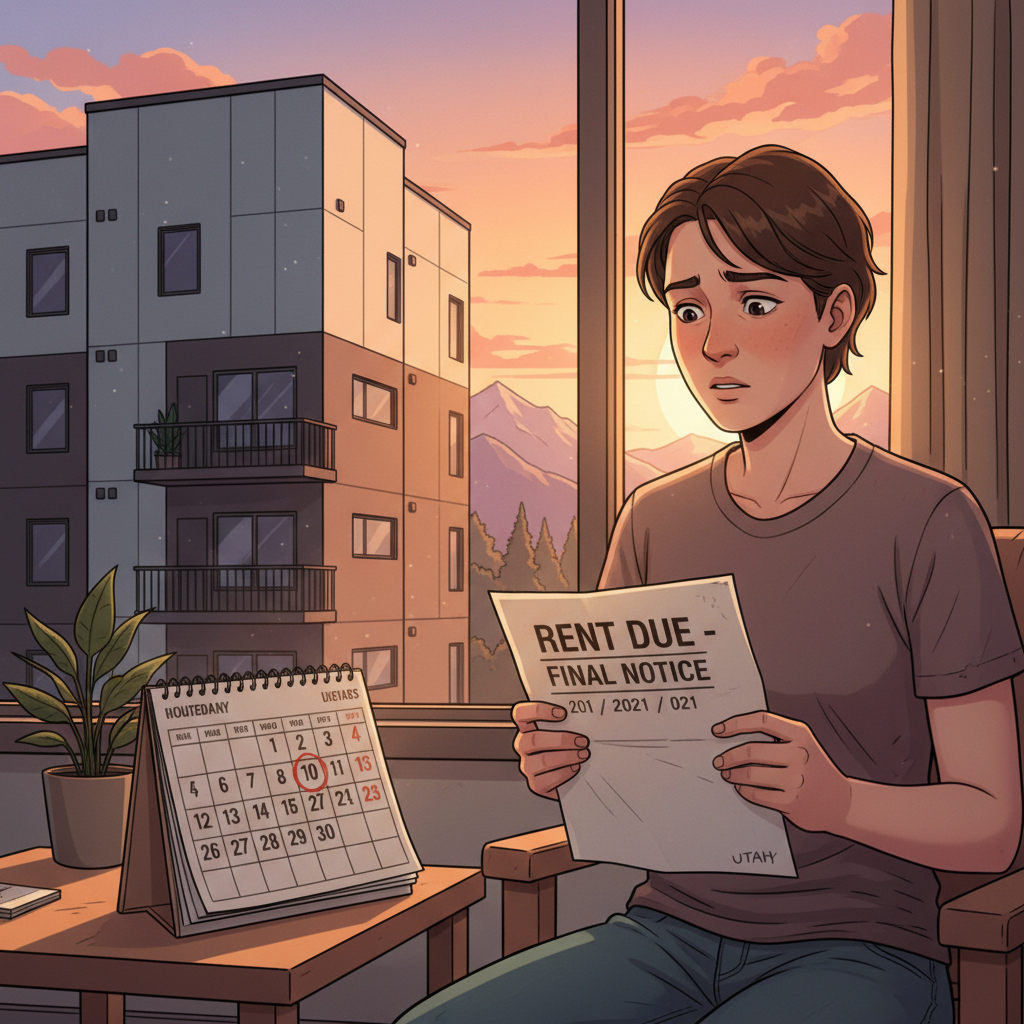
What are Utah rules on late fees, grace periods, and rent notices?: 10 Quick Questions Answered
Utah renters and landlords often have questions about how late fees, rent grace periods, and notice requirements work. These rules affect nearly every Utah lease, from Salt Lake City apartments to rentals in St. George. The rules are mostly set by state law, but understanding the basics can help you avoid disputes and costly mistakes.
Whether you’re a landlord collecting rent or a tenant worried about deadlines, Utah has clear laws about rent payments, what fees are allowed, and how much notice you need to give or receive. Here’s what you need to know to handle rent timing and late fee issues in Utah.
What Does Utah Law Say About Rent Payment, Late Fees, and Notices?
Utah law governs landlord-tenant relationships through the Utah Fit Premises Act (Utah Code Ann. Title 57, Chapter 22). Lease terms about rent, late fees, and notices must follow these statutes. For instance, Utah Code § 57-22-4 defines rental agreements, while § 78B-6-802 covers eviction notices. Late fees are allowed if specified in the rental agreement, but they must be “reasonable” and disclosed up front. Utah law does not set an automatic grace period, so check your lease.
Utah Tip: Always get rent and fee policies in writing. If your lease doesn’t state a late fee, one can’t be charged.
For renters in Utah County and Salt Lake County alike, knowing these basics can help you resolve problems with your landlord or tenant smoothly.
Utah Rental Late Fees, Grace Periods, and Notice FAQs
1. Are late fees legal in Utah?
Yes, but only if your lease or rental agreement spells them out ahead of time. Utah does not allow hidden or “surprise” late fees. There is no set dollar maximum, but fees must be reasonable. An excessive late fee could be considered unenforceable in Utah courts.
2. Is there a required grace period for rent in Utah?
No. Utah law does not mandate a default grace period for rent payments. If your lease includes a grace period, the landlord must honor it. Otherwise, rent is due on the date specified in your contract.
3. How much notice does my landlord have to give before charging a late fee?
If your lease specifies when rent is due and when a late fee applies, that agreement controls. No separate notice is strictly required if the lease discloses the policy. If it’s not in writing, late fees are not allowed in Utah.
Check your own city for local ordinances, but Utah’s state laws apply in the vast majority of cases.
4. How should notices about rent be delivered in Utah?
Utah Code § 78B-6-805 allows landlords to deliver rent notices by hand, by mail, or by posting on the property. A 3-Day Notice to Pay or Quit is common for overdue rent.
5. Can a landlord post a rent notice on my door?
Yes. Under Utah law, posting a written notice on your property is allowed for rent and eviction notices. Keep a copy or take a photo as proof if you receive one.
6. What happens if I pay rent late in Utah?
Your landlord can charge any late fee listed in your lease, or start the eviction process if you fail to pay. You typically have three days to pay up once you receive a 3-Day Notice to Pay or Quit.
7. What if my landlord tries to charge an excessive late fee?
If the late fee is much higher than what’s typical or not listed in your lease, you may challenge it in small claims court or with Utah Legal Services.
8. Is text or email good enough for a rent notice in Utah?
Text or email may count if your lease says so, but traditional paper notice is accepted in all Utah courts. It’s safest to use written, dated delivery.
9. How soon can eviction start for late rent?
If rent is even a day late, your landlord can serve a 3-Day Notice to Pay or Quit. The courts in Salt Lake City and Provo see hundreds of these notices each month. If you catch up in time, the process usually stops there.
10. What paperwork should landlords keep?
Landlords should save signed leases, records of payments, all notices sent or received, and any communication with tenants—especially involving late fees and rent.
Below are short, practical answers to Utah’s most common rent question scenarios—with tools and tips to help you act confidently.
Here’s a short video explaining how Utah law treats late rent and notice requirements.

Watch directly on YouTube — embedding disabled by owner.
This video walks through Utah’s rent notice rules and timelines at a glance.
Step-by-Step: Rent, Grace Periods, and Notices in Utah
Here’s how Utah’s process usually works in practice, from a missed rent payment to formal notices and possible eviction:
- Check what your lease says about due dates, late fees, and grace periods.
- If rent is late, expect the fee and timing listed; no fee if it’s not spelled out.
- Once late, the landlord can deliver a 3-Day Notice. This starts the clock for eviction if not paid in time.
- Keep every written notice. Delivery should follow Utah Code § 78B-6-805 rules.
- Court processes, if needed, are handled by local justice courts in each Utah county.
Here’s a quick reel from a Utah housing attorney breaking down key rent notice tips.
See what a Utah attorney highlights about late fees, rent notices, and best practices.
Common Mistakes Utahns Make
- Believing every lease has a grace period (many in Utah do not).
- Not getting or keeping written proof of notices or payments (especially in Salt Lake County disputes).
- Paying an excessive or unlisted late fee that violates Utah law.
- Ignoring a 3-Day Notice, leading to fast-track eviction filings in Utah courts.
- Not reading the local rules—some cities like Ogden may have extra tenant protections.
The Final Word
Understanding Utah’s rules for late fees, grace periods, and rent notices helps renters and landlords resolve issues quickly and avoid court hassles. Always check your lease, follow notice procedures, and keep documentation. And remember: this guide is for general information—not legal advice. For your unique situation, contact a Utah attorney.
Explore more guides or get plain-English legal answers at Utah Law Explained.