
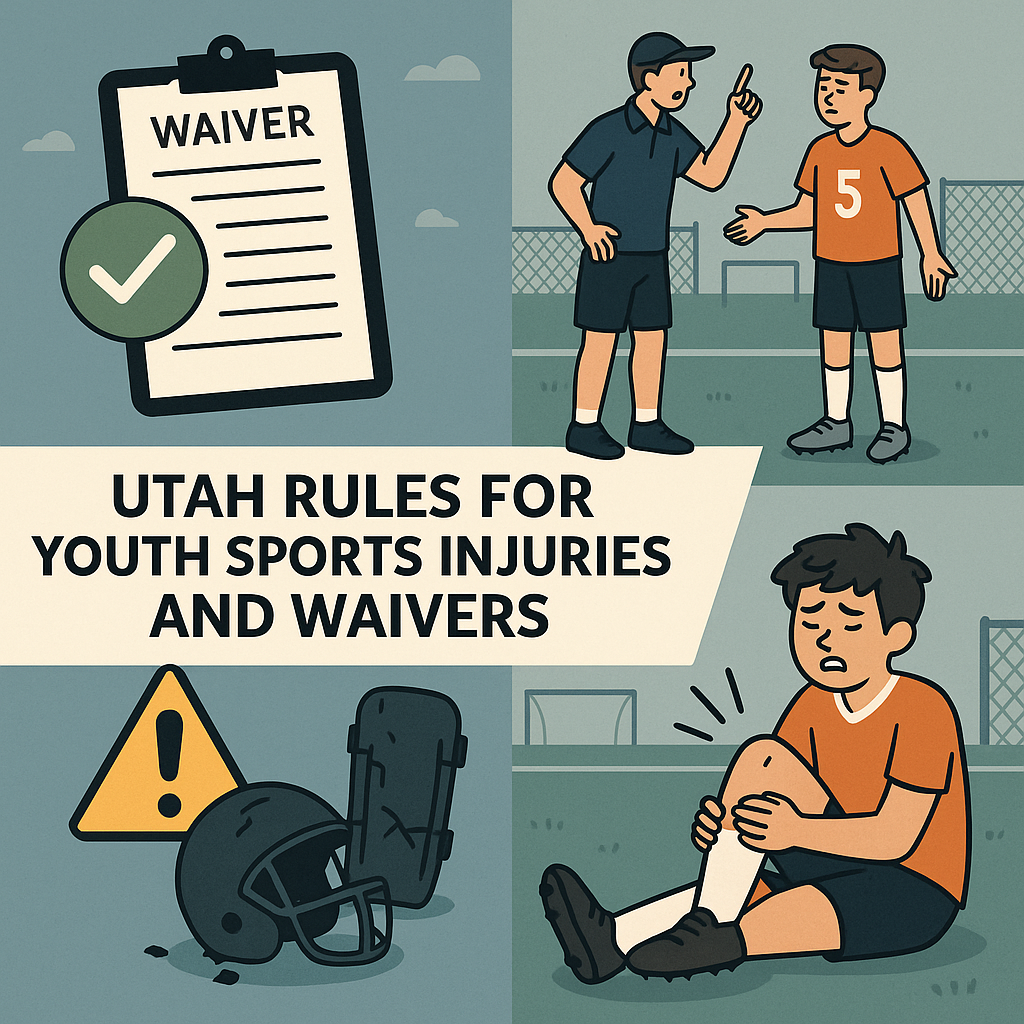
Utah Rules for Youth Sports Injuries and Waivers
Comparison guide and scenario breakdown for parents dealing with injuries, waivers, and responsibility
Signing a waiver does not automatically erase responsibility when kids get hurt. In Utah, youth sports injuries are often viewed through a practical question: was the injury part of ordinary play, or was it linked to a preventable danger such as poor supervision, unsafe equipment, or hazardous field conditions?
This guide compares what waivers commonly cover and what they commonly do not cover, then walks through real world scenarios parents face after a serious injury.
Overview: What Gets Considered
Waivers are common in youth sports. They help set expectations that physical activity can lead to injury even when everyone is acting carefully. But waivers do not answer every question.
When an injury is severe or disputed, people often focus on coaching decisions, supervision, equipment condition, and whether the environment was reasonably maintained. The closer an injury is to ordinary play, the more likely it is treated as an assumed risk. The more it looks avoidable, the more questions arise.
Comparison Guide: What Waivers Commonly Cover and Do Not Cover
Waivers typically aim to address injuries that can happen during normal participation. They are often less persuasive when the injury connects to avoidable hazards.
Ordinary Sport Risks and Preventable Dangers
Ordinary risks can include contact during a game, a twisted ankle, or a fall during a drill that is run appropriately for the age group.
Preventable dangers often involve a condition or decision that could have been corrected with reasonable care. Examples include ignoring visible hazards on a field, allowing damaged protective gear, or running drills without adequate oversight.
A waiver may acknowledge the reality of injuries, but it may not excuse avoidable safety failures.
Scenario Breakdown: Common Situations Parents See
Not every injury means someone acted wrongly. The key is whether the injury looks like part of the sport or the result of avoidable danger.
How Parents Can Respond After a Serious Injury
After a serious injury, accurate records help you understand what happened and respond to questions later. Parents often find it helpful to keep medical records, incident details, and copies of any signed waiver or registration documents.
Photos of equipment and the playing area can also help clarify whether conditions were safe at the time of the injury.
Keeping good records does not assume a dispute. It simply protects accuracy if questions arise later.
Key Takeaways
A waiver is important, but it is not the whole story. A signed waiver does not automatically erase responsibility for preventable dangers.
Ordinary play and avoidable hazards are not the same. Safety choices about supervision, equipment, and conditions can change the conversation.
Records matter. Keep copies of waivers and injury records in case questions arise later.
Parents should keep copies of waivers and injury records in case questions arise later.
Video and Social Learning Hub
YouTube: Youth Sports Injuries and Waivers
Instagram: Injury Prevention and Youth Sports Reality
Need Help Applying This to Your Situation?
Youth sports injuries can be stressful, especially when people point to a waiver as if it settles everything. If the facts suggest unsafe conditions, poor supervision, equipment problems, or other preventable dangers, speaking with trusted counsel can help you understand your options.
Talk to a Utah AttorneyFor more plain-English legal guidance, stay updated with Utah Law Explained, explore our mission on the About Us page, or connect with trusted counsel like Gibb Law Firm