
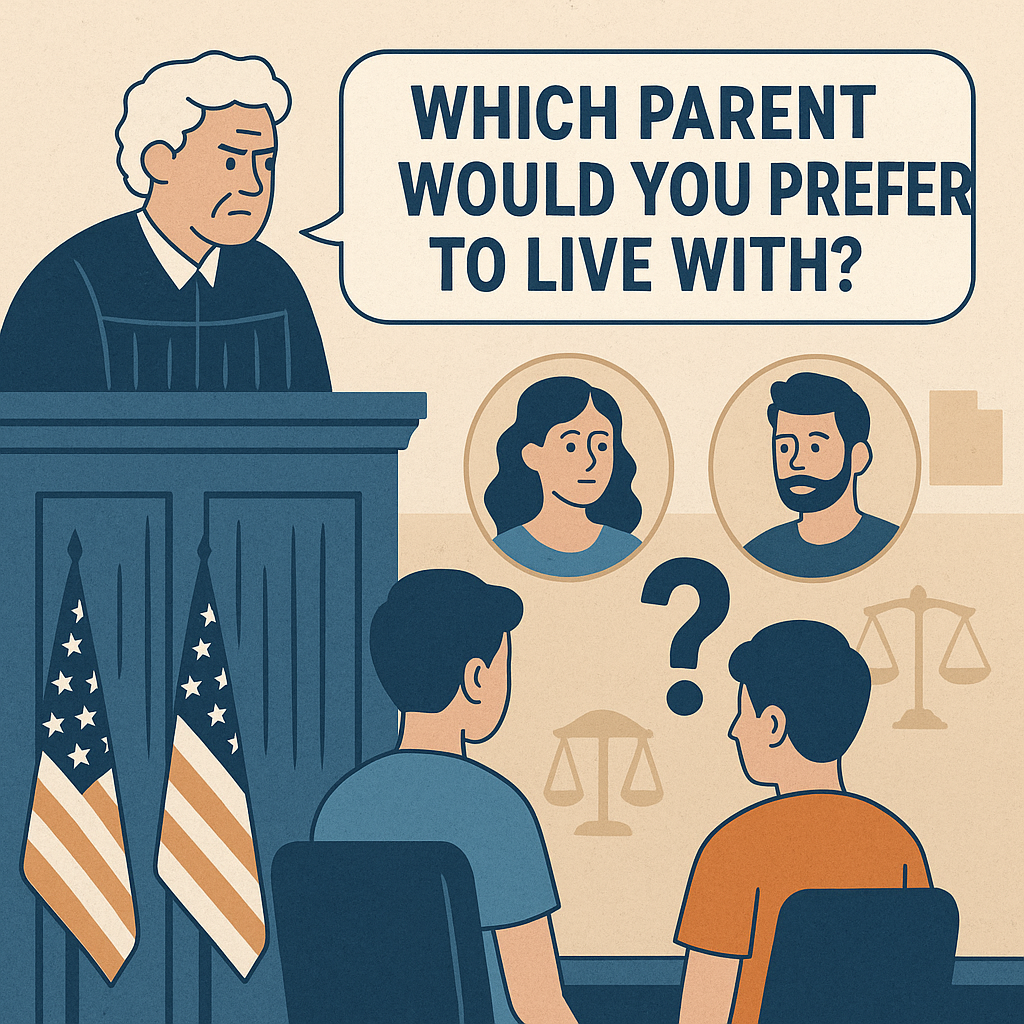
Can Utah Teens Choose Which Parent to Live With?
Utah courts consider a teen’s preference balanced against maturity and the child’s best interests.
In Utah, a teenager’s opinion about which parent they want to live with matters but it isn’t the deciding factor. Family courts focus on maturity, reasoning, and overall well being, not just age. This guide explains when a court listens to a teen’s voice, how that preference is considered, and what parents should expect during custody evaluations or modifications. At Utah Law Explained, our mission is to make complicated laws clear and useful for Utah families. Here’s how custody preferences actually work under Utah family law.
Understanding Utah’s Approach
Utah law does not assign a fixed age (such as 14 or 16) when a child can “choose” which parent to live with. Under Utah Code § 30-3-10, courts consider “the child’s preference if the child is of sufficient age and maturity.” Practically, this means:
- No automatic right to choose: Even older teens (16–17) cannot make the decision alone.
- Judicial discretion rules: Judges weigh the child’s preference against broader best-interest factors like stability, schooling, emotional health, and parental conduct.
- Private interviews: Judges often meet privately with minors in chambers, sometimes with a guardian ad litem (GAL) or custody evaluator present, to avoid undue influence.
When Courts Give a Teen’s Preference More Weight
- The teen demonstrates maturity and clear reasoning, not just an emotional preference.
- Household differences are substantial (e.g., one home offers greater educational or emotional stability).
- The preference aligns with best-interest criteria such as keeping siblings together or maintaining consistent schooling.
If a parent is manipulating or pressuring the child, the court may discount the stated preference entirely.
Scenario Breakdown: Common Custody Situations
Scenario 1: A 15-Year-Old Prefers to Live with Dad
The teen wants to stay near long-time friends and school; both homes are stable and the father provides consistent care.
Court likely outcome: The preference may carry significant weight, but the judge will still test whether any relocation impacts emotional or academic stability.
Scenario 2: A 13-Year-Old Feels “Closer” to One Parent
At 13, reasons may be viewed as more emotional. If the preferred parent has limited availability or unresolved issues (e.g., substance use or unstable housing), the court may not follow the teen’s wish.
Court likely outcome: Joint custody with a structured schedule is common, prioritizing balance and safety.
Scenario 3: A 17-Year-Old Refuses Visitation
Older teens’ preferences carry practical weight; courts rarely force a 17-year-old to reside where they clearly refuse. However, the existing order remains until age 18.
Court likely outcome: Judges may informally adjust visitation, recognizing the nearing age of independence.
Role of Guardians ad Litem and Custody Evaluators
A Guardian ad Litem (GAL) represents the child’s best interests and reports insights to the judge after confidential interviews. A custody evaluator (often a psychologist or social worker) provides a neutral assessment of family dynamics, including the child’s statements. These professionals help ensure the teen’s voice is heard without exposing them to conflict or parental pressure, and their findings can significantly shape the court’s understanding of maturity and emotional needs.
Custody Modifications and Teen Input
When a teen’s preferences change, courts require proof of a material change in circumstances. A teen’s preference can trigger review, but it must align with the child’s best interests and not stem from temporary disagreements or manipulation.
Addressing Parental Pressure or Alienation
Utah judges remain alert to parental alienation and undue influence. Where manipulation is suspected, courts may order counseling, appoint a GAL, or adjust custody to protect the child. Open communication and professional mediation often help families reach agreements before conflict escalates into court.
Related Utah Law Videos
YouTube: Utah Child Preference in Custody
Instagram Reels: Utah Family Law Insights
Need Help Applying This to Your Situation?
If your teen wants a say in where they live, understanding Utah’s custody laws can help you navigate the process calmly and fairly. Courts aim to protect children not make them bear adult decisions so the key is balancing their input with stability and well-being.
Talk to a Utah AttorneyFor more Utah specific legal guidance written in plain English, explore other family-law explainers at Utah Law Explained, where clarity meets practicality for real Utah families.