
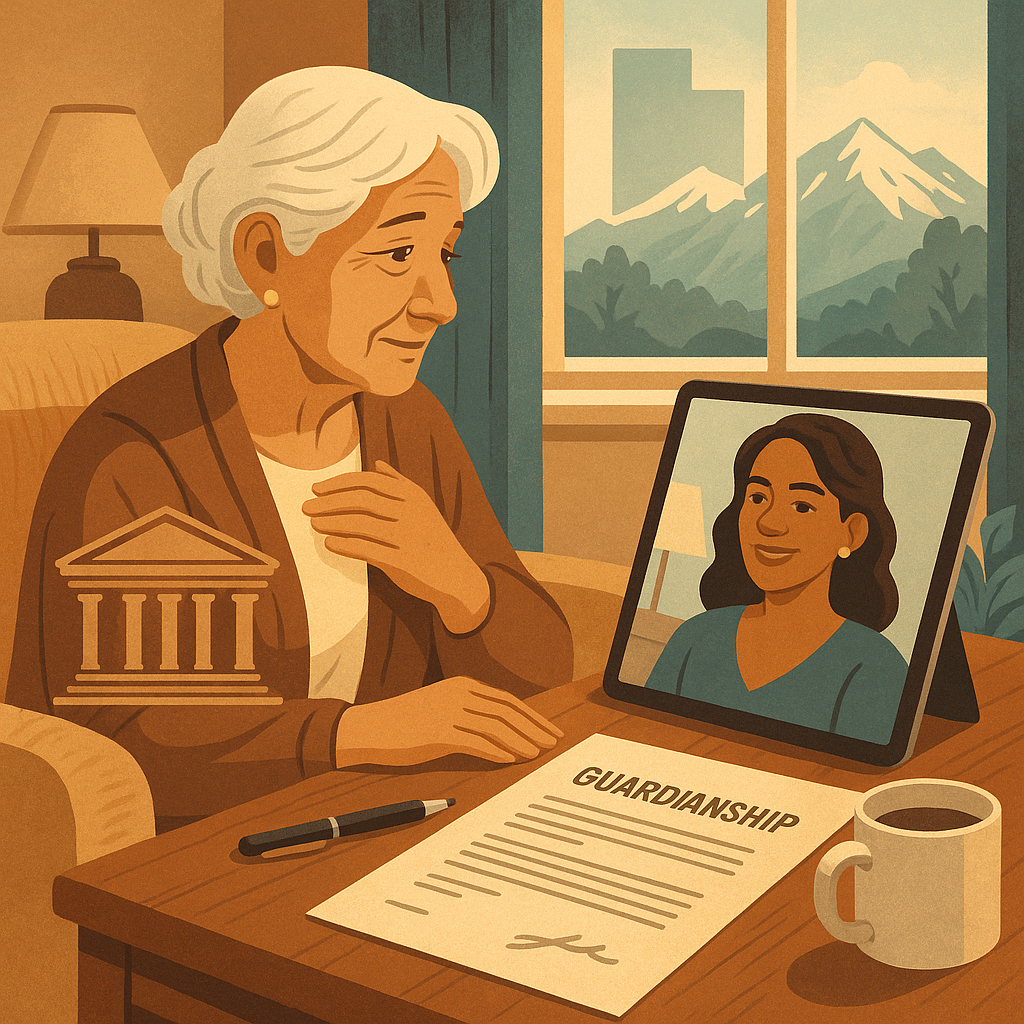
Eldercare and Guardianship Planning in Utah for Out-of-State Families
Plain-English guide to Utah elder guardianship, long-distance caregiving, court steps, duties, and multi-state planning.
Caring for an aging parent or relative is hard enough; doing it from another state can feel overwhelming. Utah’s guardianship and elder-care rules are designed to give family members clear legal authority to protect a vulnerable adult’s health, safety, and finances even when the primary caregiver lives in another state.
This guide explains, in plain English, how guardianship for older adults works under Utah law, what out-of-state children and relatives need to know before filing, and how to balance legal authority with dignity and respect for the person you love.
Long-Distance Eldercare: Utah’s Starting Point
Long-distance caregiving often starts with small warning signs: missed medications, unpaid bills, unsafe driving, or neighbors calling to say your parent seems confused. When you live out of state, it is much harder to “drop by” and quietly fix things.
Utah law offers tools to help. A court-appointed guardianship or conservatorship can give a trusted family member legal power to coordinate medical care, manage living arrangements, and protect assets while respecting the older adult’s rights and preferences. Courts focus on using the least restrictive approach, but when safety and capacity are clearly in question, guardianship becomes a central option.
What Utah Adult Guardianship Actually Means
An adult guardian in Utah is a person appointed by the court to make decisions about another adult’s personal welfare when that adult cannot make safe, informed decisions on their own.
For older adults, a Utah guardian may help with:
- Approving or coordinating medical treatment and medications
- Choosing or changing housing, including assisted living or memory care
- Arranging transportation, supervision, and daily support
- Communicating with doctors, facilities, and service providers
Guardianship does not erase the elder’s humanity or voice. Utah judges expect guardians to involve the protected person in decisions as much as reasonably possible and to respect long-standing values, culture, faith, and relationships.
Case Scenario: A Colorado Daughter, a Utah Mother
Emily lives in Colorado. Her mother, Carol, lives alone in Utah County.
Over several months, Emily notices:
- Refilled prescriptions sitting unopened on the counter
- Utility shut-off notices and unpaid property taxes
- Reports from neighbors that Carol is wandering at night
- Concerning driving incidents and minor accidents
Emily calls doctors, pharmacies, and the bank, but without legal authority she keeps hitting privacy barriers. Staff will talk in generalities but cannot release details or accept her direction. Emily realizes she needs a formal Utah solution.
Under Utah law, Emily can petition the court to be appointed as Carol’s guardian, even though she lives in another state. Once appointed, she will have clear authority to speak with medical providers, coordinate in-home help or facility placement, and make decisions to keep Carol safe.
How Out-of-State Family Members Petition for Guardianship
For out-of-state caregivers, the Utah guardianship process can be broken into a few key stages: assessing need, filing, hearing, and ongoing oversight.
Guardianship vs. Conservatorship vs. Power of Attorney
Utah uses several different tools to manage eldercare. Understanding how they fit together helps out-of-state families choose the right mix.
Guardian (personal decisions). A guardian focuses on health care, living situations, and daily support. Think “people and care.”
Conservator (money and property). A conservator manages financial decisions: paying bills, protecting accounts, handling real estate, and preventing exploitation. Sometimes the same person serves as both guardian and conservator; other times the court splits these roles.
Power of Attorney (POA). A POA is signed before capacity is lost and can authorize someone to act on medical and/or financial matters without court involvement. However, it may not be enough when:
- The elder refuses to sign or no longer understands the document
- Banks or facilities doubt its validity
- There is family conflict or suspected undue influence
In those situations, court-ordered guardianship or conservatorship can provide clearer, enforceable authority and court oversight especially important when caregivers live out of state and need institutions to honor their decisions.
Reporting Duties and Multi-State Guardianship Planning
Once appointed, Utah guardians and conservators are not left to operate in a vacuum. The court expects ongoing transparency.
Reporting and accounting duties. Guardians typically must:
- Update the court on the elder’s living situation and level of care
- Summarize major medical decisions and changes in condition
- Document moves into or out of care facilities
If you are also a conservator, Utah requires financial accountings that track income, expenses, and how assets are being used for the elder’s benefit. For out-of-state family members, careful recordkeeping is essential—it reassures both the court and any skeptical relatives that decisions are being made responsibly.
Multi-state recognition. Utah has adopted rules that help courts coordinate guardianship when more than one state is involved. This becomes important when:
- An elder moves from another state to Utah to be closer to family
- You already have a guardianship order from a different state
- The elder spends time in more than one state each year
In many cases, an existing guardianship can be transferred into Utah or recognized by a Utah court, reducing the need to “start over” and helping ensure continuity of care and decision-making across state lines.
Video & Social Learning Hub for Utah Guardianship
YouTube: Utah Guardianship & Eldercare
Instagram: Utah Elder Law & Planning
Need Help Applying Utah Guardianship to Your Family’s Situation?
When families wait until a crisis hits, decisions become rushed, stressful, and fragmentedespecially when loved ones live in different states. Planning early, reviewing powers of attorney, and understanding Utah’s guardianship process can make sure vulnerable elders receive consistent, respectful care wherever their family lives.
Talk to a Utah Elder Law AttorneyFor more plain-English legal guidance, stay updated with Utah Law Explained, explore our mission on the About Us page, or connect with trusted counsel like Gibb Law Firm.