
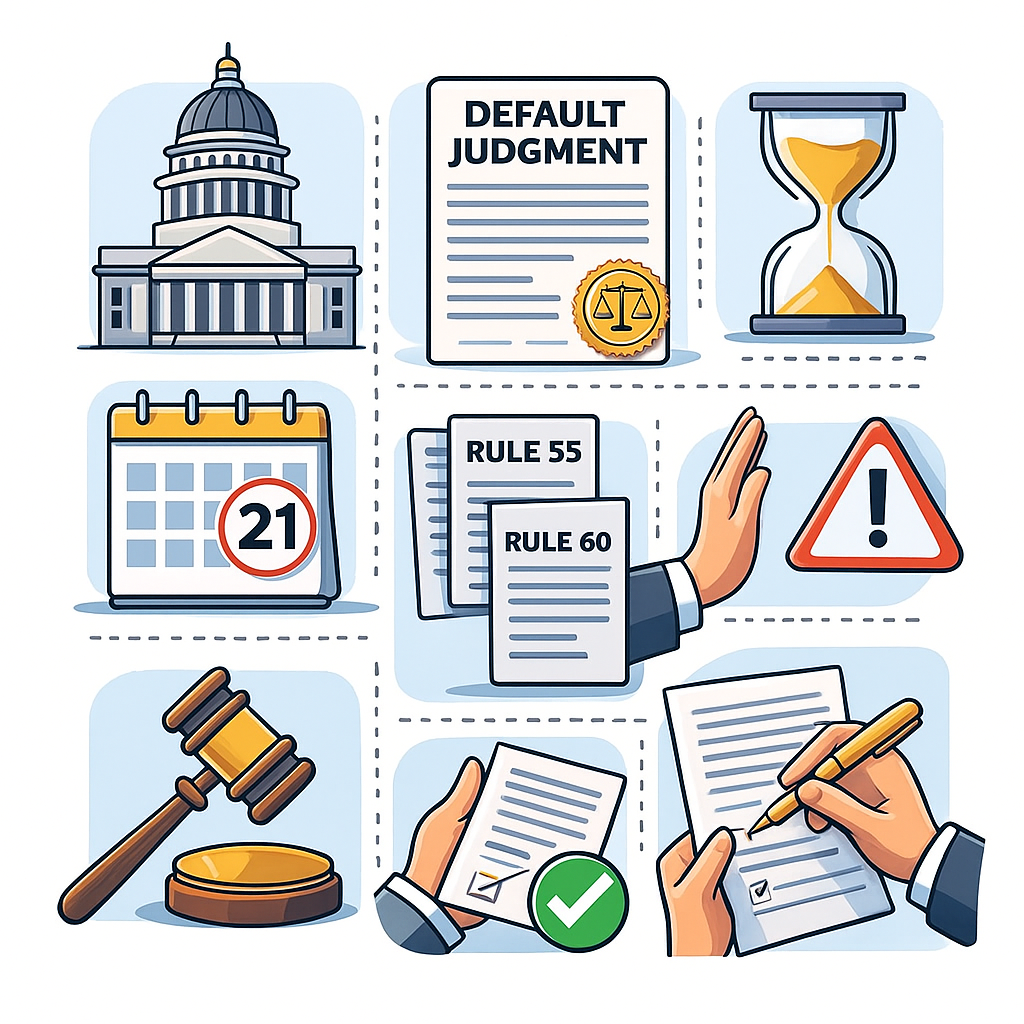
How Default Judgments Work in Utah (and How to Get One Set Aside)
Plain-English guide to Utah default judgments, Rule 55, Rule 60(b), deadlines, and relief options.
In Utah, many people lose lawsuits not because the judge heard both sides and ruled against them, but because they never filed an Answer or missed a court date. When that happens, the court can enter a default judgment, giving the other side nearly everything it asked for, including garnishments and liens. The good news: Utah's rules allow default judgments to be set aside for good cause, mistake, or improper service. Acting quickly can be the difference between a judgment that sticks and a case that gets reopened so you can tell your side of the story.
What a Default Judgment Means in Utah
A default judgment is a court order that decides the case against you because you did not participate as required. Most often, this happens when a defendant does not file a written Answer within the deadline after being properly served with a Utah complaint and summons.
Once default is entered, the court can issue a judgment for the full amount requested in the lawsuit, plus interest, attorney fees (when allowed), and enforcement tools such as wage garnishment and property liens. From that point on, the plaintiff has strong legal leverage unless the judgment is set aside.
Typical paths into default include:
- Not filing an Answer within the 21-day deadline after service.
- Missing a required hearing or failing to appear.
- Relying on phone calls, texts, or informal talks instead of filing in court.
- Never actually receiving proper service, even though the court file says you were served.
Quick Reference: Utah Default Judgment Basics
Use this quick-reference guide to see how Utah rules treat default judgments, time limits, and relief options at a glance.
Rule 55: When Utah Courts Enter Default
Utah Rule of Civil Procedure 55 explains how and when a court may enter default and default judgment against a party that does not respond or appear. Once the plaintiff shows that the deadline has passed and no Answer was filed, the court can enter default and then consider evidence supporting a money judgment.
In many debt cases, the plaintiff files an affidavit showing the claimed balance, interest, and fees. If the judge accepts it, a default judgment follows with little further hearing. This is why ignoring the lawsuit, even if you disagree with it, is so dangerous.
However, Rule 55 is not meant to be a trap. Courts still consider whether the defendant was properly served, whether deadlines were clear, and whether any filings or appearances show an intent to defend the case.
Rule 60(b): Setting Aside a Default Judgment
Rule 60(b) is the main tool for asking a Utah court to undo, or “vacate,” a default judgment. A motion under this rule asks the judge to reopen the case so the defendant can file an Answer and defend the lawsuit.
Common grounds under Rule 60(b) include:
- Mistake or excusable neglect: You misunderstood the deadline, were dealing with a serious emergency, or reasonably relied on incorrect information.
- New evidence: Important evidence surfaced that could not reasonably have been found before judgment.
- Fraud, misrepresentation, or misconduct: The other side misled the court or hid key information.
- Void judgment: You were never properly served, so the court lacked personal jurisdiction.
- Other justifying reasons: A catch-all category for unusual situations where fairness strongly favors relief.
Judges usually look for three things in a motion to set aside:
- That you acted quickly after learning of the default judgment.
- That you have a good reason for missing the original deadline.
- That you have a meritorious defense, meaning a real legal argument that could change the outcome.
Deadlines & Time Limits to Challenge Default
Time is critical once you learn about a default judgment. Waiting too long, especially after garnishments begin, can make it much harder to convince a judge to reopen the case.
In general terms, Utah courts apply the following timing rules:
- Mistake or excusable neglect: You must file within a reasonable time, often interpreted as within about 90 days of learning about the judgment.
- Fraud or misconduct: Relief based on fraud or similar misconduct usually must be requested within 1 year.
- Void judgments: If the judgment is truly void (for example, due to lack of proper service), there is no strict deadline, but it is still wise to act promptly.
- Other 60(b)(6) reasons: These require both compelling circumstances and prompt action once you become aware of the problem.
Because these time limits are applied case by case, many people choose to consult with counsel as soon as they see a default judgment on their record, receive a garnishment notice, or learn that a lien has been placed on their property.
Enforcement & Preventing a Repeat Default
Once a default judgment is entered, the plaintiff has access to powerful collection tools. These may include wage garnishment (typically up to 25% of disposable earnings), bank levies, property liens, and post-judgment discovery about your finances.
Even while you are seeking to set aside the judgment, enforcement may move forward unless the court orders a stay. That is another reason to move quickly and explain your situation clearly in any motion you file.
If the judge grants your motion and reopens the case, you must treat the second chance seriously. To avoid falling back into default:
- File a written Answer or other response by the new deadline.
- Update your mailing address and contact information with the court.
- Open and read every court notice you receive, including email notices.
- Appear at all hearings, whether remote or in person.
- Keep records of your defenses, payments, and communications in one place.
Courts are often willing to forgive one missed step when there is good cause, but they expect full participation going forward once relief is granted.
Key Takeaways: Utah Default Judgments
A default judgment is not always the end of your case. Utah rules allow you to ask for relief under Rule 60(b).
Act fast once you learn about the judgment. Judges weigh both timing and the reasons for your delay.
Improper service, clear mistakes, or excusable neglect can be strong grounds to reopen the case, especially if you have a real defense.
Even after a judgment is set aside, you must file an Answer and stay engaged so you do not end up in default again.
Video & Social Learning Hub: Default Judgments
YouTube: Default Judgments & Setting Them Aside
Instagram: Default Judgment Tips & Legal Research
Overwhelmed by a Default Judgment in Utah?
A default judgment can lead to garnishments, liens, and serious financial stress, but it does not always have to be permanent. Understanding Utah's rules, acting quickly, and presenting a clear story about what went wrong can dramatically improve your chances of getting back into court and defending your case on the merits.
Talk to a Utah AttorneyFor more plain-English legal guidance, stay updated with Utah Law Explained, explore our mission on the About Us page, or connect with trusted counsel like Gibb Law Firm.