
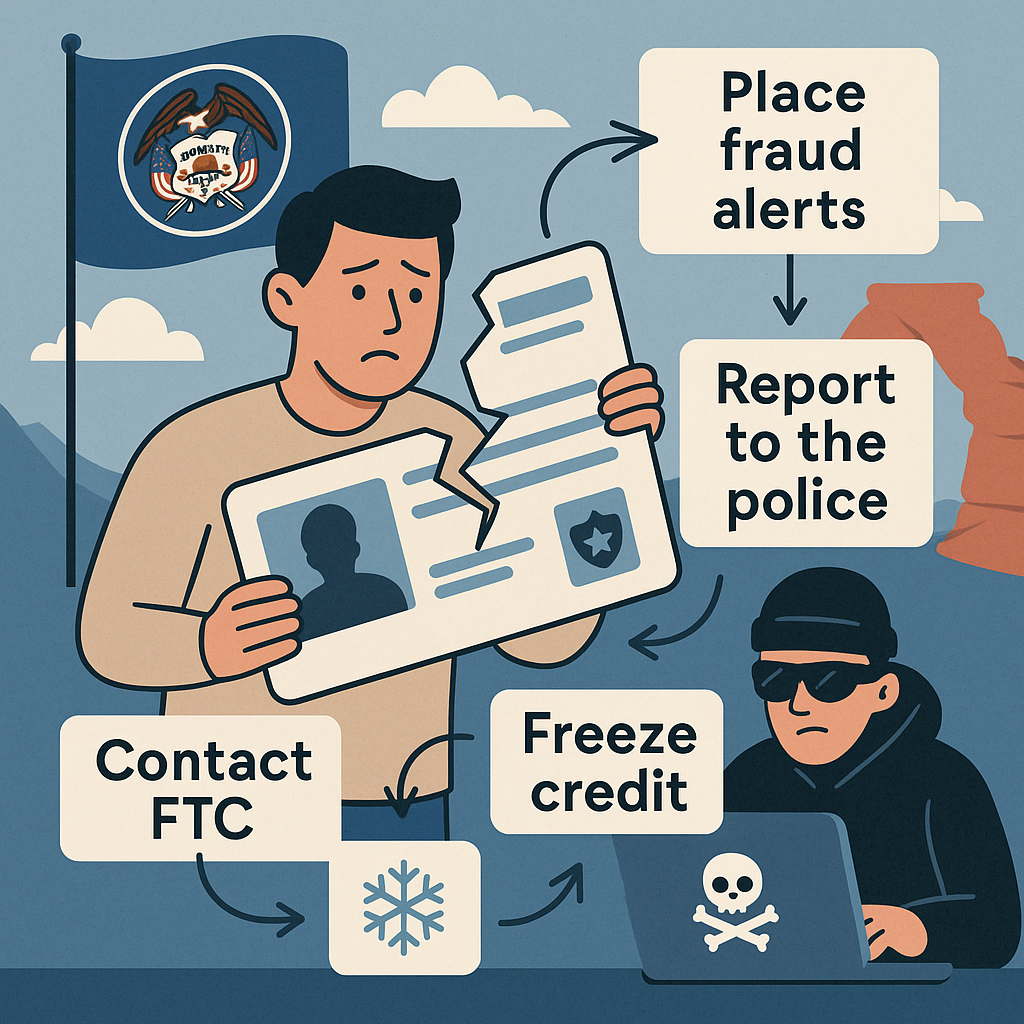
Identity Theft Steps for Utah Victims
Step-by-step guide to freezing credit, reporting fraud, and restoring accounts under Utah and federal tools.
Identity theft can drain your bank account, damage your credit, and create legal and financial problems that follow you for years. But in Utah, fast action makes all the difference. This guide walks you through the exact steps Utah victims should take what to do first, who to report to, how to freeze credit, and how to repair the damage so fraud stops as quickly as possible.
Utah offers strong state and federal tools designed to protect you, but they only help if you use them quickly and in the right order.
Identity Theft in Utah: Why Fast Action Matters
Utahns face identity theft from many angles: hacked email accounts, stolen debit cards, fraudulent loans, fake unemployment claims, and even tax refunds filed in someone else’s name. Once thieves have your information, they often move quickly to open new credit, transfer money, or impersonate you online.
The good news: you have rights. Federal law, Utah statutes, and tools like IdentityTheft.gov, fraud alerts, credit freezes, and police or IC3 reports give you leverage to stop the damage, dispute fraudulent accounts, and restore your credit history. The key is to follow a clear, step-by-step plan.
Step 1: Secure Your Accounts and Passwords
Your first priority is to block the thief from continuing to use your accounts or logins.
- Change passwords on email, banking apps, social media, and any account that stores payment information.
- Turn on two-factor authentication (2FA) so new logins require a code sent to your phone or app.
- Sign out of all devices in your account settings if that option is available.
- Review recent activity for logins from cities, countries, or devices you don’t recognize.
Because most identity-theft schemes start with a compromised email or phone, securing those “core” accounts first helps you cut off the thief’s access to password resets and confirmation codes.
Step 2: Contact Your Bank and Credit-Card Issuers
Next, work directly with the financial institutions where money is moving or cards are used. Ask to speak with the fraud department.
- Report unauthorized charges on debit and credit cards.
- Ask the bank to freeze or close any compromised accounts.
- Request new card numbers and account numbers where appropriate.
- Update alerts so you receive texts or emails for new charges or transfers.
Banks and card issuers must investigate fraud under federal law, and early reporting increases the chance of reimbursement and quick resolution. Make notes of who you spoke with, dates, and confirmation numbers.
Step 3: Place Fraud Alerts and Credit Freezes
Fraud alerts and credit freezes help you control what happens next with your credit profile.
Fraud alert: Tells lenders to take extra steps to verify your identity before opening new credit in your name. When you place a fraud alert with one bureau, it typically notifies the others.
Credit freeze: Blocks new creditors from accessing your credit report entirely, which usually stops new accounts from being opened.
Contact the three major bureaus (free for Utahns):
Step 4: Report to the FTC, Police, and IC3
Once your accounts and credit are locked down, create a paper trail. Official reports make it easier to dispute charges, correct your credit report, and show creditors you are a victim not a person who simply failed to pay.
- FTC (IdentityTheft.gov): File an online complaint to receive a written Identity Theft Report and personalized recovery plan.
- Local Utah police: Consider a police report if your wallet was stolen, a creditor or debt collector asks for it, or you need additional documentation.
- IC3 (Internet Crime Complaint Center): Use
www.ic3.govfor scams involving email, social media, hacked accounts, or online payments.
Quick reporting chart for Utah victims:
Step 5: Dispute Fraud and Monitor Your Credit
With your reports in place, your final step is to clean up the damage and keep an eye on your credit going forward.
- Dispute fraudulent accounts and charges in writing with each creditor and credit bureau.
- Include copies of your FTC Identity Theft Report, police report (if any), and any bank or card statements showing the fraud.
- Pull your credit reports from all three bureaus at
AnnualCreditReport.comand highlight errors. - Set reminders to re-check your reports and bank activity regularly over the next year.
Identity theft recovery timeline (typical pattern):
Video & Social Learning Hub: Identity Theft Recovery
YouTube: Identity Theft Steps & Reporting
Instagram: Identity Theft Safety Tips
Need Help With an Identity Theft Problem?
Identity theft is overwhelming, but taking these steps quickly can stop ongoing fraud, limit financial damage, and give you the documentation you need to recover. If you are dealing with complex fraud, debt collectors, or court papers in Utah, talking with a trusted attorney can help you understand your options and timelines.
Talk to a Utah AttorneyFor more plain-English legal guidance, stay updated with Utah Law Explained, explore our mission on the About Us page, or connect with trusted counsel like Gibb Law Firm.