
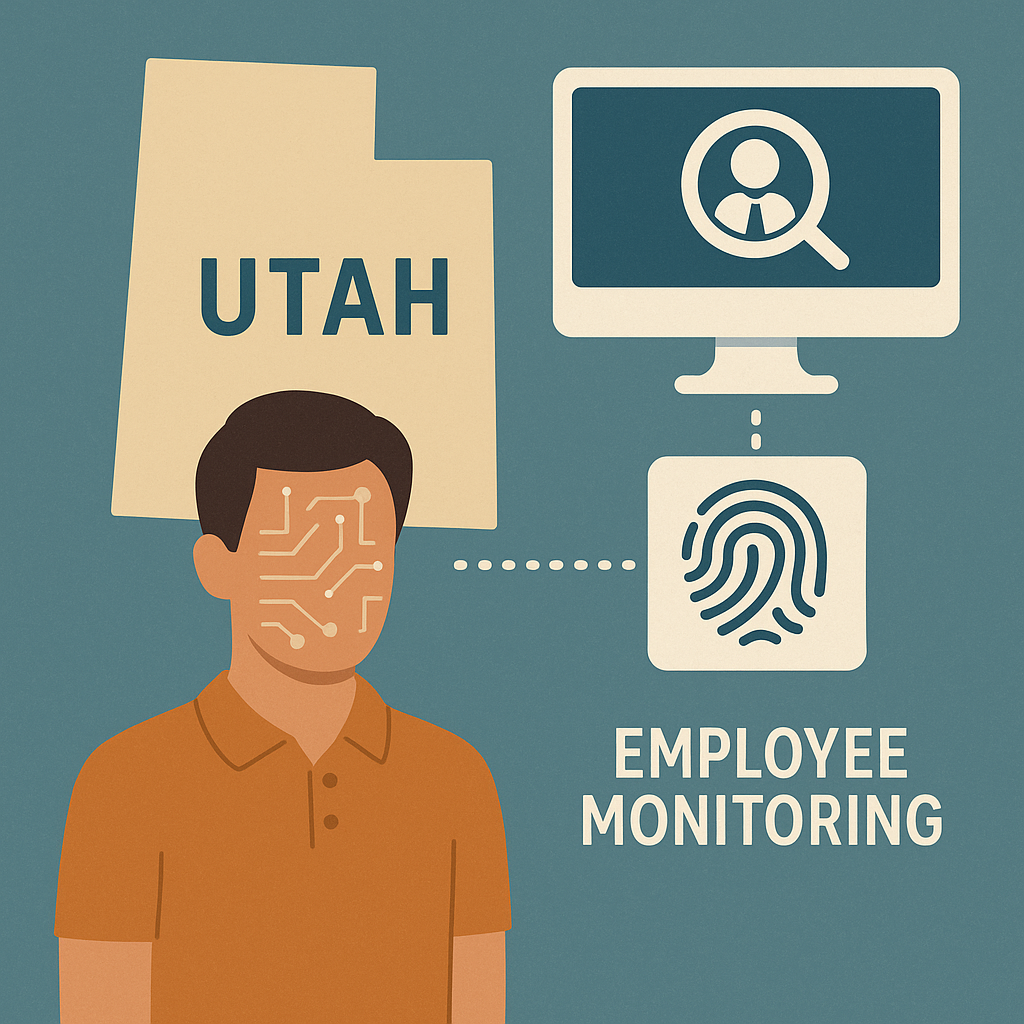
Privacy Law in Utah: Employee Monitoring and Biometric Data in the Workplace
Plain-English guide to monitoring disclosure, biometrics, retention, and breach duties
As digital tools reshape how Utah businesses operate, workplace monitoring is becoming increasingly common from tracking productivity software to fingerprint-based time clocks. But while technology can make management easier, it also raises serious privacy concerns. Utah’s laws set clear boundaries for what employers can track, store, and share about their employees.
This guide from Utah Law Explained breaks down how privacy law applies to employee monitoring, biometric data, and the responsibilities that come with managing personal information in the workplace.
Understanding Employee Privacy in Utah
Utah does not have a single comprehensive workplace privacy statute, but several overlapping state provisions and federal rules define what is legal when employers use monitoring systems. Employers must balance their need to oversee productivity with employees’ rights to privacy and informed consent.
Under Utah’s Consumer Privacy Act (UCPA), businesses that collect personal information including biometric data like fingerprints, facial scans, or voiceprints must be transparent about their data practices. Even if the monitoring happens internally, companies are expected to safeguard sensitive data and disclose how it is used.
Monitoring Disclosure Requirements
Generally, employees should be informed when monitoring occurs. Effective disclosures explain:
- What tools or software are used, such as keystroke trackers, cameras, or GPS.
- What data is collected and why.
- How long information is stored and who can access it.
Without clear disclosure, employers risk violating privacy expectations, and employees could claim an invasion of privacy if they were never informed.
Biometric Data: Fingerprints and Facial Recognition
Biometric identifiers are highly sensitive under Utah privacy standards. Employers who use fingerprints or facial recognition for attendance or security should:
- Obtain written consent before collecting any biometric data.
- Explain how data will be stored, encrypted, and deleted.
- Avoid selling or sharing biometric data with third parties.
Failure to follow these steps can expose companies to legal risk, especially if data is mishandled or breached.
Data Retention and Deletion
Retention limits depend on the purpose of collection. Utah privacy standards favor storing data only as long as necessary to fulfill a legitimate business need. When an employee leaves or the purpose ends, data should be securely deleted.
Good practices include:
- Create a written data retention policy.
- Purge biometric or monitoring data on a routine schedule.
- Train HR and IT teams on compliance and documentation.
Data Breach Notification Duties
Utah’s Data Breach Notification Act requires notifying affected individuals when personal information including biometric data is compromised. Notice should be provided without unreasonable delay and explain what happened, what data was exposed, and what mitigation steps are underway.
Failing to notify can trigger enforcement by the Utah Attorney General’s Office and erode employee trust.
Staying Compliant: Practical Steps
Proactive transparency and documentation go a long way:
- Publish internal privacy policies for all data-related activities.
- Limit monitoring to legitimate business purposes.
- Secure biometric and monitoring data with encryption.
- Review privacy settings and vendor contracts on a regular basis.
Monitor developments under the UCPA and local privacy amendments that could expand employee rights.
Video & Social Learning Hub
YouTube: Workplace Privacy and Utah UCPA
Instagram: Related Legal Topics
Need Help Applying This to Your Workplace
Utah businesses operate in a fast-changing environment where data and privacy are linked. Keep employees informed, protect biometric data, and align practices with state law to stay compliant and build trust.
Talk to a Utah AttorneyFor more Utah-focused legal guides and plain-English breakdowns, explore Utah Law Explained or connect with trusted counsel like Gibb Law Firm.