
How to Register and Modify an Out-of-State Custody Order in Utah UCCJEA
Plain-English guide to registration, jurisdiction, objections, and modification
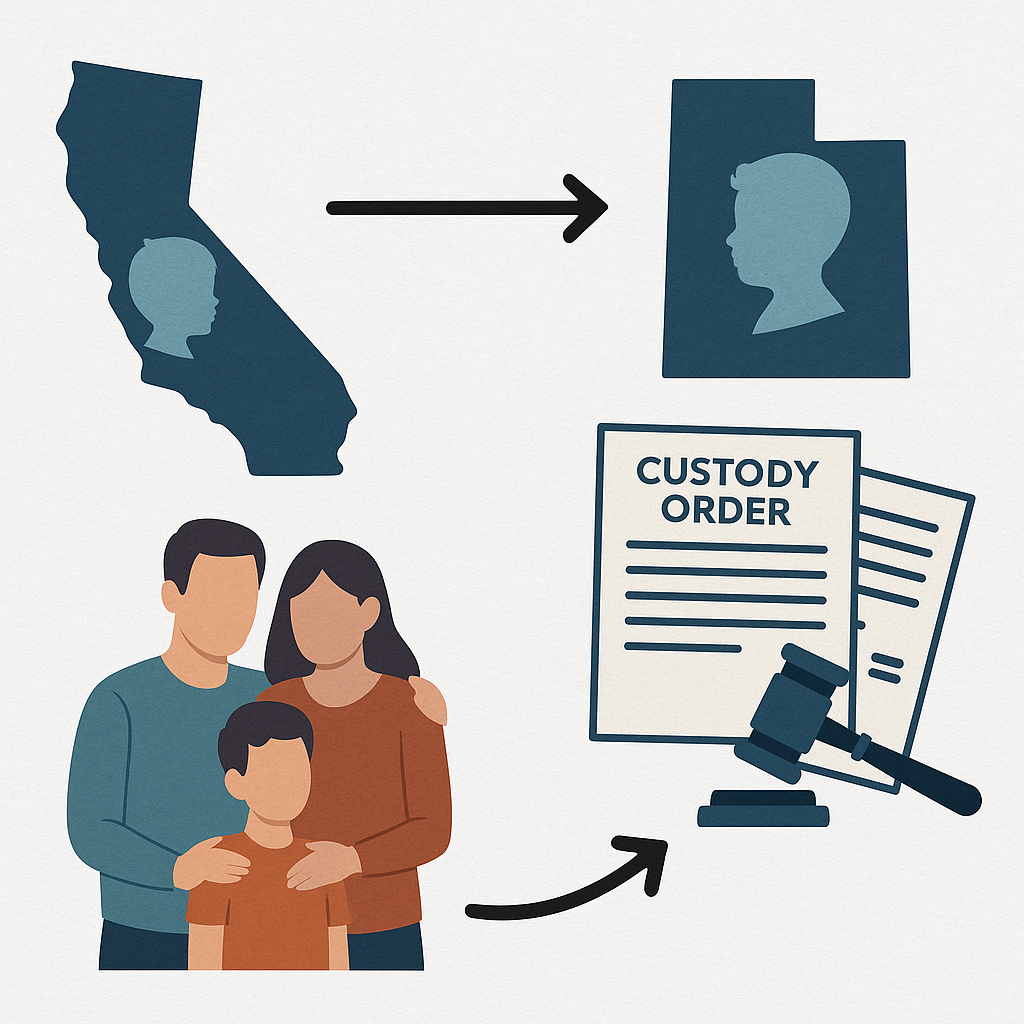
If you have a valid custody order from another state and need to enforce or change it in Utah, you must first register it under Utah’s version of the Uniform Child Custody Jurisdiction and Enforcement Act. Once properly registered, Utah can enforce and sometimes modify the order if it meets jurisdiction requirements. This guide explains how registration works, when Utah can take jurisdiction, and what happens if the other parent objects.
When Utah Has Jurisdiction
Utah courts follow the UCCJEA to decide which state has the authority to make or modify custody orders. Generally:
- Utah can register an out-of-state custody order if either parent or the child now lives in Utah.
- Utah can modify that order only if the original state no longer has jurisdiction or if that court declines jurisdiction in favor of Utah.
- If both parents remain in the original state, Utah cannot modify the order. It can only enforce it.
The UCCJEA aims to prevent conflicting custody orders between states and to keep the case in the state most connected to the child.
Registration Packet and Certified Copies
To register your out-of-state custody order in Utah, follow these steps:
Notice to the Other Parent
After registration, the court must notify the other parent. The notice usually includes:
- A copy of the registered order
- A statement that the order will be confirmed unless the other parent contests it within a set deadline, often 20 days
You will need to provide a valid mailing address for the other parent.
Objections and Hearing
If the other parent files an objection, the court will set a hearing. The contesting parent must show one of the following:
- The original court did not have jurisdiction
- The order has been vacated, stayed, or modified by another court
- The order has expired
If none apply, the Utah court will confirm the registration and the order becomes enforceable in Utah as if issued here.
Modifying After Registration
Utah can modify the custody order only under limited circumstances:
- The original state no longer has a significant connection to the child or parties
- All parties have moved out of the original state
- The original state declines jurisdiction and allows Utah to proceed
If those conditions are met, Utah can address custody or parent-time using the same standards that apply to any Utah custody modification case.
Coordination With Other States
Utah judges often coordinate directly with the issuing court to clarify jurisdiction and avoid duplicate cases. Courts may hold phone or video conferences to decide which state should proceed, keeping one clear home state for custody decisions.
Related Videos and Posts
YouTube Videos
Need Clarity On Your UCCJEA Situation?
Understanding the registration process is key to protecting your rights when moving between states. If you are unsure whether Utah can take jurisdiction or modify your order, consider speaking with a Utah family law attorney who handles interstate custody matters.
Talk to a Utah AttorneyFor more plain-English legal guidance, stay updated with Utah Law Explained, explore our mission on the About Us page, or connect with trusted counsel like Gibb Law Firm.
Explore
How to Register and Modify an Out-of-State Custody Order in Utah UCCJEA
Plain-English guide to registration, jurisdiction, objections, and modification
Introduction. If you have a valid custody order from another state and need to enforce or change it in Utah, you must first register it under Utah’s version of the Uniform Child Custody Jurisdiction and Enforcement Act. Once properly registered, Utah can enforce and sometimes modify the order if it meets jurisdiction requirements. This guide explains how registration works, when Utah can take jurisdiction, and what happens if the other parent objects.
When Utah Has Jurisdiction
Utah courts follow the UCCJEA to decide which state has the authority to make or modify custody orders. Generally:
- Utah can register an out-of-state custody order if either parent or the child now lives in Utah.
- Utah can modify that order only if the original state no longer has jurisdiction or if that court declines jurisdiction in favor of Utah.
- If both parents remain in the original state, Utah cannot modify the order. It can only enforce it.
The UCCJEA aims to prevent conflicting custody orders between states and to keep the case in the state most connected to the child.
Registration Packet and Certified Copies
To register your out-of-state custody order in Utah, follow these steps:
Notice to the Other Parent
After registration, the court must notify the other parent. The notice usually includes:
- A copy of the registered order
- A statement that the order will be confirmed unless the other parent contests it within a set deadline, often 20 days
You will need to provide a valid mailing address for the other parent.
Objections and Hearing
If the other parent files an objection, the court will set a hearing. The contesting parent must show one of the following:
- The original court did not have jurisdiction
- The order has been vacated, stayed, or modified by another court
- The order has expired
If none apply, the Utah court will confirm the registration and the order becomes enforceable in Utah as if issued here.
Modifying After Registration
Utah can modify the custody order only under limited circumstances:
- The original state no longer has a significant connection to the child or parties
- All parties have moved out of the original state
- The original state declines jurisdiction and allows Utah to proceed
If those conditions are met, Utah can address custody or parent-time using the same standards that apply to any Utah custody modification case.
Coordination With Other States
Utah judges often coordinate directly with the issuing court to clarify jurisdiction and avoid duplicate cases. Courts may hold phone or video conferences to decide which state should proceed, keeping one clear home state for custody decisions.
Related Videos and Posts
YouTube Videos
Need Clarity On Your UCCJEA Situation?
Understanding the registration process is key to protecting your rights when moving between states. If you are unsure whether Utah can take jurisdiction or modify your order, consider speaking with a Utah family law attorney who handles interstate custody matters.
Talk to a Utah AttorneyFor more plain-English legal guidance, stay updated with Utah Law Explained, explore our mission on the About Us page, or connect with trusted counsel like Gibb Law Firm.