
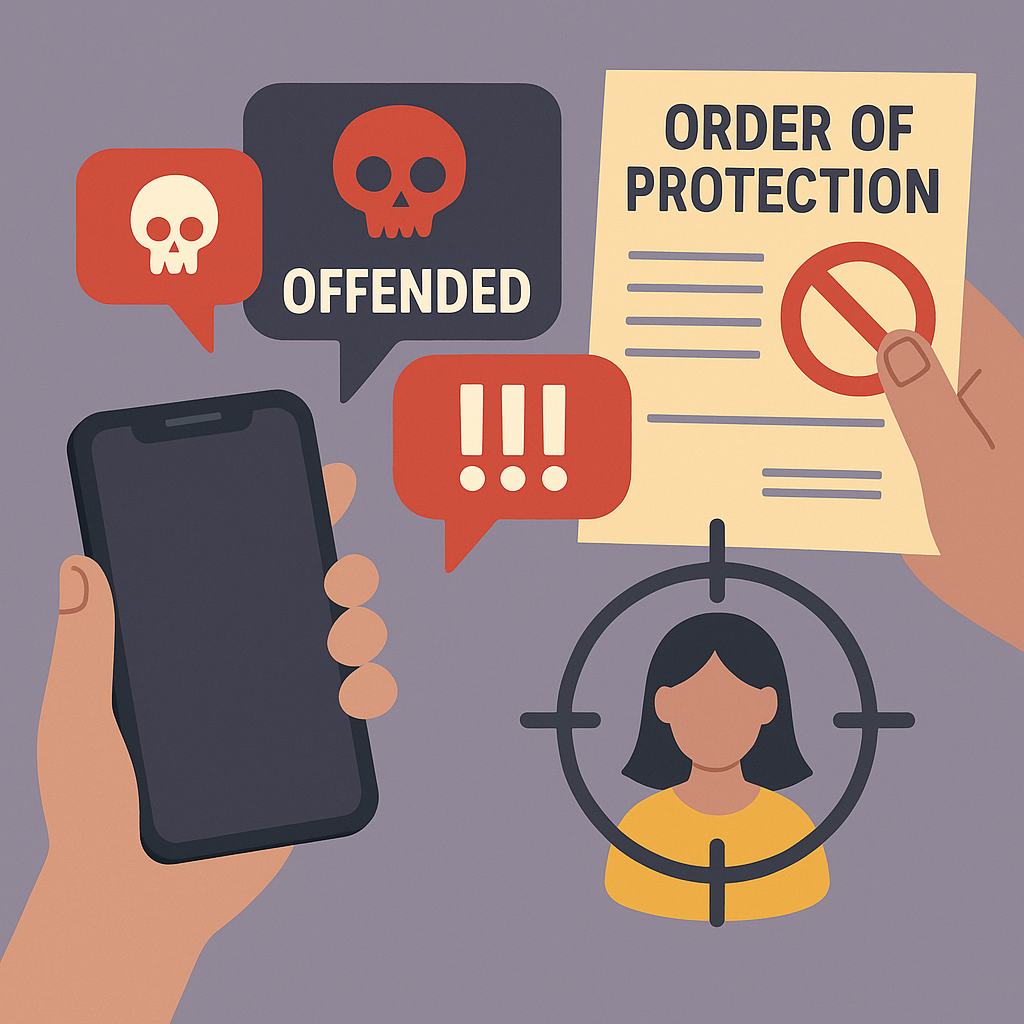
Social Media Harassment and Utah Stalking Laws
How Utah stalking laws treat online harassment, threats, and digital stalking, even when it’s all on social media.
Social media harassment isn’t just stressful, it can become a criminal offense under Utah’s stalking laws, even when the behavior happens entirely online. Utah treats repeated digital harassment, threats, monitoring, or fear-inducing messages the same as in-person stalking. Because online interactions leave a trail of messages, comments, tags, and DMs, victims often have clearer evidence than in offline cases.
This guide explains when online behavior crosses the legal line, how Utah courts analyze digital harassment, what evidence matters most, and the steps you can take to protect yourself before the situation escalates.
When Online Harassment Becomes Stalking in Utah
Under Utah law, stalking is built around a “course of conduct” that would cause a reasonable person to feel fear, serious emotional distress, or concern for their safety. That course of conduct can happen entirely through digital channels, texts, DMs, comments, emails, tags, or repeated friend requests.
It is not about one rude comment or a single disagreement. Cases typically focus on patterns: repeated, unwanted contact after you’ve tried to disengage; threatening or degrading posts; or persistent attempts to monitor or control you. The more consistent and targeted the behavior, the more likely it is to fall under Utah’s stalking framework.
What Counts as Online Stalking in Utah?
Examples of online actions that may qualify as stalking under Utah law include:
- Repeated threatening or intimidating messages sent through DMs, texts, or email
- Monitoring someone’s profiles or activities and commenting in ways that scare them
- Posting humiliating, harmful, or highly personal content aimed at a specific person
- Creating fake accounts to contact, watch, or impersonate someone after being blocked
- Tagging a person repeatedly in posts meant to intimidate, embarrass, or harass them
- Sending unwanted explicit or sexual content despite clear requests to stop
- Encouraging others to join in harassing or threatening the same person (“dogpiling” or “cyber mobs”)
You do not need to respond to the harasser for their behavior to count as stalking. In fact, Utah courts often look at attempts to disengage blocking, reporting, or telling the person to stop, as important evidence that the contact is unwanted.
Evidence: How Screenshots and Messages Help Your Case
Digital harassment leaves evidence, and Utah courts can use a wide range of electronic records when evaluating stalking claims. Strong documentation makes it easier for law enforcement and judges to see the pattern.
Protective Orders and Reporting Digital Harassment
If you are facing online harassment that feels threatening or overwhelming, Utah offers several tools to protect you:
- Stalking injunctions (civil). You can ask a district court for a stalking injunction even if no criminal charges have been filed. This order can prohibit the other person from contacting you online or offline.
- Criminal protective orders. If the person is charged with stalking or related offenses, the criminal court can issue a protective order as part of the case. Violating that order is itself a crime.
- School or workplace reporting. If the harasser is a classmate, coworker, or supervisor, you may also be able to use school or employment policies in addition to legal steps.
When you report, try to provide a clear package of information: screenshots, dates and times, account names, and a short written summary of how the behavior has affected your safety or daily life. The more organized your documentation, the easier it is for law enforcement and the court to act quickly.
Criminal Penalties Under Utah Stalking Laws
Online behavior that meets Utah’s definition of stalking can lead to serious criminal charges even if the person never appears in front of you in person.
Depending on the facts and the person’s history, penalties can include:
- Class A misdemeanor stalking for many first-time offenses, which may include jail time, fines, probation, and mandatory counseling.
- Third-degree felony stalking if there are certain aggravating factors, such as prior stalking convictions, violations of a protective order, or conduct that targets a minor.
- Second-degree felony stalking in more serious cases, such as repeated violations or conduct involving threats of serious harm.
Online threats and cyberstalking can also overlap with other crimes like harassment, identity theft, or sharing intimate images without consent which may add additional charges and penalties.
Q&A: Common Questions About Social Media Harassment in Utah
Q: Can someone be charged even if they never threatened me directly?
A: Yes. Utah’s stalking laws focus on whether a reasonable person would feel fear or serious emotional distress, not just on explicit threats. Persistent, fear-inducing monitoring or contact can qualify.
Q: What if the person keeps making new accounts after I block them?
A: That behavior often strengthens a stalking case. Creating new accounts to get around a block shows the contact is intentional and persistent, and courts may treat it as escalation.
Q: What if the harassment is anonymous?
A: While it can be harder to trace, law enforcement can sometimes use subpoenas to obtain IP logs or account data from platforms. Anonymous does not always mean untraceable.
Q: Is “doxxing” illegal in Utah?
A: Sharing private information like your address or phone number with the goal of harassing or scaring you can support stalking charges or other criminal counts, depending on the facts.
Q: Should I block the person or keep messages coming for evidence?
A: Your safety comes first. In many cases, it makes sense to screenshot and save what you already have, then block the person and continue documenting any new accounts or attempts to contact you.
Q: Is one rude message enough to file a stalking case?
A: Usually, stalking requires a pattern of behavior. However, a single serious threat or explicit message may be charged under other criminal statutes, even if it doesn’t meet the full stalking standard.
Video & Social Learning Hub
YouTube: Utah Stalking & Cyberstalking Explained
Facing Online Harassment? Take Action Early.
Online harassment rarely stops on its own. The sooner you document, report, and seek protection, the faster Utah’s legal system can step in. If you’re unsure how Utah stalking laws apply to your situation or what to do next, talking with a Utah attorney can help you map out your options.
Talk to a Utah AttorneyFor more plain-English legal guidance, stay updated with Utah Law Explained, explore our mission on the About Us page, or connect with trusted counsel like Gibb Law Firm.