
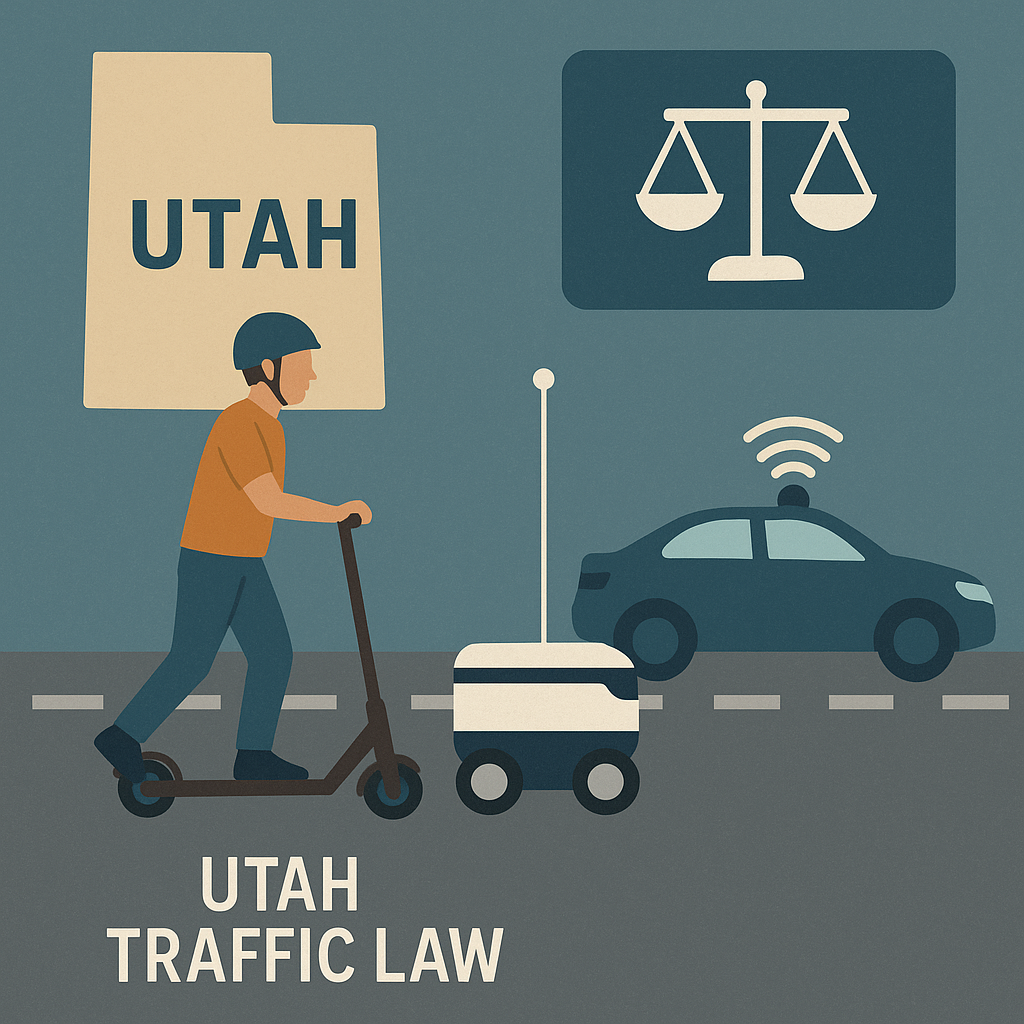
Traffic Law in Utah and New Mobility E-Scooters, Delivery Robots, and Self-Driving Cars
Plain-English explainer on where new tech can operate, safety rules, and who is responsible when things go wrong
Utah’s roads are changing fast. From downtown Salt Lake City to small-town neighborhoods, new mobility options like electric scooters, autonomous delivery robots, and self-driving cars are reshaping how people and goods move. But innovation brings regulation. Utah law has evolved to balance safety, access, and responsibility. This guide from Utah Law Explained breaks down how state traffic laws apply to these technologies, where they can operate, and who is responsible when incidents occur.
Understanding Utah’s Approach to New Mobility
Utah has taken a pragmatic approach to emerging transportation technology by welcoming innovation while setting safety guardrails. State law defines how e-scooters, personal delivery devices, and autonomous vehicles fit into existing traffic frameworks. Local governments, especially Salt Lake City, can add rules to account for density and public use.
Licensing and Safety Requirements
For scooters and personal devices, Utah law emphasizes rider responsibility. There is no special license, but riders must follow cyclist rules for signaling, yielding, and speed. For self-driving cars, Utah allows limited autonomous testing through UDOT pilot programs. Each operator must submit safety documentation before public road testing. Salt Lake City adds local ordinances for scooter parking zones and can limit high-speed autonomous testing within city limits.
The Challenge of Liability
When incidents occur, the central question is who had control and whether negligence occurred.
- E-scooter accidents: Often handled under personal injury law. If a fleet company fails to maintain scooters, fault can be shared.
- Delivery robots: The operating business is responsible for safe programming, monitoring, and insurance.
- Autonomous cars: Manufacturers may be responsible for system defects. Owners remain responsible for maintenance or misuse.
As courts address more cases, Utah’s approach will likely continue to blend existing traffic rules with tech-specific liability standards.
Utah DOT and Local Innovation
Utah’s Department of Transportation has embraced testing and data collection. Autonomous shuttle pilots and city partnerships help shape safety standards before wide deployment. Salt Lake City, Provo, and Ogden have led pilots for scooter share and delivery robots, providing data to refine state rules.
Video and Social Highlights: Utah in Motion
YouTube: Utah New Mobility
Key Takeaways
E-scooters are generally treated like bicycles. Follow cyclist rules and local parking ordinances.
Delivery robots may use sidewalks and crosswalks, must yield to pedestrians, and operators carry liability.
Autonomous vehicles can operate under Utah pilot programs with documentation, registration, and insurance.
Liability hinges on control and negligence across riders, operators, and manufacturers.
Staying Safe and Informed
Utah’s new mobility laws are about balance. Whether you are gliding on a scooter, deploying a delivery robot, or watching autonomous shuttles roll by, knowing your rights and responsibilities keeps progress safe and sustainable.
Talk to a Utah AttorneyUtah Law Explained reminds readers that the law evolves quickly. For more plain-English guidance, stay updated with Utah Law Explained, explore our mission on the About Us page, or connect with trusted counsel like Gibb Law Firm.