What Utah Residents Should Know About Privacy Rights With Drones
Plain-English guide to Utah’s drone privacy rules, trespass and harassment risks, and steps homeowners can take
Utah law gives property owners real protection when drones cross into their airspace or invade their privacy. This guide explains when drone use is legal, when it becomes trespass or harassment, and what steps Utah homeowners can take if a drone is flying over their private property. Drones are used for real estate, recreation, and law enforcement. Utah’s rules balance innovation with privacy so homeowners can respond lawfully and effectively.
Utah Drone Laws and Private Property Boundaries
Under Utah Code § 76-9-402.6, it is illegal to use a drone to intentionally record or observe a person in a private place without consent. The same section prohibits using drones to surveil individuals where they have a reasonable expectation of privacy, such as fenced backyards or private gatherings.
A drone simply flying over a neighborhood is not automatically illegal. Airspace is generally regulated by the FAA, and low-altitude flight alone is not always trespass. However, repeated or targeted flights that capture footage of people or private property may violate Utah’s privacy and voyeurism statutes.
When Surveillance Becomes Trespass or Harassment
Utah treats drone surveillance that invades privacy much like physical trespassing. If someone operates a drone to intentionally view or record individuals on private property, they can face criminal charges under state law.
The penalties depend on intent. Using a drone to spy or harass can lead to class B misdemeanor charges. In extreme situations, such as stalking, blackmail, or data misuse, additional charges may apply. Reckless operation that creates danger may also trigger nuisance or reckless endangerment laws.
Drone Photography and Consent
Recording people in private settings without permission is illegal in Utah, even if done from a public vantage point using a drone. Examples include capturing images of someone in a fenced yard, through a window, or at a private gathering. These situations violate Utah privacy laws and can lead to criminal charges and civil claims.
Law Enforcement and Licensed Operators
Law enforcement must follow warrant rules and data-handling limits when using drones. Many Utah agencies maintain privacy policies and audits. Licensed commercial operators, such as real estate photographers or surveyors, must comply with FAA Part 107 and respect property owners’ privacy. Certification does not allow filming private areas without consent.
Case Scenario: The Backyard Drone
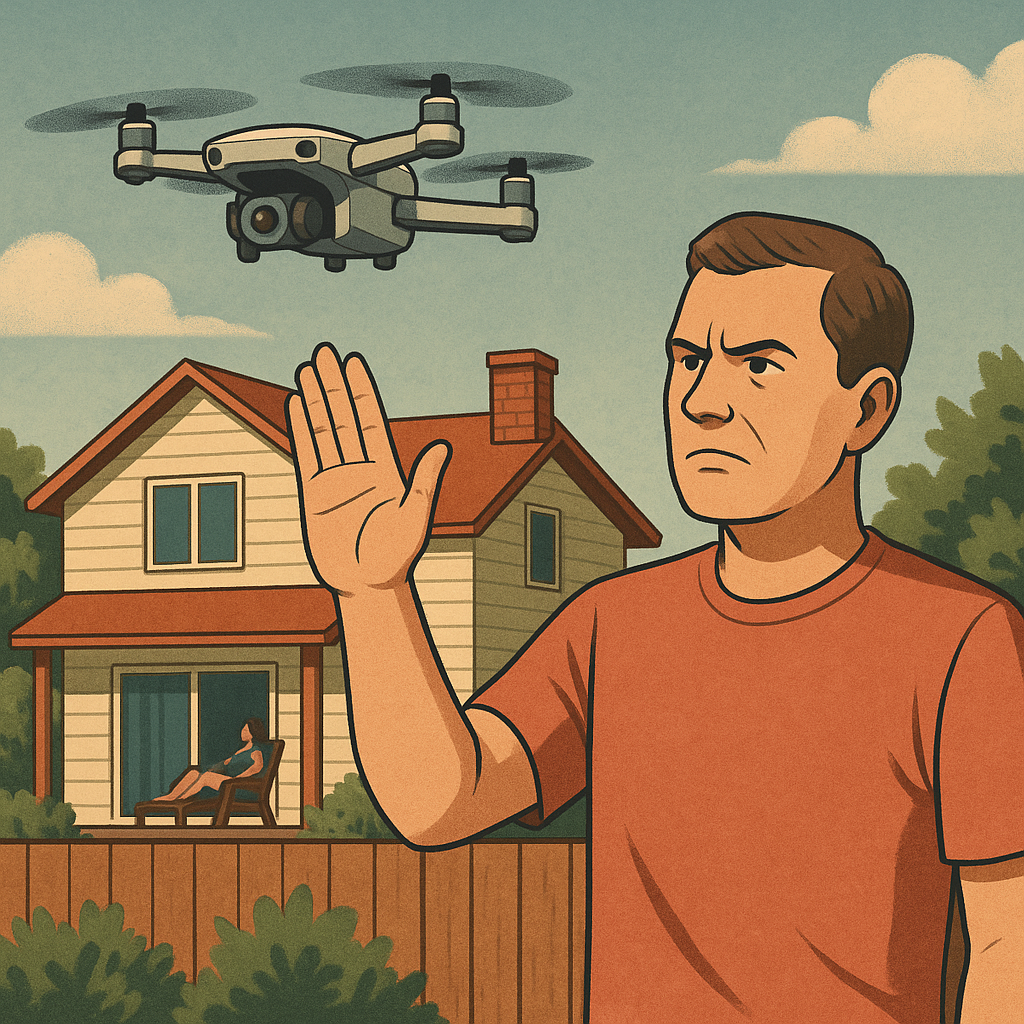
Imagine a homeowner in Sandy notices a drone hovering over her backyard several times a week, pausing over the deck where her family spends time. She later learns a neighbor is experimenting with photography.
Because the drone repeatedly enters low airspace and records people in a private setting without consent, this likely violates Utah Code § 76-9-402.6 and could implicate nuisance laws. The homeowner should document each incident and can file a police report. Law enforcement may be able to identify the operator and pursue charges or civil remedies.
How to File a Complaint or Report Unlawful Use
- Document the event: Record the date, time, location, and what the drone did. Capture photos or video if safe.
- Identify the operator: Note distinctive features, flight pattern, or any vehicle/license information.
- Contact law enforcement: Local police or sheriff can investigate under privacy, voyeurism, or harassment statutes.
- Report to the FAA: If the drone flew recklessly or violated altitude/airspace rules, submit a report via the FAA portal.
- Consult an attorney: For repeated or harmful intrusions, consider civil remedies or an injunction.
Penalties for Violating Drone Privacy Laws
A first offense under § 76-9-402.6 may be a class B misdemeanor, punishable by up to six months in jail and a fine up to $1,000. Repeated or aggravated conduct, including stalking or data misuse, can lead to harsher criminal penalties and potential civil liability for invasion of privacy.
Federal FAA Rules vs. Utah State Law
The FAA controls airspace, altitude, and flight safety nationwide. Utah regulates how drones are used regarding privacy, harassment, and consent. Operators must follow both systems. Complying with FAA rules does not permit violating Utah’s privacy protections.
Video & Social Learning Hub
YouTube: Utah Drone Laws & Privacy
Instagram: Drone Use in Utah
Concerned About a Drone Over Your Property?
Understanding your rights helps you respond calmly and within the law. If you are documenting violations or considering a complaint, a Utah attorney can advise on next steps.
Talk to a Utah AttorneyUtah Law Explained publishes clear, Utah-specific legal guides to help residents handle real issues from privacy to property and beyond. This article is for information only and not legal advice.