
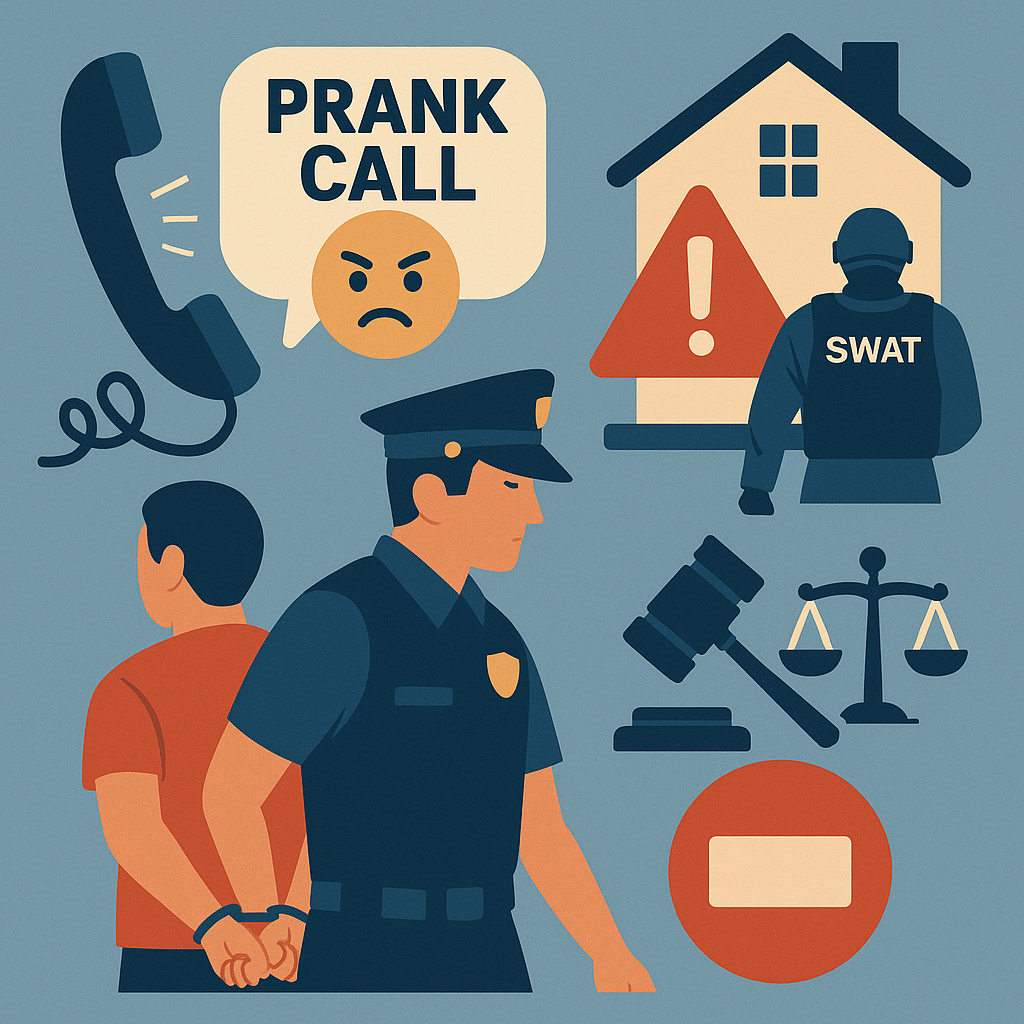
Utah Law on Prank Calls and Swatting
Plain English explainer and case study on when jokes can turn into criminal charges
Some pranks are more than annoying. Utah can treat certain prank calls and swatting style hoaxes as serious crimes. What feels like a joke to the caller can trigger emergency response and place real people in danger.
This guide explains when prank behavior crosses into criminal conduct, what evidence investigators often use, and what consequences may follow. Utah Law Explained provides legal information, not legal advice.
When Prank Calls Cross into Criminal Harassment
Not every prank call is illegal. Utah law draws a line when communication becomes threatening, repeated, deceptive, or intended to seriously alarm another person.
Conduct is more likely to create legal risk when it includes repeated unwanted calls, threats of harm, impersonating authority, or targeting someone at home, work, or school in a way that disrupts safety and peace.
If you are receiving these calls, what matters legally is often the pattern, the content, and whether the conduct appears designed to harass or frighten.
Swatting and False Emergency Reports
Swatting generally refers to a false emergency report that is meant to trigger a heavy law enforcement response at a target location. These reports often claim a weapon, hostage situation, or imminent violence.
Utah takes false emergency reporting seriously because it can put officers and residents at risk, divert resources from real emergencies, and cause fear and disruption for entire neighborhoods or campuses.
Evidence and How Callers Are Identified
Many people assume prank calls are anonymous. In practice, investigations may rely on multiple evidence sources, especially when emergency dispatch is involved.
Possible Consequences and Restitution
Consequences depend on what was reported, whether threats were made, and what response was triggered. The range can include misdemeanor or felony charges, along with fines, probation, and a long term criminal record.
In some situations, restitution may also be pursued for losses tied to emergency response, damages, or other measurable harm caused by the false report.
If you need the exact penalty tier for a specific situation, consult current Utah Code or speak with a Utah criminal defense attorney for up to date guidance.
Case Study: Swatting at University of Utah Housing
Local reporting has covered swatting hoax calls that led police to respond at University of Utah housing after a false report of an armed threat. Even when the threat is not real, the response can be intense and dangerous.
These incidents show why swatting is treated differently from ordinary pranks. A false emergency report can create a high risk situation for residents and officers, and it can disrupt a whole community in minutes.
YouTube and Instagram Videos
YouTube: Prank Calls and Swatting
Instagram: Community Warnings and Examples
Know the Line Before a Joke Becomes a Case
Understanding the stakes helps people avoid jokes that lead to real criminal records. If you are dealing with allegations or the fallout from a false report, reliable guidance early can help you protect your rights and make safer decisions.
Talk to a Utah AttorneyFor more plain English legal guidance, stay updated with Utah Law Explained, explore our mission on the About Us page, or connect with trusted counsel like Gibb Law Firm.