
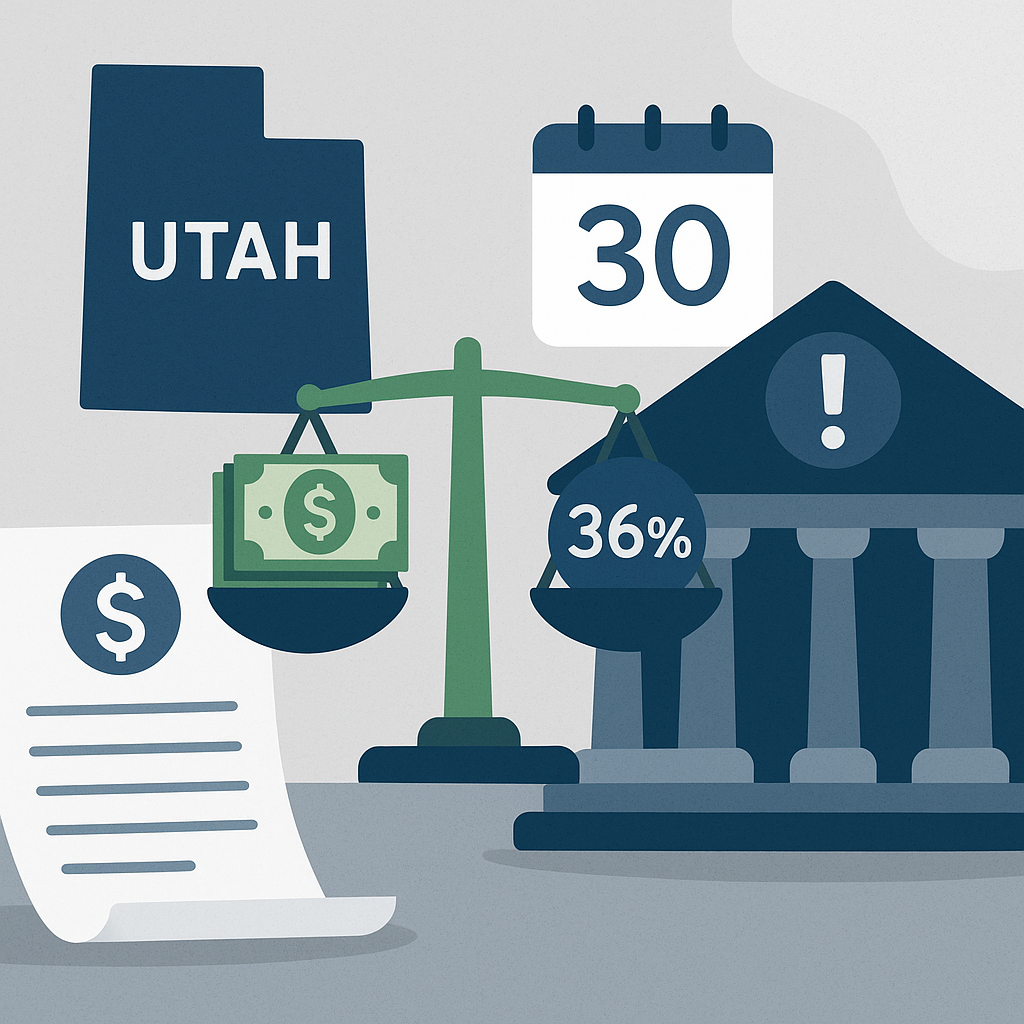
Utah Payday Loan and High-Interest Lender Rules
Plain-English guide to Utah payday loan rules, high-interest lenders, and your consumer rights.
Payday loans are legal in Utah, but they often come with some of the highest interest rates in the country. Utah law gives lenders wide freedom to set fees and APRs, yet it also puts real limits on what they can hide, how they can collect, and what happens when you fall behind. This guide from Utah Law Explained breaks down Utah payday loan rules in plain English, so you can understand the risks, spot illegal behavior, and act before the debt snowballs.
If you want a broader view of consumer protection in Utah beyond payday loans, see our plain-English overview of unfair and deceptive practices in 5 Key Points on Utah UDAP Laws and the deeper dive in 5 Key Insights on Utah UDAP Laws. For a bigger picture of your basic rights, our guide Utah Legal Guide: Key Statutes Every Utahn Should Know is a helpful companion.
How Payday Loans Work in Utah
In Utah, payday loans are typically short-term, small-dollar loans that are due on your next payday. Instead of charging interest the way a traditional bank loan does, many payday lenders charge “fees” that stack up fast. When those fees are converted into an annual percentage rate (APR), it is common to see APRs above 400%.
High cost alone is not automatically illegal under Utah law. What matters is whether the lender follows Utah’s rules on:
- Clear fee and APR disclosure before you sign anything
- Rollover and renewal limits so the same debt is not endlessly extended
- Extended payment plans once you hit certain limits on deferrals
- Collection practices that cannot cross into harassment, threats, or deception
These requirements come from Utah’s lending framework, including deferred-deposit and check-cashing laws, alongside unfair and deceptive acts and practices (UDAP) protections that apply more broadly to consumer transactions.
Common Scenarios & Your Rights Under Utah Law
Most payday loan problems show up in a few recurring patterns. Understanding how Utah law views these scenarios can help you react quickly and avoid long-term damage.
Scenario 1: The “Never-Ending” Payday Loan
You take out a small loan to get you through to payday, but when that payday comes, you cannot afford to pay the balance in full. The lender offers to “roll over” or renew the loan for another pay period with another fee added. This keeps happening, and the amount you owe barely moves.
Utah lenders must clearly disclose each fee and cannot hide new charges inside rollovers. When you reach Utah’s limits on deferrals or renewals, you generally should be offered an extended payment plan instead of another rollover. If a lender refuses to discuss a payment plan when the law requires it, that is a red flag.
Scenario 2: Multiple Withdrawals and Surprise Bank Fees
Many payday loans are repaid through automatic withdrawals (ACH) from your bank account. If there is not enough money in the account, some lenders try to pull the funds over and over, which can trigger overdraft fees and leave you with even less to live on.
Under Utah law, you have the right to revoke your ACH authorization. That typically means:
- Giving written notice to the lender that you are revoking permission, and
- Notifying your bank that you withdraw consent for that lender to debit your account.
Once you revoke authorization, the lender should not keep trying to pull funds from your account especially not multiple times in a single day. Repeated, aggressive attempts can move into unfair or deceptive territory.
Scenario 3: Threats of Arrest or Criminal Charges
A lender or collector tells you that if you do not pay immediately, you can be arrested, jailed, or criminally prosecuted for “fraud.” For many borrowers, this fear is enough to push rent, utilities, or groceries aside to keep paying the loan.
In Utah, genuine inability to repay a payday loan is generally a civil matter, not a criminal one. Lenders cannot lawfully threaten arrest, immigration consequences, or criminal prosecution as a collection tactic. While they can sue in civil court for nonpayment, using criminal threats to scare you violates consumer-protection principles and may be reportable behavior.
Scenario 4: You’re Ready to Break the Cycle
When the loan is clearly unaffordable, the main goal is to stop the cycle from getting worse. That usually means:
- Stopping unnecessary rollovers when an extended payment plan should be offered
- Revoking ACH withdrawals if they are draining your account
- Communicating in writing so there is a record of what you asked for
Combining Utah’s specific payday-loan rules with general consumer protections like those summarized in our UDAP explainers can help you push back on unfair practices and keep negotiations grounded in law instead of fear.
Illegal or Abusive Lender Behaviors in Utah
Not every aggressive or frustrating lender action is illegal, but there are clear lines Utah payday lenders should not cross. In general, a Utah payday or high-interest lender should not be:
- Hiding fees or mislabeling charges to make the loan look cheaper than it is
- Using confusing language in contracts that makes it impossible to understand the true cost
- Threatening arrest, jail, or criminal charges solely for late or missed payments
- Calling at unreasonable hours or harassing you, your employer, or your family
- Re-submitting failed withdrawals over and over in a way that triggers repeated overdraft fees
- Continuing automatic withdrawals after you have revoked authorization in writing
Patterns like these can raise issues under Utah’s unfair and deceptive acts and practices standards. When combined with misleading advertising or abusive collection tactics, they may justify complaints to state regulators or, in some cases, private legal action.
Stopping Automatic Withdrawals & Repeat Rollovers
One of the most practical tools Utah borrowers have is the ability to cut off automatic withdrawals when they become harmful. While you still owe the debt, you do not have to give a lender unlimited access to your bank account.
A typical step-by-step approach looks like this:
- Revoke ACH permission in writing. Send a dated letter or email to the lender clearly stating that you withdraw authorization for any future automatic debits from your account.
- Notify your bank or credit union. Give them a copy of your revocation and ask how to block future attempts by that lender. Banks often have their own forms for this.
- Ask about an extended payment plan. If you have reached Utah’s limits on renewals or rollovers, you may qualify for a longer-term plan where you pay the balance down over several pay periods instead of renewing the loan again.
None of these steps erase the debt on their own, but they can stop the bleeding and give you room to prioritize rent, food, and essential bills while you work toward a realistic repayment plan or explore options with a Utah consumer-rights attorney or nonprofit credit counselor.
How to Report Predatory or Abusive Payday Lenders
If you believe a payday or high-interest lender has crossed the line under Utah law, you can do more than simply stop answering the phone. Reporting patterns of abuse helps regulators spot repeat offenders and, in some cases, secure refunds or penalties.
Depending on the situation, Utah borrowers often consider:
- Utah Department of Financial Institutions – oversees many state-regulated lenders and can investigate violations of lending rules.
- Utah Division of Consumer Protection – accepts complaints about unfair or deceptive practices that target Utah consumers.
- Consumer Financial Protection Bureau (CFPB) – a federal agency that tracks complaints about payday lenders nationwide and may intervene in certain cases.
When you file a complaint, it helps to attach copies of your contract, payment history, bank records, and any texts, voicemails, or emails showing threats or misleading statements. The more specific your timeline and documentation, the easier it is for investigators or a private attorney to understand what happened.
Video & Social Learning Hub: Utah Payday Loans
YouTube: How Payday Loans Really Work
Instagram: Utah Payday Loan Snapshots
Need Help With Utah Payday Loan Debt?
Acting early can prevent a payday loan from spiraling into long-term financial harm. If high-interest payments are squeezing out rent, utilities, or groceries, it is a sign to look at your rights, talk about realistic options, and consider whether a Utah consumer-rights attorney or credit counselor can help you protect yourself.
Talk to a Utah AttorneyFor more plain-English legal guidance, stay updated with Utah Law Explained, explore our mission on the About Us page, or connect with trusted counsel like Gibb Law Firm.