How Utah’s Probation System Works
Terms, supervision, violations, and how to successfully complete your sentence
This article explains how probation works in Utah, including standard terms, supervision requirements, violations, and how to complete your sentence successfully. Probation is a second chance to serve your sentence in the community. It is also a serious commitment with close supervision and clear rules. Understanding the process helps you avoid violations and move forward with stability.
What Is Probation and When Courts Use It
In Utah, probation allows someone convicted of a crime to remain in the community under court-ordered supervision rather than serving time in jail or prison. Judges often use probation for first-time or lower-level offenses when the person shows potential for rehabilitation. Probation is part of the sentence. It holds you accountable while giving you the opportunity to work, attend counseling, and rebuild stability.
Standard and Special Conditions of Probation
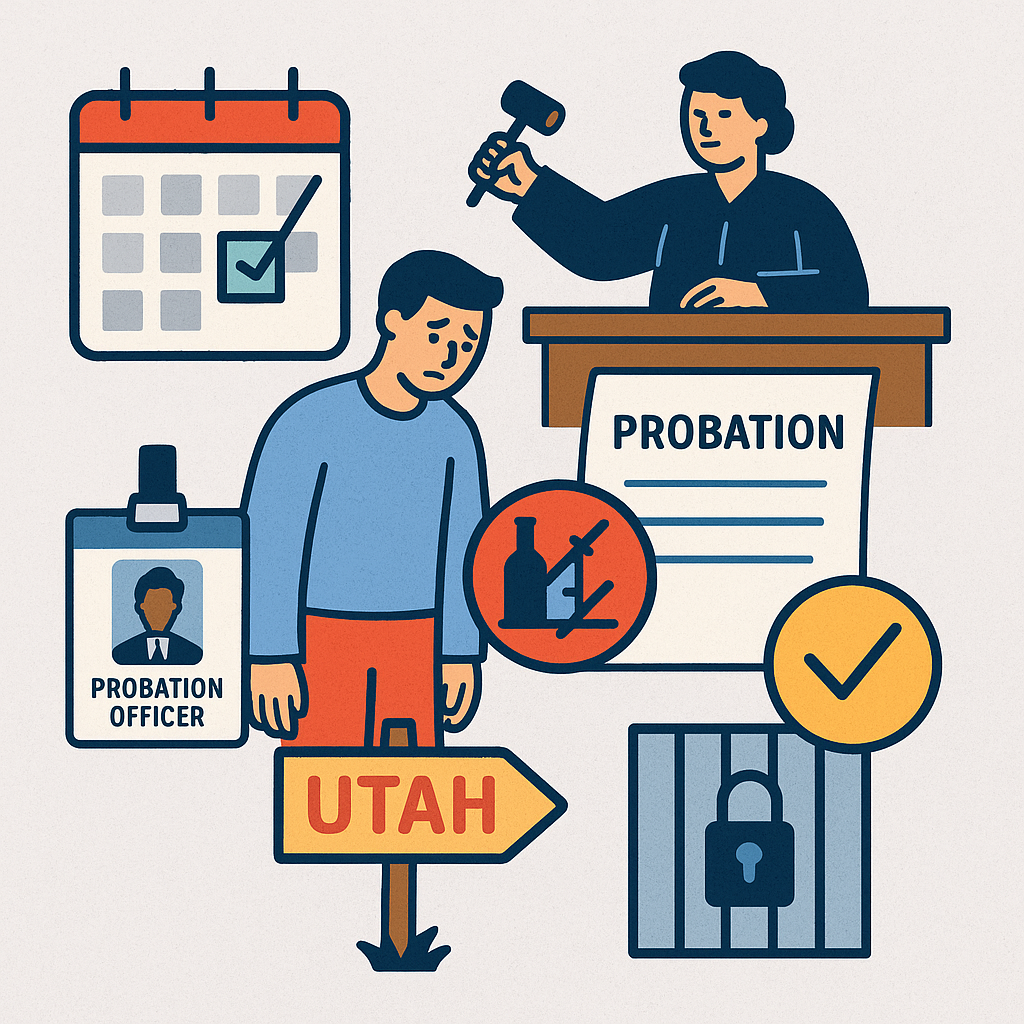
Every Utah probation case includes standard conditions, such as:
- Reporting regularly to a probation officer
- Avoiding drugs, alcohol, and criminal activity
- Staying within Utah unless approved to travel
- Submitting to drug or alcohol testing
- Maintaining employment or school enrollment
Depending on the offense, courts can add special conditions:
- Completing treatment programs for substance use or domestic violence
- Paying restitution to victims
- Performing community service
- Following curfews or electronic monitoring
Violating any of these conditions, even minor ones, can trigger a probation review or violation hearing.
The Role of Probation Officers and Supervision Levels
Utah’s probation system is managed by Adult Probation and Parole (AP&P), part of the Utah Department of Corrections. Officers supervise individuals statewide, ensure compliance, and support successful reentry.
Supervision levels depend on risk and progress:
- Court probation — Managed by the local court for lower-risk cases
- Private probation — Licensed providers monitor cases when courts outsource oversight
- State probation (AP&P) — Used for higher-risk or felony-level cases
Your supervision level can change as you demonstrate progress or face setbacks.
What Counts as a Violation and How Hearings Work
A probation violation occurs when you break one or more court-ordered terms. Common violations include missing appointments, testing positive for drugs or alcohol, new criminal charges, or failing to pay restitution.
When a violation is reported, the process usually follows this path:
- The probation officer submits a violation report
- The court schedules a violation hearing
- You have the right to an attorney at the hearing
- The judge reviews evidence and decides the outcome
Even a single violation can lead to stricter supervision or jail time depending on the severity.
Possible Outcomes for Violations
- Warning or reprimand for minor, first-time issues
- Increased supervision or added conditions such as more check-ins or treatment
- Short jail stay sometimes called shock time to reinforce compliance
- Full revocation where probation is revoked and the original jail or prison sentence is imposed
Consistency and communication with your probation officer are key to avoiding violations and showing good faith.
How to Petition for Early Termination or Modification
If you have completed most of your probation and stayed fully compliant, you can request early termination. Judges may grant this when fines and restitution are paid, no violations have occurred, special conditions are complete, and your probation officer supports the request. You can also petition to modify terms such as travel restrictions or testing requirements if circumstances change.
How Completion Affects Your Record
Successfully completing probation means you have fulfilled your sentence. Your record will still show the original conviction, but completion helps demonstrate rehabilitation and can make it easier to seek expungement later under Utah’s Clean Slate laws. For statutory details on probation terms and conditions, see Utah Code § 77-18-1.
Key Details at a Glance
Video & Social Learning Hub
YouTube: Understanding Utah Probation
Instagram: Probation in the Community
Stay On Track and Finish Strong
If you are on probation in Utah, completion is within reach when you follow your conditions and communicate with your probation officer. Talk with an attorney before requesting modifications or early termination.
Talk to a Utah AttorneyThis page is part of Utah Law Explained, a local resource that provides plain-English legal information. It is not legal advice.