
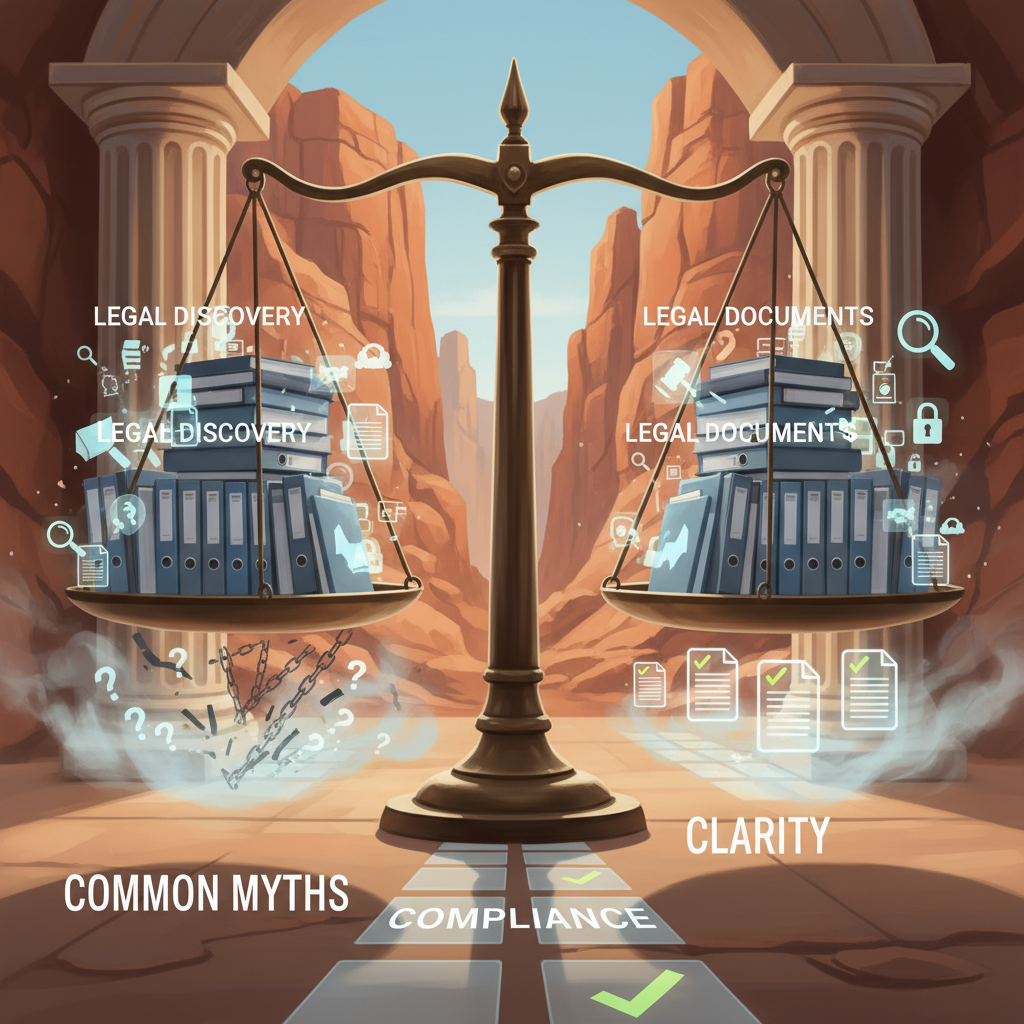
Utah Rule 26 disclosures and the discovery process often cause confusion for people involved in Utah lawsuits. If you’re a Utah business owner or an individual with a legal claim, chances are you’ve heard phrases like “initial disclosures,” “discovery deadlines,” or “Rule 26.” But do you really understand what each means—or what you actually have to do to comply?
This guide will separate the myths from the facts about Utah discovery, focusing on what Rule 26 really requires. We’ll explain why it matters, highlight common mistakes, and provide plain-English tips so you feel confident preparing your case—whether you’re in Salt Lake City, Ogden, Provo, or beyond.
What Is Utah Rule 26? Myths vs Facts
Utah Rule of Civil Procedure 26 sets the standards for how parties in Utah lawsuits exchange information before trial. The process is meant to ensure fairness and avoid legal “trial by ambush.” This rule applies to most lawsuits in Utah district courts and, in many cases, justice courts as well. Find the most current version of Rule 26 at Utah Court Rules.
- Myth: “Discovery only occurs in big-dollar lawsuits.”
Fact: Even small claims and lower-value disputes in Utah often require some form of disclosures or discovery. - Myth: “You only have to share evidence that helps your side.”
Fact: Utah law requires you to disclose both helpful and harmful evidence—anything you plan to use or that relates to the claims/defenses. - Myth: “The court will remind you if you miss a deadline.”
Fact: It’s your job to track and meet strict Rule 26 disclosure and discovery timelines—missing a deadline can hurt your case.
Disclosures, Discovery & Deadlines: The Utah Rule 26 Process
Here’s a step-by-step of how Rule 26 works in Utah civil cases:
- Initial disclosures: Both sides must share key information (such as witness lists, copies of documents, and damage calculations) within 14 days after the first answer is filed (Utah R. Civ. P. 26(a)(1)).
- Fact discovery: Each party requests information from the other side through written questions (interrogatories), document requests, or depositions. The deadlines depend on the tier of your case (simple, average, or complex) and are set in Utah R. Civ. P. 26(c).
- Expert disclosures: If you plan to rely on expert witnesses, you must follow special disclosure rules and deadlines, usually 7-28 days after fact discovery ends.
- Final pretrial disclosures: Just before trial, both sides update their disclosures to include the final evidence and witnesses they intend to present.
Salt Lake County, Utah County, Weber County, and other district courts throughout Utah follow these procedures, though local rules may adjust some details. Courts use a “tiered discovery” system—Tiers 1, 2, and 3—based on the dollar amount at issue. Read the full Rule 26 language here.
In Utah divorce and family law cases, disclosure under Rule 26 is mandatory—even if the parties agree on most issues.
Learn how the Utah discovery process plays out in real family law cases by watching this local attorney’s explanation.
Watch directly on YouTube — embedding disabled by owner.
This video breaks down initial disclosures and common issues in Utah divorce discovery.
Complying with Rule 26: Myths vs Facts
- Myth: “You can wait to disclose evidence until you’re sure you’ll use it.”
Fact: Utah law requires early and ongoing disclosure. Failing to disclose on time may mean you can’t use evidence at trial. - Myth: “Templates or ‘boilerplate’ objections are fine.”
Fact: Courts want specific, thoughtful answers—vague objections are usually overruled. - Myth: “Discovery is just paperwork—no strategy needed.”
Fact: Strategic, candid disclosures help resolve cases fairly and avoid court sanctions (such as fines or evidence exclusion).
It’s worth noting: Utah judges routinely order parties to pay the other side’s attorney fees if they force unnecessary motions because of avoidable discovery disputes. For local rules and forms, check the Utah Courts’ official page for your county.
See how discovery rules and scheduling affect even high-profile Utah cases with this courtroom clip.

Watch directly on YouTube — embedding disabled by owner.
This video illustrates how scheduling and compliance debates play out in Utah courtrooms.
Real-Life Example: Discovery in Utah’s District Courts
Suppose you’re involved in a contract dispute in Salt Lake City’s Third District Court. After you file (or respond to) a lawsuit, you’ll receive a Notice of Tier Assignment—a Tier 2 case, for example, means 180 days of fact discovery and specific limits on depositions and document requests. You must exchange your initial disclosures, then work with the other party to complete discovery tasks, meet deadlines, and resolve any disagreements before trial. Utah County and Weber County district courts follow similar standards.
Tips for Success: Navigating Rule 26 in Utah
- Mark all deadlines on your calendar and set reminders.
- Be thorough and honest in your disclosures—even if the information seems unhelpful.
- Keep organized records of what you send and receive.
- If you need more time, file a motion in advance—don’t just miss the deadline.
- Review local rules for your county (they may have special procedures).
Common Mistakes Utahns Make
- Missing or miscalculating the 14-day initial disclosure deadline after receiving a filed answer.
- Failing to update disclosures when new information or evidence arises during discovery.
- Serving incomplete disclosures or using “boilerplate” objections that judges routinely overrule.
- Assuming local forms are accepted statewide; check for your court’s preferred practice.
The Final Word
Understanding Utah Rule 26—especially the difference between disclosure and traditional discovery—is crucial for anyone involved in a Utah lawsuit. By avoiding common misconceptions and staying on top of deadlines, you’ll save time, reduce costs, and help ensure your case is decided on the facts, not on technical missteps. This article is for informational purposes only and is not legal advice. For help with your unique legal situation, consult a licensed Utah attorney.
For more plain-English guides on Utah law, visit Utah Law Explained, or learn about our mission on the About Us page.