
What Happens After You’re Arrested in Utah?
Booking, bail, first appearance, and your rights — explained in plain English
After an arrest in Utah, things move fast. You will be booked into jail, a judge will decide release and bail, and you will have a first court appearance where rights and charges are addressed. This guide explains each step so you know what to expect, what choices you may be offered, and how to avoid common mistakes.
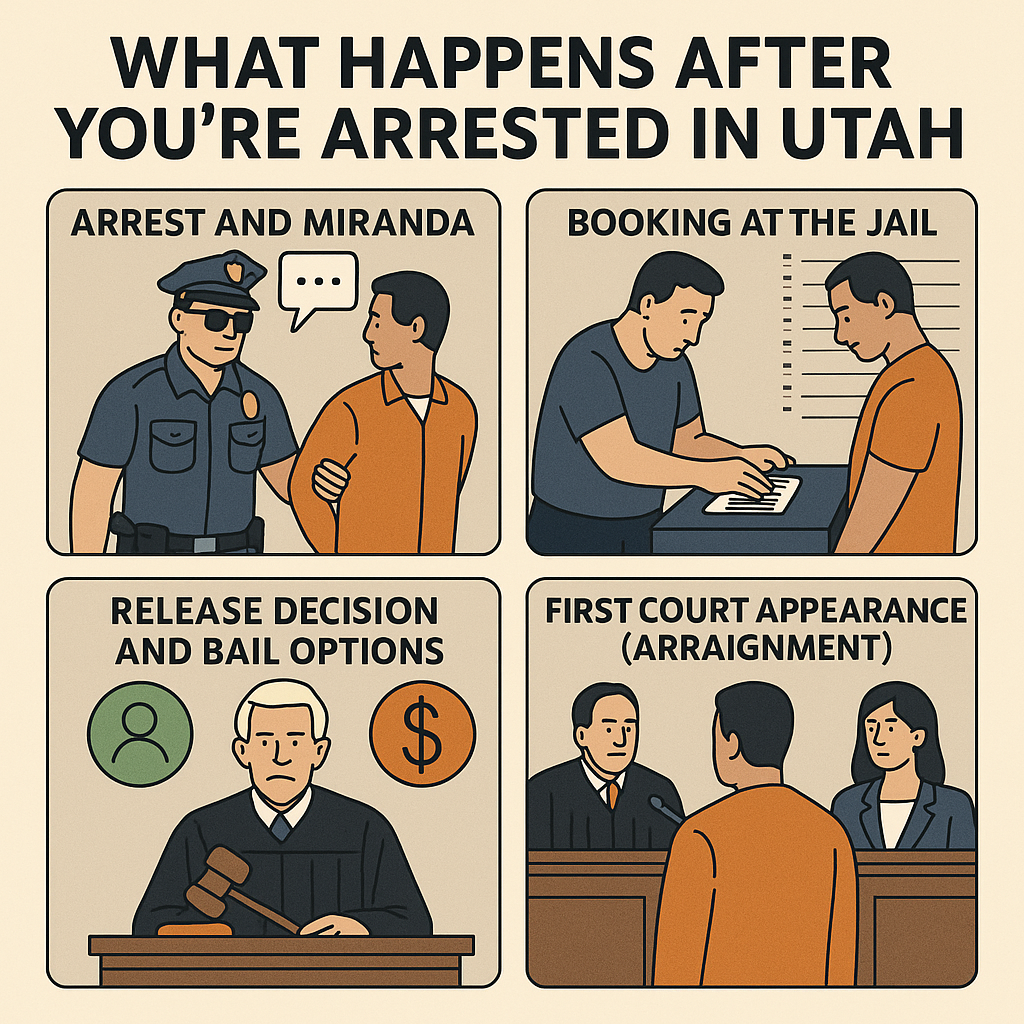
How the Utah Arrest Process Works at a Glance
- Arrest and Miranda rights
- Booking at the jail
- Release decision and bail options
- Pretrial release conditions
- First court appearance (arraignment)
- Getting a lawyer or public defender
- Warrants and missed court dates
Step 1: Arrest and Your Miranda Rights
What happens: A peace officer arrests you with or without a warrant. If the officer plans to question you while you are in custody, they must advise you of your Miranda rights so any statements are voluntary and admissible. You can choose to remain silent and ask for a lawyer.
Your choices: Provide name and basic identifying info. You do not have to answer questions about the incident. You can clearly say, “I want a lawyer. I will not answer questions.”
- Stay calm and do not resist.
- Provide ID when asked.
- Ask if you are free to leave. If arrested, stop talking about the facts.
- Clearly assert your right to remain silent and your right to an attorney.
- Do not sign statements you do not understand.
Step 2: Booking at the Jail
What happens: Staff take your photo and fingerprints, inventory property, check for warrants, and list preliminary charges. You may be searched. You will be told how to make a phone call per jail policy.
Your choices: Contact a family member or attorney. Follow facility rules to avoid additional charges.
- Memorize or retrieve one phone number to call.
- Do not discuss case facts on recorded jail phones.
- Ask about medications or medical needs if relevant.
- Keep paperwork you are given when released.
Step 3: Release Decision, Bail, and Timing
What happens: You may be released on recognizance, given conditions, assigned monetary bail, or held for a prompt hearing. Courts consider public safety and flight risk in setting conditions.
Your choices: If bail is set, post cash or use a licensed bail bond company. If you cannot afford bail, ask the court to review or reduce it at first appearance or a separate hearing.
- Ask jail staff when your first appearance will occur.
- Confirm bail amount and acceptable payment types.
- If using a bondsman, confirm fees and collateral.
- Keep all bail receipts.
Step 4: Bail Bond Options & Release Conditions
What happens: A Utah-licensed bondsman may post a surety bond for a nonrefundable fee. Judges may impose conditions like no contact, no alcohol, firearms restrictions, or GPS check-ins.
Your choices: Pick the most affordable, least risky release option and fully understand your conditions.
- Read all release conditions before signing.
- Clarify check-in schedules and testing requirements.
- Ask your lawyer how to request changes if conditions are unworkable.
- Follow conditions exactly to avoid re-arrest.
Step 5: First Court Appearance (Arraignment)
What happens: The judge confirms identity, informs you of charges and rights, addresses counsel, and reviews release/bail. You may enter a plea or receive future dates.
Your choices: If you do not have an attorney, ask for one and for time to consult. Request appointment of a public defender if you qualify.
- Arrive early with your paperwork.
- If you want a lawyer, say so clearly and ask for time to consult.
- Ask the court to address bail if you cannot afford it.
- Get your next court date in writing before you leave.
Step 6: Getting a Lawyer or Public Defender
What happens: Hire a private Utah criminal defense attorney or apply for a public defender if eligible. Early counsel helps protect your rights and may speed up bail review and discovery.
Your choices: Decide quickly so your lawyer can appear with you and speak to the prosecutor and court.
- Gather pay stubs or financial info if applying for a public defender.
- Keep all attorney contact info and engagement letters.
- Follow your lawyer’s advice on statements and social media.
Step 7: Missed Court Dates and Warrants
What happens: Missing a required hearing can trigger a bench warrant. You may be arrested and held until you appear. Acting quickly can reduce consequences.
Your choices: Contact your lawyer or the clerk immediately to ask about recalling the warrant and rescheduling.
- Do not delay. Call your lawyer or the clerk the same day.
- Be ready to explain why you missed court.
- Ask if you must appear in person to quash the warrant.
- Update your contact information with the court.
Frequently Asked Questions
What if I was not read Miranda rights? Miranda warnings are required before custodial interrogation. Lack of warnings may affect whether statements can be used, but it does not automatically dismiss charges.
How soon is the first court appearance? Timing varies by county and day of week. If you are in custody, appearances typically occur promptly. Ask jail staff or the clerk for the schedule.
Do I have to post bail to get out? Not always. Some people are released on recognizance with conditions. If bail is set, you can request a review.
Can I talk to the police to “clear things up”? You have the right to remain silent and consult a lawyer before any questioning. Using that right cannot be held against you in court.
Utah Statutes & Official References
- Utah Code Title 77, Chapter 7 (Arrest procedures, warrants)
- Utah Code Title 77, Chapter 20 (Bail and pretrial release framework)
- Utah State Courts: Criminal cases & first appearances
- Local county sheriff pages for booking, visitation, and release rules
Video & Social Learning Hub
YouTube: Arrest to First Appearance in Utah
Instagram: Rights, Arraignment & Next Steps
Need Help Applying This to Your Situation?
If you or someone close to you was recently arrested in Utah, act quickly and get informed. Show up to court on time, ask for a lawyer if you need one, and follow release conditions exactly. This page provides legal information, not legal advice.
Talk to a Utah AttorneyFor more plain-English legal guidance, stay updated with Utah Law Explained, explore our mission on the About Us page, or connect with trusted counsel like Gibb Law Firm.