
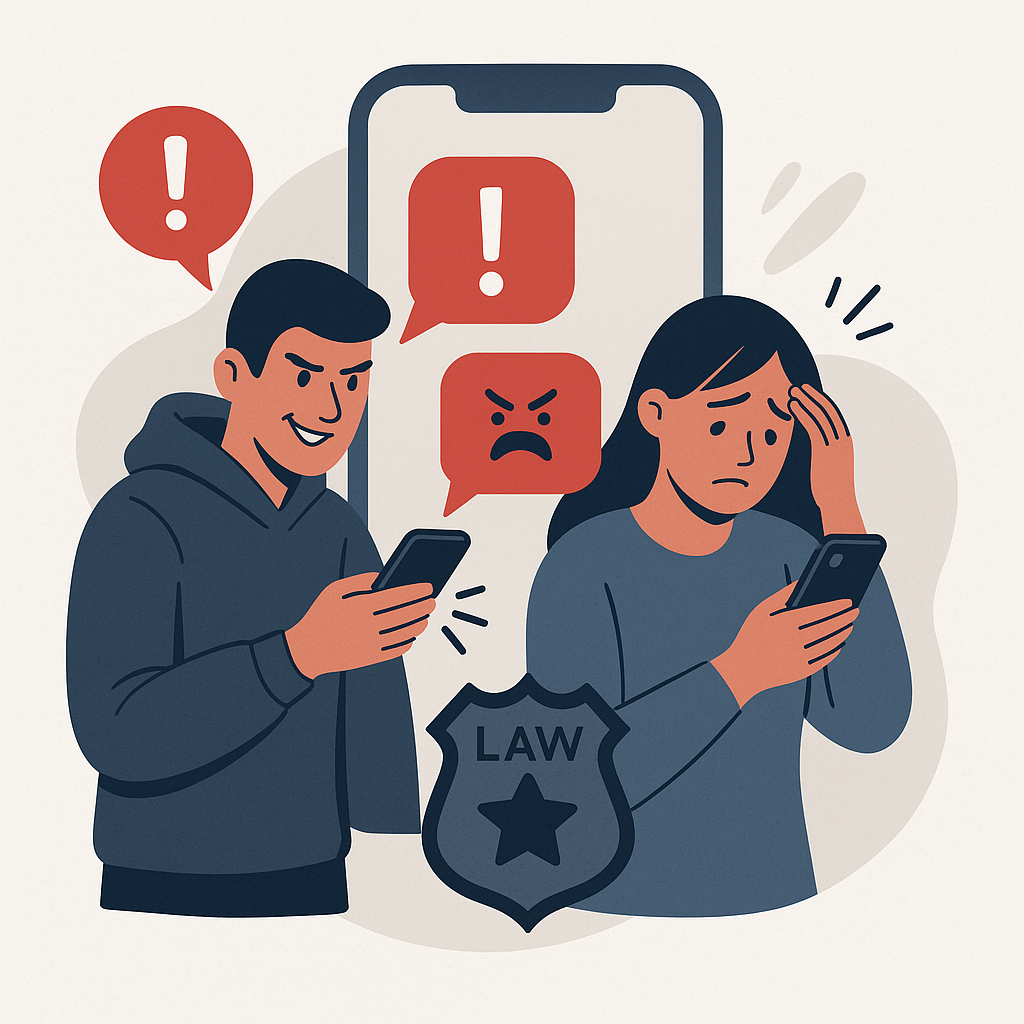
When a Simple Text Becomes Criminal Harassment in Utah
Plain-English guide to when one message crosses the legal line, what evidence matters, and the penalties involved.
In Utah, even a single message can cross the legal line. What matters is what the text says, how it is sent, and whether a reasonable person would feel threatened, alarmed, or seriously harassed. Utah’s electronic-communication laws take threatening or repeated unwanted texts seriously, and courts look closely at intent, context, and impact not just message count.
Utah Law Explained is built to turn complex law into plain-English guidance, so you can tell the difference between an annoying conversation and a situation that could justify calling police, seeking a protective order, or speaking with a defense attorney.
When Does a Text Become Criminal Harassment in Utah?
Utah does not require dozens of messages for something to be considered harassment. Under Utah’s electronic communication harassment and stalking statutes, prosecutors tend to look at five big ideas:
- Intent: Was the sender trying to annoy, threaten, intimidate, alarm, or emotionally harm you?
- Content: Does the message include threats, graphic language, or severe intimidation?
- Frequency or pattern: Has the person kept texting after you clearly said “stop” or blocked them?
- Reasonable-person standard: Would an ordinary Utahn in your shoes feel afraid or seriously distressed?
- Impact: Has the texting interfered with your safety, privacy, or peace of mind?
These criminal rules sit alongside broader Utah protections discussed in our plain-English guide to key Utah statutes. The same “reasonable person” idea shows up there too: courts care about how conduct would feel to an ordinary, law-abiding person.
What Kinds of Texts Can Count as Harassment or Stalking?
Not every rude or heated message is a crime. But some types of texts are much more likely to be treated as criminal harassment or even stalking:
- Threatening texts: Messages that communicate harm physical, emotional, sexual, or reputational can be enough for a criminal charge, even if sent only once.
- Repeated unwanted messages: If you say “do not contact me again” and the messages keep coming, the pattern itself can be harassment, even without explicit threats.
- Texts meant to intimidate or control: Statements like “I know where you are,” “You’re not safe,” or “Answer me right now or else” can show an intent to scare or dominate.
- Cyberstalking-type messages: Texts that track or monitor you such as “I saw you leave work” or “I know who you were with” may push the case into stalking territory.
Patterns of digital harassment often overlap with other consumer and privacy issues we cover, like unfair or deceptive practices under Utah’s UDAP laws, especially when businesses or strangers are involved in repeated unwanted contact.
Can One Text Alone Be a Crime in Utah?
Yes. Although many cases involve a pattern of communication, Utah law allows charges based on a single text when:
- The message contains a credible threat of harm.
- The message would make a reasonable person fear for their safety or the safety of family, pets, or property.
- The message is so extreme that it clearly goes beyond normal relationship conflict or a one-time argument.
Courts look at the impact of the message in context, your history with the sender, any past incidents, and how you reacted. A message from a stranger may be treated differently than the same words from a long-term partner, but either can become serious enough to involve law enforcement.
If texts are happening alongside driving threats, property damage, or other risky behavior, some of the same safety ideas we discuss in our Utah defense strategies guide like documenting events and getting prompt legal advice also apply here.
Evidence: Screenshots, Phone Logs, and Social Media DMs
Saving everything is one of the most important steps you can take. Police, prosecutors, judges, and defense attorneys all rely on actual records screenshots, logs, and messages rather than memories alone.
Penalties and Protective Orders in Utah Harassment Cases
Consequences depend on how severe the communication is and whether there is a history of harassment, protective orders, or stalking. In Utah, harassment by text can lead to:
- Class B misdemeanor charges for many first-time harassment situations, especially where messages are repeated but less severe.
- Class A misdemeanor charges if the conduct violates an existing protective order or involves more serious threats.
- Stalking charges when there is a pattern of behavior (online or in person) that causes fear or serious emotional distress; stalking can escalate to a felony in some circumstances.
- Protective orders or stalking injunctions limiting all contact texts, calls, in-person contact, and indirect contact through others.
Judges can also order probation conditions, counseling, and technology-related restrictions. For people accused of harassment, the stakes are high: a conviction can affect employment, professional licenses, and housing, alongside criminal penalties.
Because these cases intersect with broader rights and obligations, many Utahns review our consumer-protection explainer on unfair practices and our general Utah legal guide to understand how different laws fit together.
Q&A: Common Questions About Harassing Texts in Utah
Q: If someone texts me nonstop but never threatens me, is it still harassment?
A: Yes, it can be. If you clearly say “stop contacting me” and the person continues, courts may view the pattern of unwanted communication as harassment, especially if it disrupts your sleep, work, or daily life.
Q: What if the sender later says they “didn’t mean it” or was “just joking”?
A: Intent is judged by the words used, the surrounding context, and how a reasonable person would feel not just by a later claim that it was a joke. Threats framed as “jokes” can still be treated as serious.
Q: Does blocking the number help my case?
A: Often, yes. Blocking shows you tried to end the communication. If the person finds new ways to contact you after being blocked, that persistence can support a stronger harassment or stalking claim.
Q: Should I respond to confront or warn them?
A: In many situations, it is safer not to engage. Responding can escalate conflict or be misinterpreted later. If you are considering court or police involvement, talk with a Utah attorney about how to communicate or whether to stop responding entirely.
Q: Can I get in trouble for texting back angrily?
A: Anger alone is not a crime, but if your own messages become threatening or harassing, they can be used against you. Try to keep your side of the record limited, calm, and focused on safety. If you feel overwhelmed, reviewing other practical guides on Utah Law Explained can help you think through next steps before you act.
YouTube & Instagram Learning Hub: Harassing Texts & Cyberstalking
YouTube: Harassment, Cyberstalking, and Utah Standards
Need Help Applying This to Your Situation?
Harassment often starts small one text, one comment, one late-night message. Utah law recognizes that even a single communication can be threatening or deeply unsettling, especially when there is a troubling history or power imbalance. Saving every message, screenshot, voicemail, and log helps you document what is happening and protects you if the situation escalates.
Talk to a Utah AttorneyFor more plain-English legal guidance, stay updated with Utah Law Explained, explore our mission on the About Us page, or connect with trusted counsel like Gibb Law Firm.