
Protecting Your Digital Assets After a Loved One Dies in Utah
Plain-English guide to RUFADAA, account access, crypto, and how to plan ahead
Utah law now treats your digital life as part of your estate. Emails, photos, social media, cloud storage, even crypto are assets that may be protected by privacy rules and company policies. This guide explains how Utah’s RUFADAA works, what heirs need to access accounts legally, and how to plan so important data and funds are not lost.
What Counts as a Digital Asset Under Utah Law
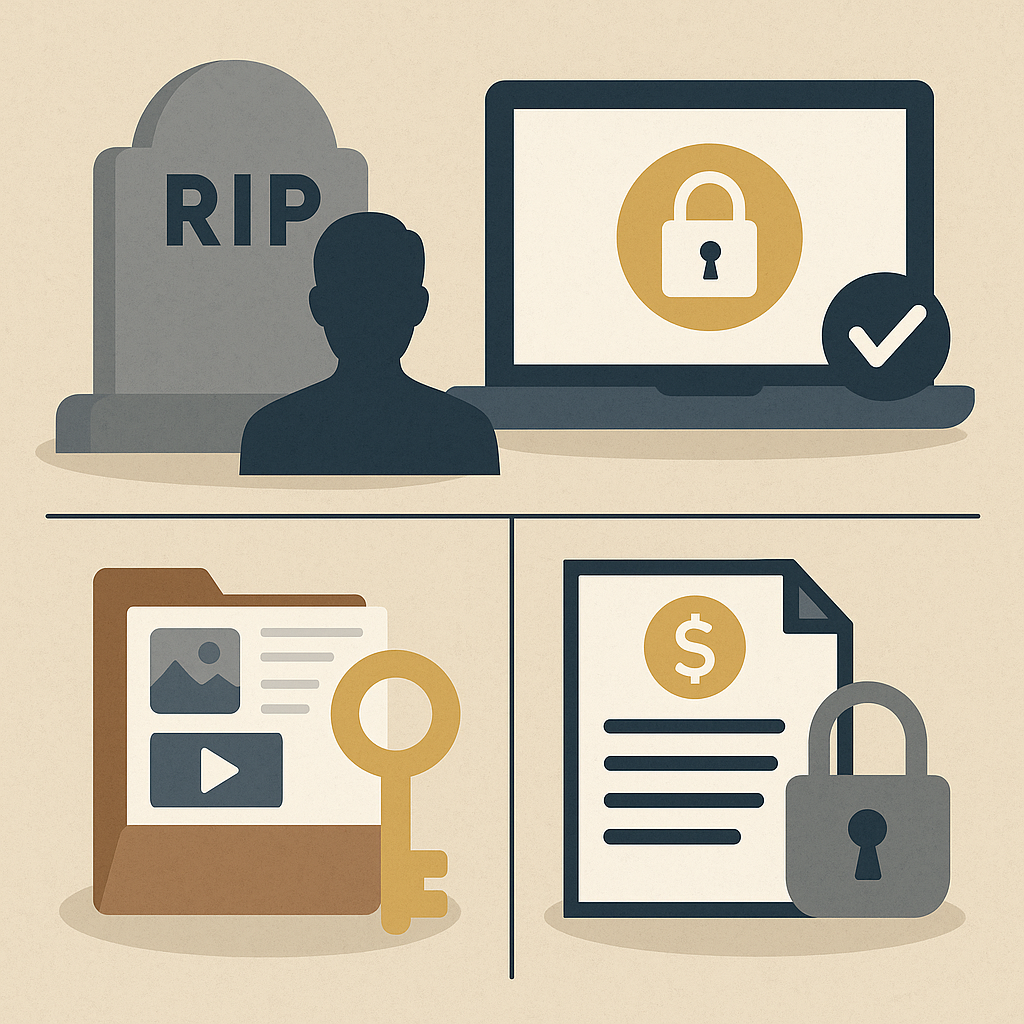
Under Utah law, a digital asset is any electronic record or online account someone owns. Common examples include:
- Email accounts, text messages, and cloud files
- Photos, videos, and social media profiles
- Cryptocurrency, NFTs, and digital wallets
- Online financial, shopping, or subscription accounts
- Stored passwords or two-factor authentication apps
Even small items like a Google Drive folder or a Venmo balance can be part of a person’s digital estate.
How Utah’s RUFADAA Law Works
Utah adopted the Revised Uniform Fiduciary Access to Digital Assets Act to give executors and trustees limited legal authority over digital accounts. In plain terms:
- A fiduciary executor, trustee, or agent under power of attorney can request access to digital assets.
- Tech companies release data only if the deceased allowed it in a will, trust, power of attorney, or an online setting.
- Without clear consent, access can be denied due to federal privacy laws.
- Some platforms offer legacy tools that can override a will if configured.
This framework balances privacy with estate administration, but it works best when the deceased made their wishes clear in writing.
Using Online Legacy Tools
- Google – Inactive Account Manager lets you choose what happens after inactivity and who gets access.
- Apple – Add a Legacy Contact in Apple ID settings.
- Facebook – Assign a Memorialization Contact to manage your profile.
If set up before death, these controls usually take priority over what a will says.
Include Digital Assets in Your Will or Estate Plan
- Create a clear list of major online accounts and where they are stored.
- Add specific language in your will or trust authorizing fiduciaries to access those accounts.
- Store login info securely in a password manager or a sealed document in a safe place.
- Update your plan when you add new accounts or crypto holdings.
Utah estate attorneys can help ensure the wording aligns with RUFADAA and probate requirements.
Documents Heirs Will Need to Access Accounts
- Death certificate
- Proof of executor or trustee authority
- Estate documents authorizing digital access
- Any known login credentials or recovery information
Without these, companies like Apple, Meta, or PayPal may refuse to release information or assets even to family.
Privacy and Consent Requirements
Federal laws like the Stored Communications Act protect electronic communications. Heirs cannot simply log into a deceased person’s email or social media without authorization. Access must come through:
- Written consent in a will, trust, power of attorney, or online tool
- Legal authority under RUFADAA
- A court order if access is contested or unclear
Do not guess passwords or bypass security. That can violate Utah and federal law.
Handling Cryptocurrency and Online Financial Accounts
Crypto adds risk. If private keys or wallet credentials are missing, funds may be lost permanently. Heirs should:
- Locate hardware wallets and recovery phrases
- Work with the estate attorney to inventory and value assets correctly
- Avoid transferring or selling digital currency before probate is complete
Disclose digital financial accounts like PayPal, Venmo, and online brokerage portals in probate filings.
Helpful Links
YouTube & Instagram Resources
YouTube Videos
Need Help Applying This to Your Situation
Digital assets are part of every modern estate. Utah’s RUFADAA gives a path to access, but it works best when permissions are set ahead of time. If you are managing a loved one’s estate or building your own plan, organize passwords, review account settings, and update your will or trust.
Talk to a Utah AttorneyUtah Law Explained provides legal information, not legal advice. Always consult a qualified Utah estate attorney for specific guidance.