
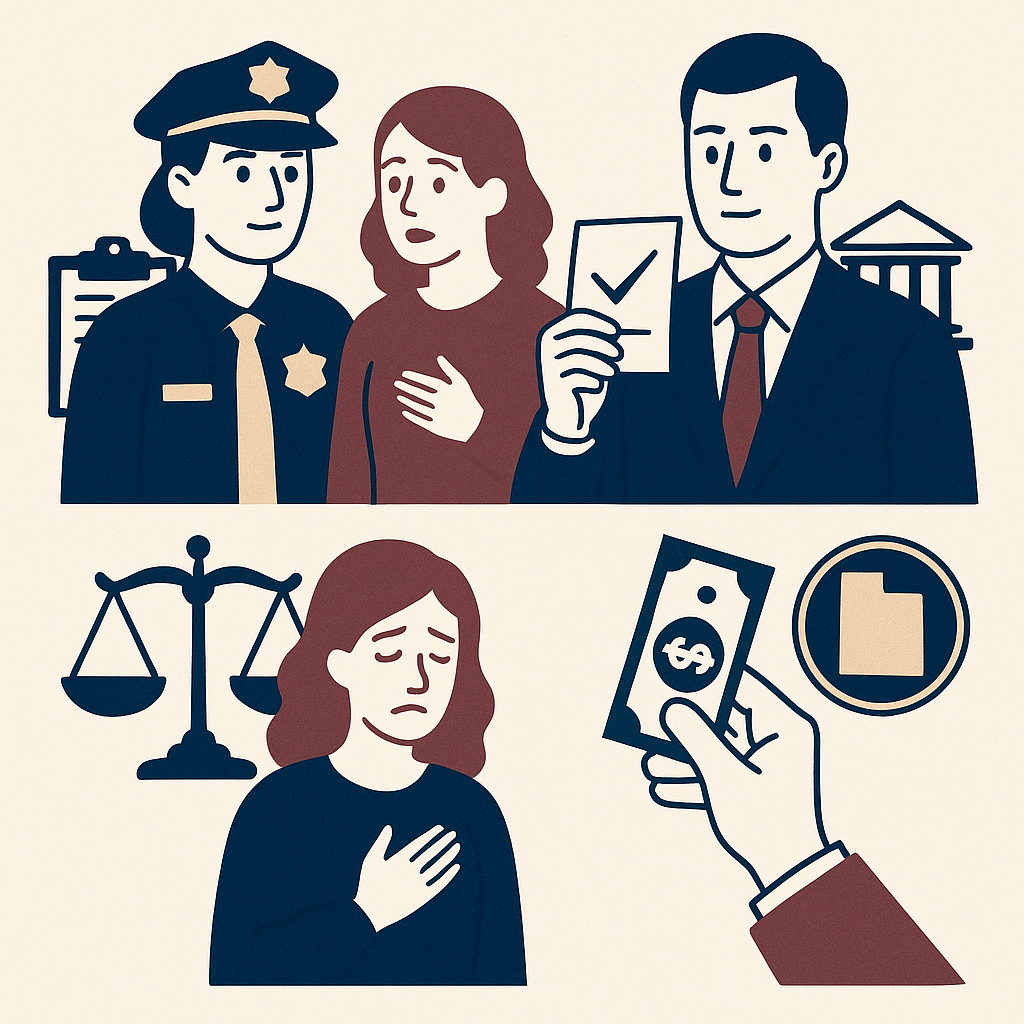
Rights of Crime Victims in Utah
From reporting and victim impact statements to restitution and protection, know the rights Utah law provides
This plain-English guide explains the rights Utah law gives to crime victims from the moment a crime is reported through sentencing, restitution, and beyond, so you know what support and protections you are entitled to. Utah’s Victims Bill of Rights ensures you are treated with fairness, respect, and dignity. Understanding these rights helps you take part in the justice process with confidence.
Utah’s Victims Bill of Rights
Utah law recognizes that crime victims play a vital role in the justice system. The Victims Bill of Rights, found in Utah Code § 77-37, guarantees protections and participation throughout criminal proceedings. Victims have the right to:
- Be treated with courtesy, compassion, and respect for their dignity and privacy
- Be informed about court dates, plea deals, sentencing, and parole hearings
- Be present in court during public proceedings
- Be heard at critical stages of the case, including sentencing and parole decisions
- Receive restitution from the offender for losses caused by the crime
These rights apply in adult and juvenile cases. Law enforcement must provide victims with information about available assistance.
Reporting a Crime in Utah
Start by contacting local law enforcement, such as city police or the county sheriff. Officers will take a report and may guide evidence collection or follow-up interviews. If prosecutors file the case, they decide on charges and next steps.
Victims have the right to be notified about case status updates, including when a suspect is arrested, charged, or released. Utah’s VINE system allows automated alerts about offender custody status.
Your Right to Be Informed, Present, and Heard
You are not a bystander. You can attend hearings, submit input at plea negotiations, and speak during sentencing. Prosecutors and victim advocates help ensure your views are shared with the court.
Courts also allow written statements if you prefer not to speak in person. Victim input can influence sentencing, probation terms, and restitution orders.
Preparing a Victim Impact Statement
A victim impact statement tells the court how the crime affected your life. Consider including:
- How daily life or your sense of safety has changed
- Financial losses, medical costs, or property damage
- Emotional or psychological harm
- Your views on sentencing or restitution
Keep it clear, specific, and respectful. You may read it in court or submit it in writing. Victim advocates in the prosecutor’s office or the Utah Office for Victims of Crime can help you prepare it.
Restitution and Financial Assistance
Victims can request restitution as part of the criminal case for losses such as property replacement, medical bills, lost wages, or counseling. Judges determine the amount at sentencing based on evidence.
If restitution does not cover your losses or the offender cannot pay, you may qualify for help from Utah’s Crime Victim Reparations Program. It can assist with out-of-pocket expenses directly related to the crime, such as therapy, medical treatment, or funeral costs. Apply through the Utah Office for Victims of Crime website.
Confidentiality and Protection
Utah law protects victims from harassment, intimidation, or retaliation. Addresses and personal contact details may be kept confidential in public filings, and courts can issue protective orders when needed.
If you fear ongoing threats, ask prosecutors or victim advocates to coordinate with law enforcement for safety planning, no-contact conditions, or relocation resources.
Helpful Resources and Related Media
Official Utah Resources
YouTube: Victim Rights in Utah
Instagram: Awareness and Support
Need Help Navigating Your Rights?
Understanding your rights can make the process less intimidating and more empowering. If you have questions about reporting, victim impact statements, or restitution, consider speaking with a Utah attorney or a certified victim advocate.
Talk to a Utah AttorneyFor educational purposes only and not legal advice. For personalized guidance, consult a qualified professional. Stay updated with Utah Law Explained, explore our About Us page, or connect with trusted counsel like Gibb Law Firm.