
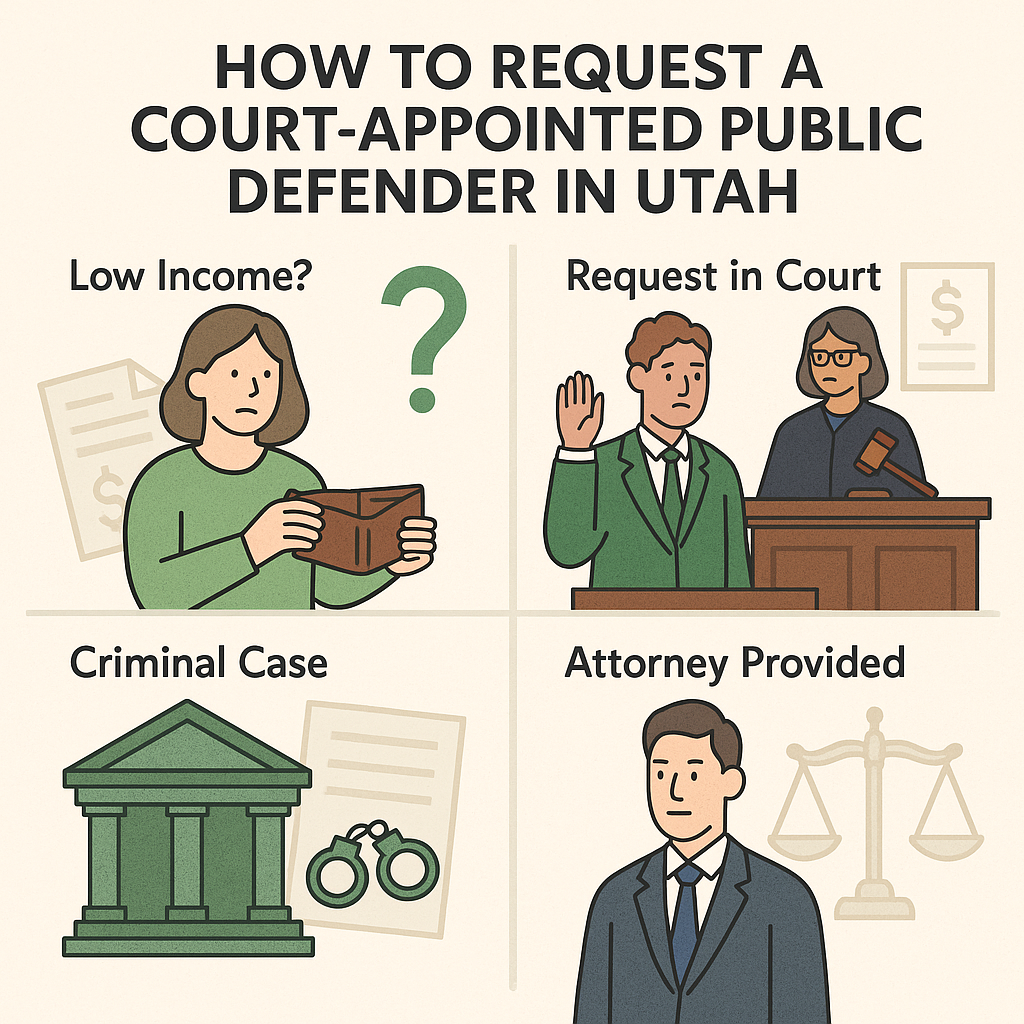
How to Request a Court-Appointed Public Defender in Utah
Who qualifies, how to apply at your first court appearance, and what to expect from representation
If you’ve been charged with a crime in Utah and can’t afford an attorney, you have the right to request a public defender. This guide breaks down who qualifies, how to apply at your first court appearance, and what to expect from representation under Utah’s indigent defense system.
Police questioning and court hearings can feel intense, but Utah residents have strong constitutional protections. Knowing when and how to use those rights can make a real difference. Use this plain-English guide to understand the process and your next steps.
Step-by-Step: Requesting a Public Defender
At a glance: Determine eligibility, complete the financial disclosure, make your request at arraignment, confirm case type, work with your lawyer, and know how to ask for new counsel if necessary.
Eligibility, Fees, and Reimbursement
Courts may assess a small application fee and can order reimbursement after conviction based on your finances. If your case is dismissed or you’re acquitted, you typically don’t pay. If your income changes after appointment, you must notify the court so eligibility can be reassessed.
Working Effectively with a Public Defender
- Share documents and timelines promptly; keep contact info current.
- Ask questions about charges, evidence, and potential outcomes.
- Discuss plea options versus trial strategy and deadlines.
- Follow court orders and release conditions to avoid setbacks.
Q&A: Utah Public Defender Basics
Do I have to pay anything? Possibly. A small fee or post-conviction reimbursement can be ordered based on finances. Acquittals/dismissals generally owe nothing.
What if my income changes? Tell the court. Eligibility can be reassessed if your financial situation improves.
How do I contact my defender? After appointment, you’ll receive contact details in court paperwork or via your county defender’s office.
Can I choose my public defender? No. The court assigns one from its approved list. Reassignment requires a serious reason.
Are public defenders qualified? Yes. They’re licensed Utah attorneys with criminal defense experience and frequent courtroom work.
Video & Social Learning Hub
YouTube: Public Defender in Utah
Need Help Applying This to Your Case?
If you’re facing criminal charges in Utah and can’t afford a lawyer, act quickly at your first appearance to request a public defender. Provide complete financial details, stay engaged with your attorney, and ask questions throughout your case. This article is legal information, not legal advice.
Talk to a Utah AttorneyUtah Law Explained offers plain-English guides to help you navigate Utah’s justice system confidently.